
Vintage Walnut Lamps
These vintage walnut lamps and lamp tables unite warm timber tones with practical illumination across several historic periods.
Vintage Walnut Lamps
When searching for vintage walnut lamps, buyers encounter a diverse selection of lighting and the associated tables utilised for illumination.
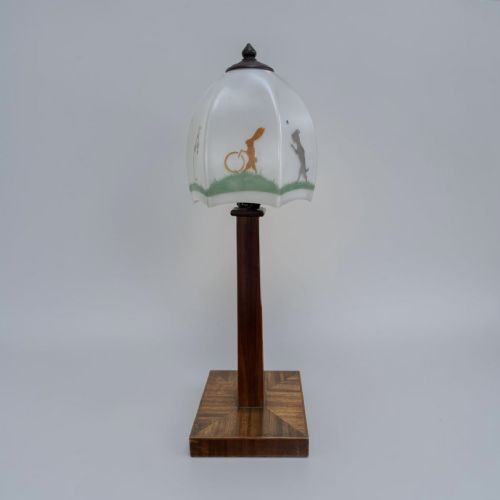
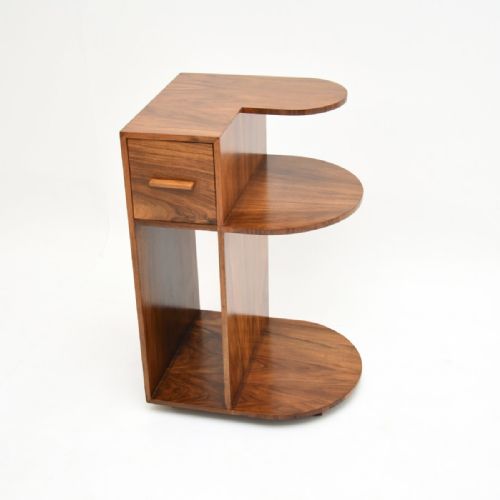
The most common formats on this page include standard lamps, floor lamps, table lamps, and wall lights alongside side tables and bedside tables functioning as lamp stands.
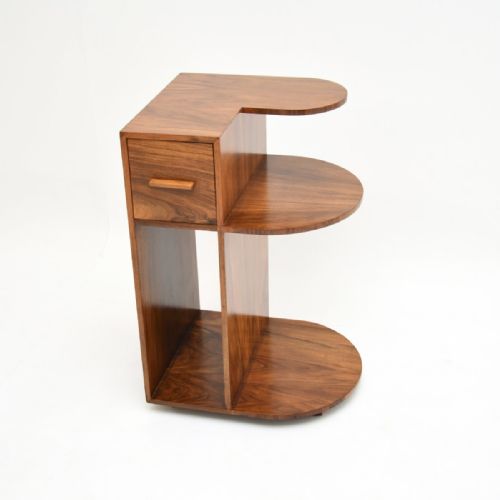
Originating from periods spanning the Victorian era through the Edwardian years and into Art Deco designs, these pieces utilise rich timber grains to anchor a room.
Materials and construction methods
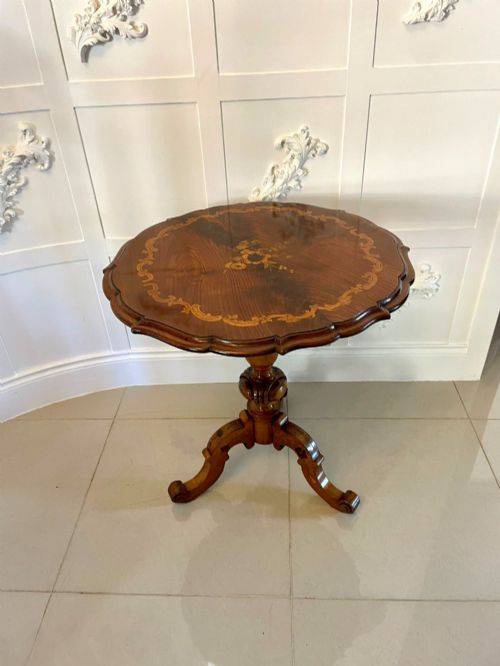
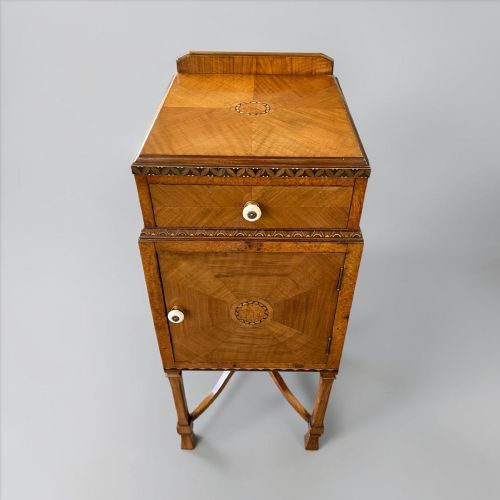
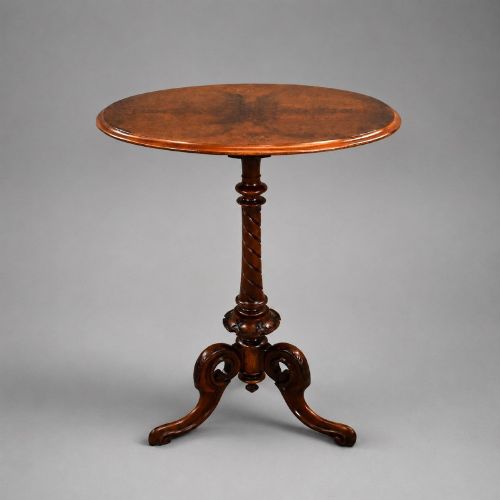
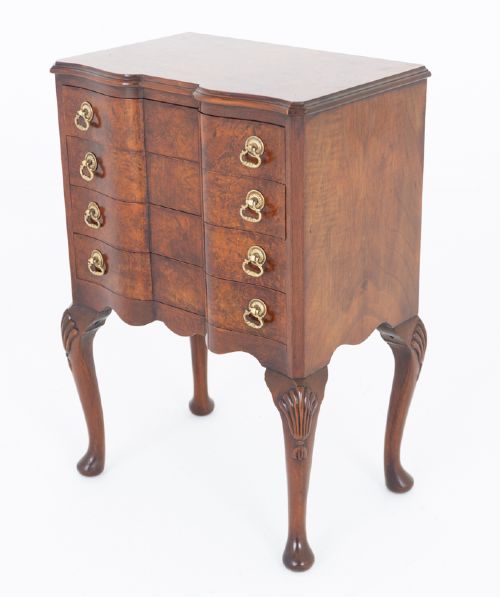
Cabinet makers utilised solid walnut, burr walnut, and walnut veneer over supportive secondary timbers to create patterned surfaces and curved forms.
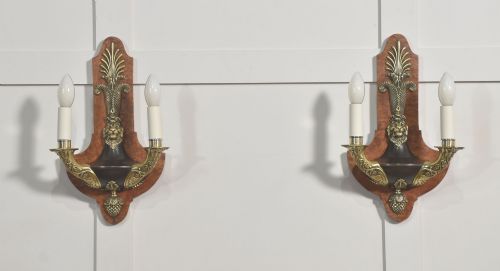
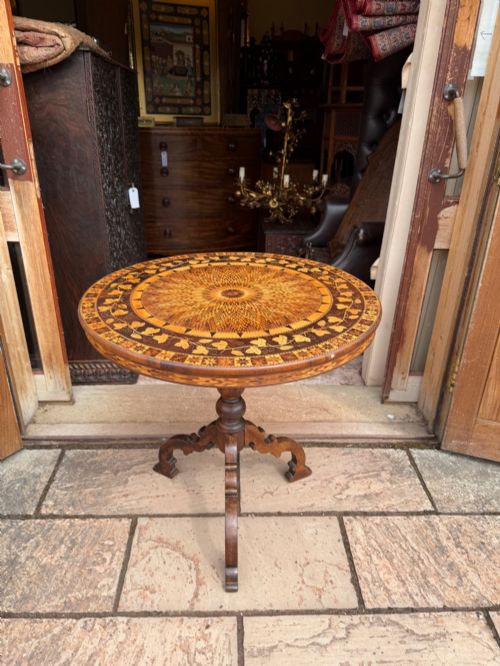
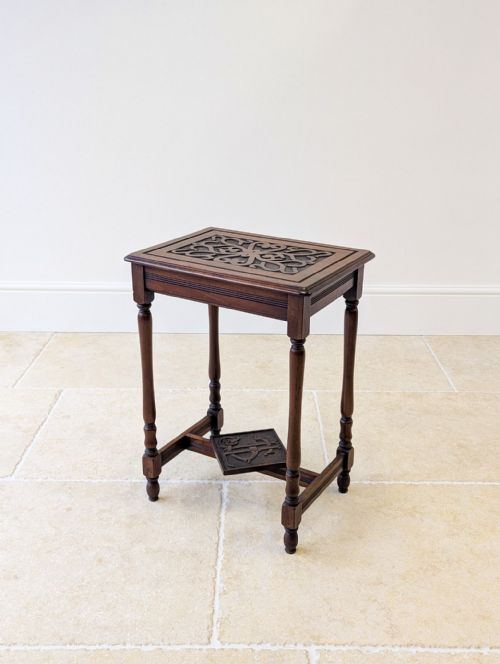
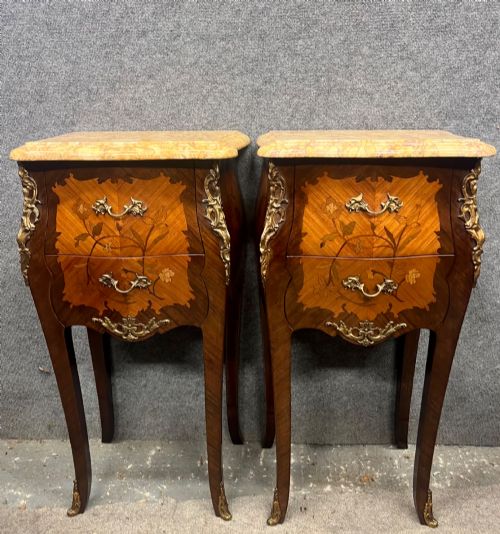
Decorative details frequently incorporate marquetry inlay, brass galleries, marble tops, and ormolu mounts to accent the polished wood.
Turning, joinery, and veneering techniques define the construction of both the tall standard lamps and the occasional tables designed to hold them.
Listings feature walnut, burr walnut, and veneer alongside brass, marble, glass, and ormolu across Victorian, Edwardian, and Art Deco periods.
Defining elements of craftsmanship
Superior examples display exceptional figure in the walnut grain and precise execution of marquetry inlay rather than repetitive printed patterns.
The integration of supportive materials such as solid brass fixtures and genuine marble tops elevates the standard of the piece.
Proportion, stability, and the crispness of carved or turned details separate high-end production from simpler utilitarian items.
Liberty of London
The Vintage Walnut Lamps Glossary
- Burr Walnut
- A figured timber harvested from the growth excrescences on walnut trees, prized for its swirling patterns. Cabinet makers prized this wood for veneering prominent surfaces.
- Marquetry
- The art of applying pieces of veneer to a structure to form decorative patterns. Artisans cut various woods and materials to create pictorial or geometric designs.
- Standard Lamp
- A tall freestanding floor lamp designed to illuminate a room from a corner or beside seating. These fixtures often share the timber characteristics of contemporary side tables.
- Ormolu
- Gilded bronze applications used for decorative mounts on furniture and light fittings. This technique imparts a metallic contrast to the polished walnut surfaces.
- Art Deco
- A design style spanning the 1920s and 1930s characterised by streamlined geometric forms. Pieces from this era often feature highly figured veneers and symmetrical layouts.
Vintage Walnut Lamps: Frequently Asked Questions
What is a standard lamp?
A standard lamp is a tall freestanding floor lighting fixture designed to illuminate a room from a standing position. These tall wooden shafts often coordinate with nearby occasional furniture.
In period settings, they functioned to provide ambient light beside reading chairs or in room corners where table space was limited.
How do I identify Art Deco pieces?
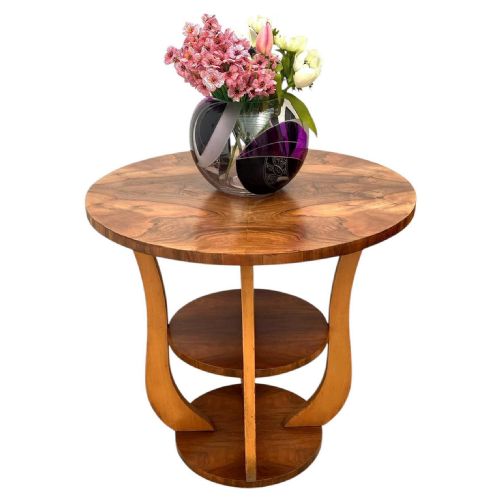
Art Deco pieces from the 1920s and 1930s display geometric lines, symmetry, and highly figured veneers without traditional revival ornamentation. They favour smooth polished surfaces.
These designs often incorporate contrasting timbers like sycamore alongside walnut to emphasise the modern aesthetic of the interwar period.
Where were lamp tables placed?
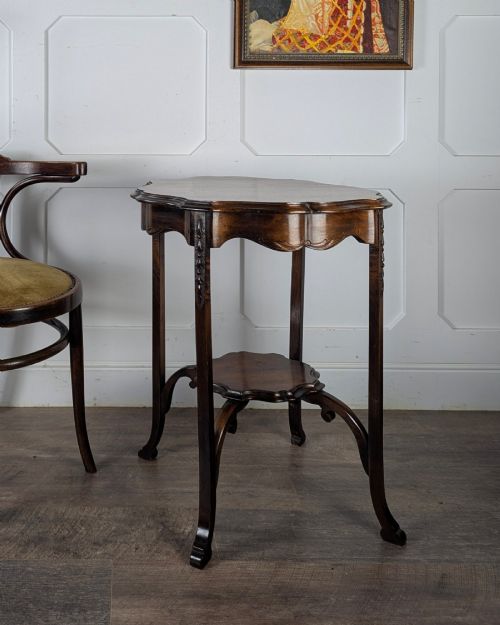
Lamp tables were positioned beside seating arrangements, beds, or in corners to hold portable lighting and small personal items. Their compact surface area suited domestic layouts.
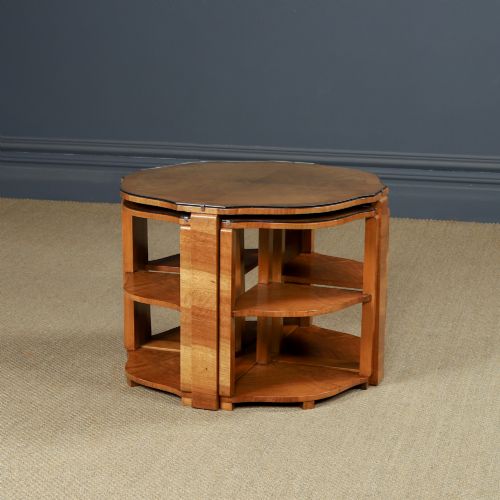
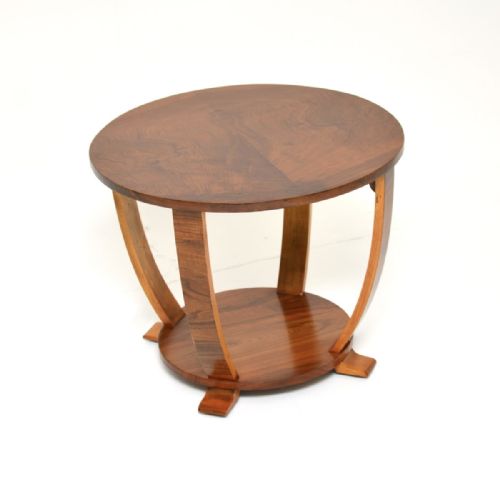
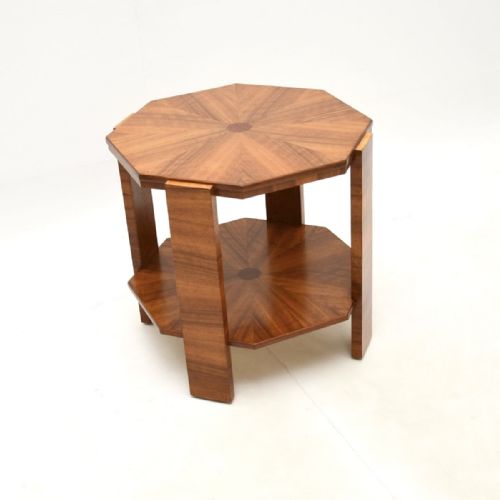
Common forms include square, round, octagonal, and nest configurations designed to tuck neatly into domestic spaces.
What is burr walnut?
Burr walnut is a specialised wood cut from the knotty growth of a walnut tree, yielding complex swirling grain patterns. It requires expert veneering due to its unstable nature.
Furniture makers reserved this decorative timber for the top surfaces of occasional tables and bedside chests to catch the eye.