
Antique Wooden Lamp Base
An antique wooden lamp base brings warmth and texture to a room, offering sturdy substance that modern resin or metal lighting lacks.
Antique Wooden Lamp Base
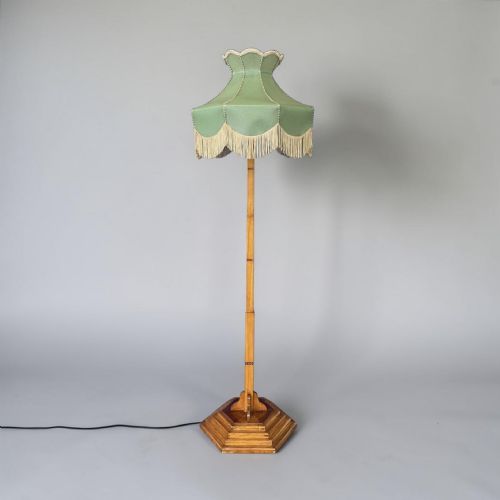
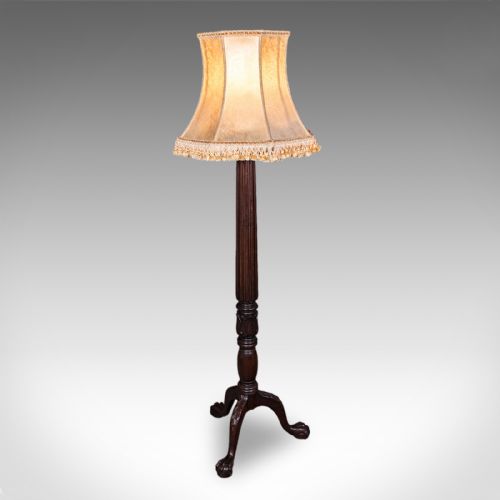
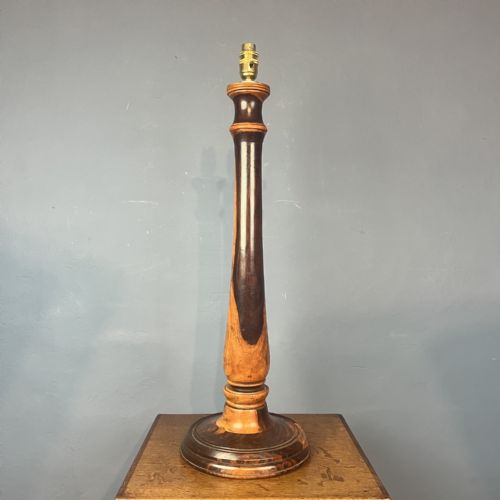
An antique wooden lamp base is a functional lighting fixture shaped from timber, ranging from small table models to tall floor-standing columns. When you search for this phrase, you encounter pieces converted from earlier items alongside originals made specifically to hold electrical wiring. The selection spans straightforward turned columns in oak or mahogany through to decorative carved interpretations in walnut and exotic hardwoods.
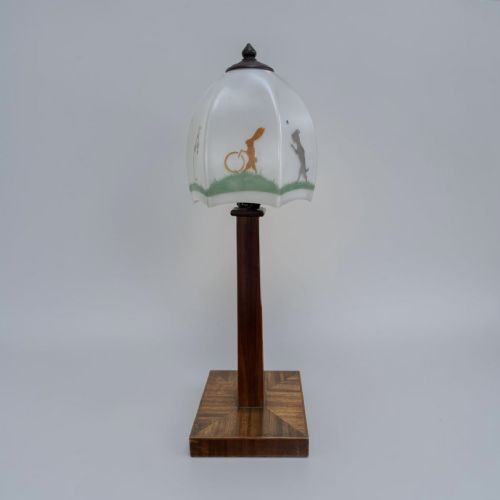
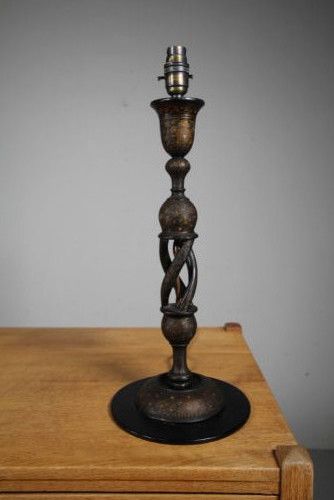
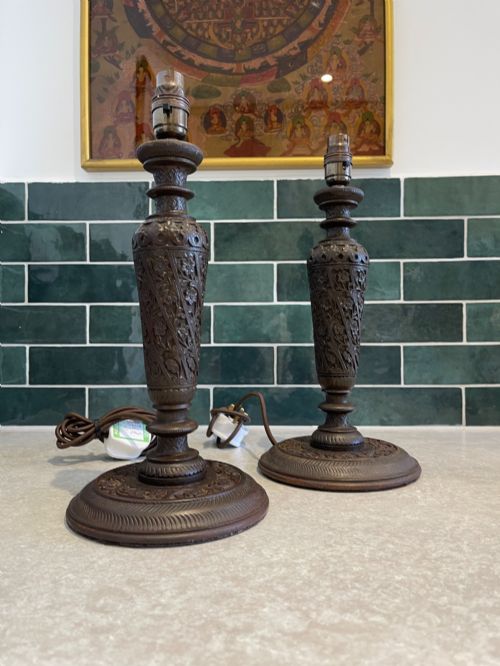
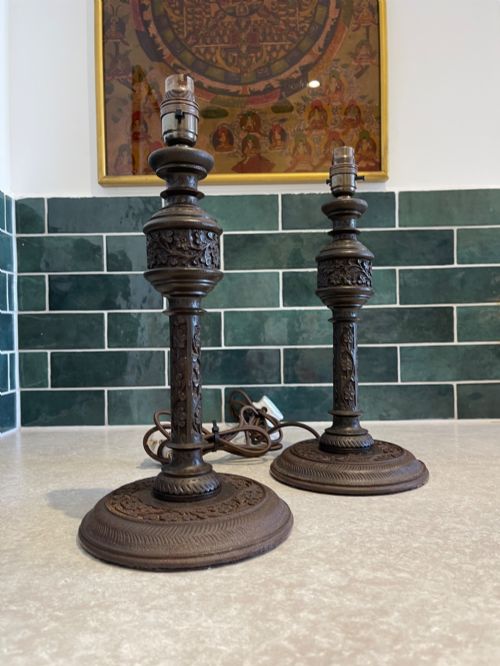
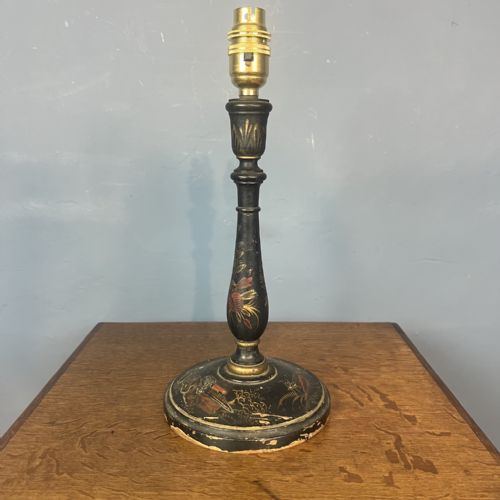
The most frequent examples on this page date from the Victorian and Edwardian periods, alongside standard lamps and table lamp bases from the 1920s and 1930s. You will also find regional variations including Kashmiri twist carvings, Chinoiserie lacquer finishes, and robust oak designs suited to English country interiors. Many retain traces of past use, shifting from candlesticks or architectural fragments into wired illumination over the decades.
Materials and construction methods
Craftsmen built these lamp bases from dense native and imported timbers, selecting oak, mahogany, walnut, and cherry for their grain and stability. Turning on a lathe created symmetrical columns and candlesticks, while skilled carvers added intricate foliage or twisted rope patterns by hand. Gilding, silver leaf, and paint often embellished the timber surface to catch the ambient candlelight or early electric light.
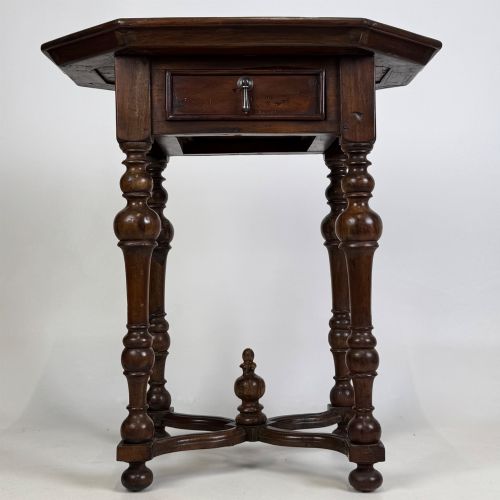
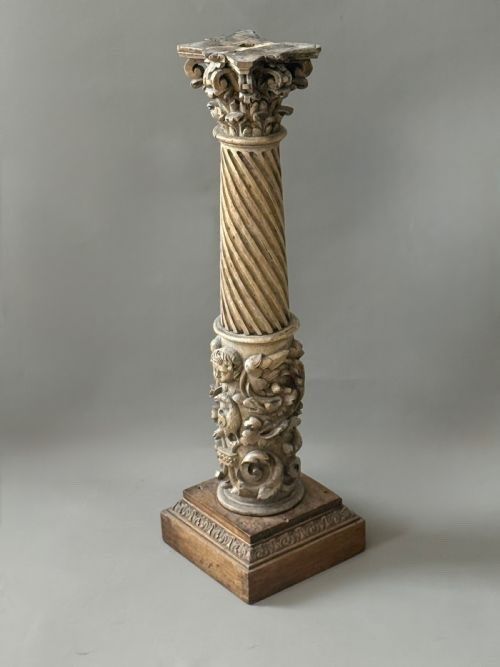
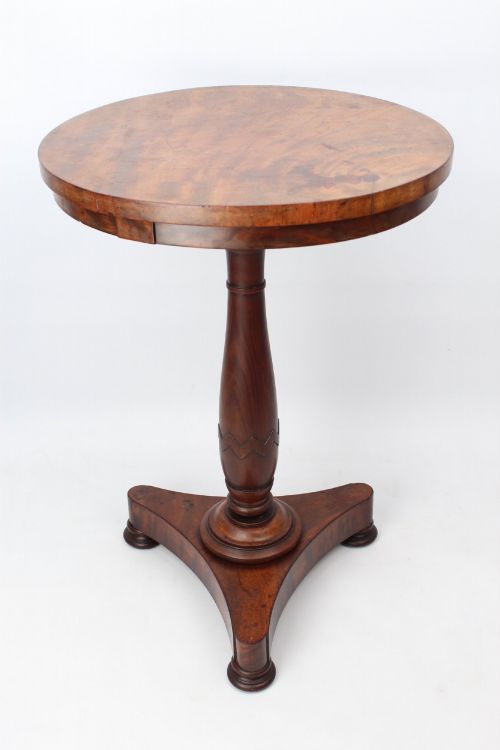
Many taller standard lamps and smaller table bases began life as other objects, such as wine tables, occasional tables, or architectural pillars. Joinery relied on traditional methods like mortise and tenon joints or solid turned threading to support the weight of the timber upright. Subsequent conversion for electricity involved channelling cords through the centre or running discreet wiring down the exterior.
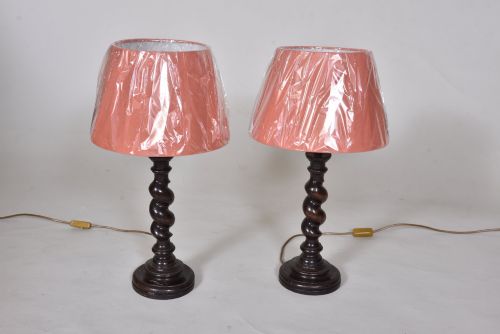
Root wood from China and turned Kashmiri twist columns demonstrate how global trade found its way onto Edwardian side tables.
Factors determining quality
The calibre of an antique wooden lamp base rests upon the choice of timber and the crispness of its hand-carving or turning. Dense, well-figured mahogany or richly patinated oak displays a depth of grain that plain, factory-turned softwood simply cannot match. Superior proportions ensure the base remains stable on the floor or table, supporting the weight of a shade without a precarious centre of gravity.
Original surface finishes heavily influence the standing of a piece, whether that involves undisturbed French polish, aged giltwood, or authentic Chinoiserie lacquer. Examples that retain their original architectural integrity, rather than clumsy modern alterations, demonstrate superior craftsmanship. The harmony between the turned wooden body and any applied metal mounts or original bases marks the difference between basic utility and fine decorative art.
Holland and Sons
The Antique Wooden Lamp Base Glossary
- Standard lamp
- A tall floor-standing lamp base designed to illuminate a room from a corner or beside a piece of furniture. These frequently feature heavy tripod bases or weighted circular platforms for stability.
- Turned wood
- Timber shaped on a lathe by rotating it against cutting tools to produce symmetrical profiles such as columns, balusters, and spindles. This technique appears widely on Victorian and Edwardian table lamps.
- Chinoiserie
- European decorative style reflecting Chinese artistic influences, often featuring hand-painted lacquer work on wood. This finish turns up on early twentieth-century table and standard lamps.
- Lignum vitae
- An exceptionally dense, heavy wood derived from tropical trees, prized for its dark colour and durability. Victorian makers utilised this material for robust table lamps.
- Giltwood
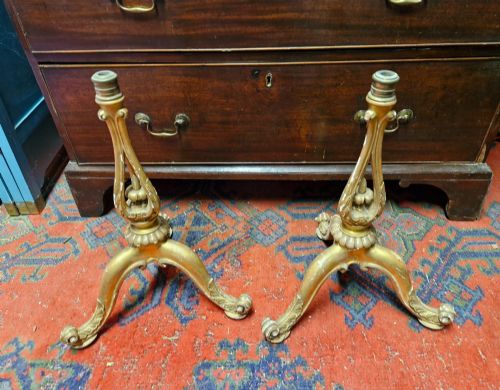
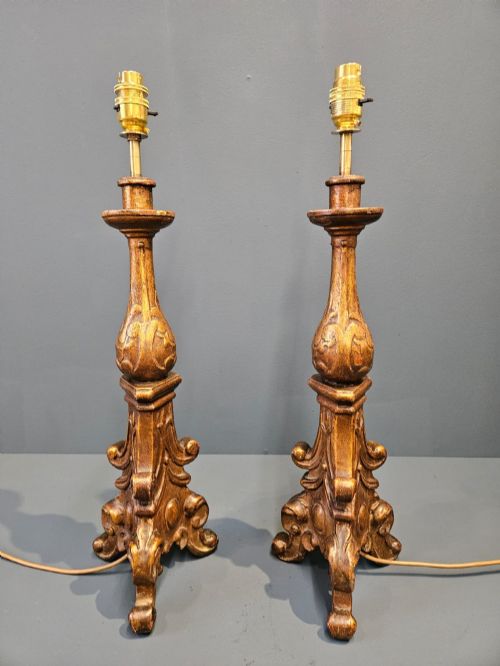
- Wood that has been coated with a thin layer of gold leaf or gilt paint to create a lustrous decorative surface. This treatment appears on nineteenth-century tripod bases and standard lamps.
Antique Wooden Lamp Base: Frequently Asked Questions
How do I wire an antique wooden lamp base safely?
Most older wooden bases require modern rewiring to meet current electrical standards. A professional electrician can thread modern cord through the existing channel or update internal components without damaging the historic timber.
Felt pads added to the underside protect both the wiring and your furniture surface. Ensure the bulb wattage matches the heat tolerance of the historic socket and shade.
Were these always electric lamps?
Many older wooden bases started life as candlesticks, wine tables, or architectural columns before conversion to electricity. Heavier pieces often underwent adaptation during the late nineteenth or early twentieth centuries as electric lighting became common.
Examining the base and column reveals whether a central channel was built into the original design or bored out during a later conversion.
How do I date a wooden lamp base?
Dating relies on timber selection, turning styles, and surface finish rather than internal electrical parts. Regency and William IV pieces display rich mahogany grains and robust classical proportions, while Art Deco and 1920s examples favour streamlined forms or limed oak.
Comparing the turned motifs and decorative details to known furniture styles from the same decade confirms the likely era of manufacture.
How do I care for antique wood?
Keep wooden lamp bases away from direct sunlight and sources of extreme heat to prevent the timber from drying out and splitting. Dust regularly with a soft, dry cloth and apply a quality beeswax sparingly to nourish the polished surface.
Avoid liquid polishes containing silicone, which can penetrate historic finishes and build up a cloudy residue over time.