
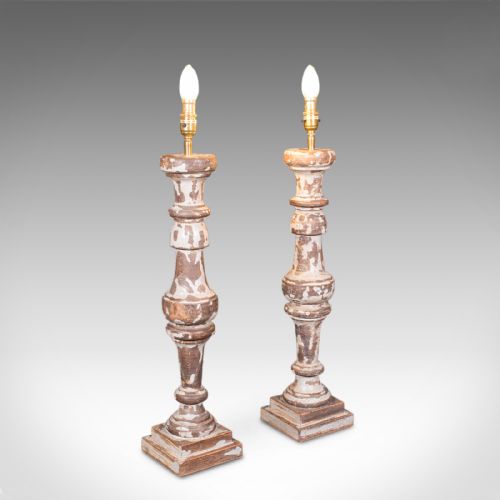


Painted Column Lamp Base
A painted column lamp base brings colour and upright form to a room, spanning periods from the Victorian era through the 1930s.
Painted Column Lamp Base
A painted column lamp base is an upright lighting support shaped in architectural or turned forms, finished with decorative pigment. These pieces combine vertical presence with surface pattern, drawing the eye in spaces where simpler lighting lacks character.
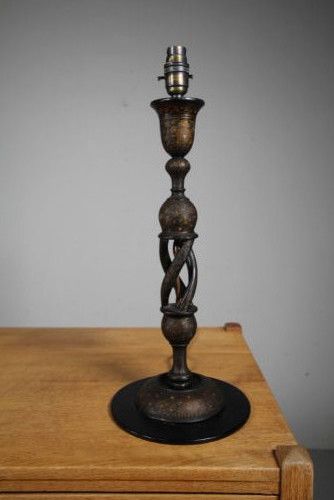
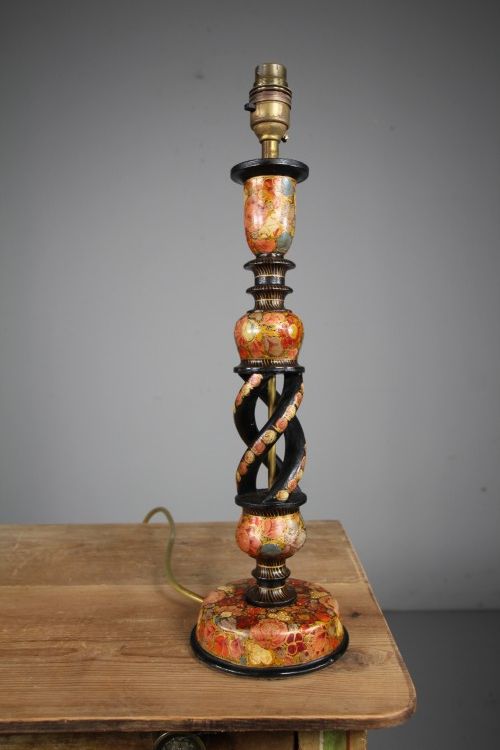
The selection here encompasses items from the Victorian period up to the 1930s, alongside nineteenth-century examples. Forms range from tall Kashmiri twists to English pine bases and oil lamp conversions.
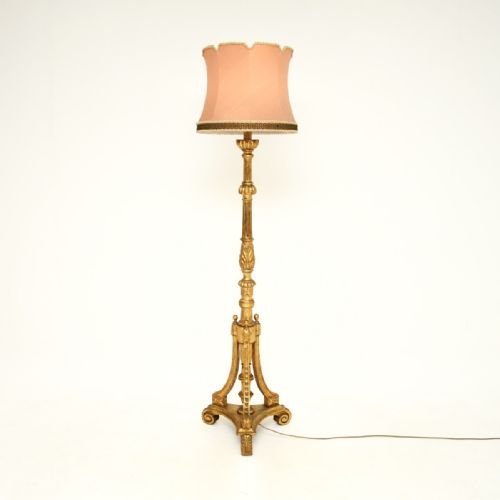
Buyers will encounter distinct stylistic treatments including Chinoiserie lacquer, Anglo-Indian work, French Country pieces, and Neoclassical columns. Most examples function as table lamps, though floor-standing variations also appear.
How they were made
Wood serves as the primary substrate, utilised in carved, turned, and solid forms including pine and gilt wood. Artisans shaped these timbers into slender columns before applying layers of paint, lacquer, or gilt.
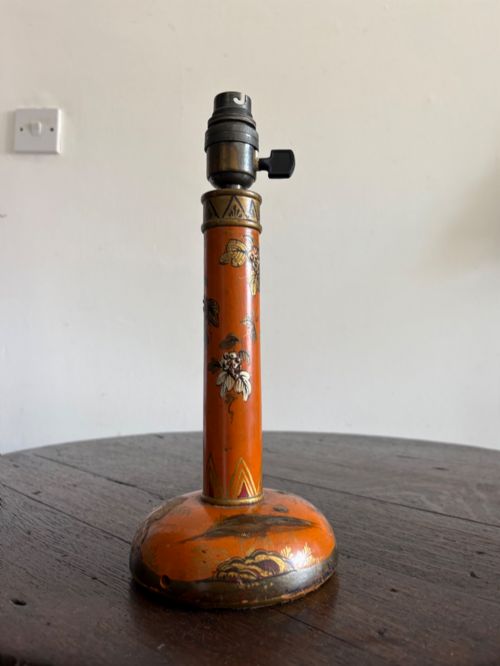
Surface decoration relies on hand-painted motifs, often featuring lacquered finishes in colours such as mandarin orange and cream. Brass components frequently provide structural mounts or fittings, whilst papier-mache and glass appear in specific construction details.
Mandarin orange lacquer brightens a 1920s room.
What varies in quality
The finesse of the hand-painted decoration determines the visual impact of each column, distinguishing hurried work from detailed artistic execution. Lacquer depth and the preservation of original pigments carry significant weight in how the piece reads aesthetically.
The integrity of the turned wood column and its stability on a surface dictate the structural merit of the base. Materials such as brass hardware and the application of gilt or lacquer layers further separate standard utility pieces from finer decorative examples.
The Painted Column Lamp Base Glossary
- Chinoiserie
- European interpretation of Chinese and East Asian artistic traditions, often featuring painted lacquered scenes on furniture and lamp bases.
- Lacquer
- A durable resinous finish applied in multiple coats and polished to a hard sheen, frequently seen in brightly coloured decorative objects.
- Gilt wood
- Timber treated with gold leaf or metallic powder to create a lustrous golden surface, characteristic of nineteenth-century decorative pieces.
- Neoclassical
- A style drawing inspiration from classical antiquity, reflected here in orderly column forms and balanced proportions.
- Oil lamp
- A lighting vessel utilising oil before later conversion to electricity, providing a robust metal or ceramic reservoir and columnar body.
Painted Column Lamp Base: Frequently Asked Questions
What periods do these lamp bases come from?
The pieces span from the late nineteenth century through to the 1930s, including Victorian and early twentieth-century examples.
This broad timeline incorporates distinct decades such as the 1870s, 1880s, 1890s, 1910s, and 1920s.
Are these lamp bases wired for modern use?
Many examples have been rewired to accommodate contemporary electrical standards while retaining their historic appearance.
Buyers should inspect individual listings to confirm the current wiring status of each lamp base.
What materials were used to make them?
Construction primarily involves wood, including carved pine, gilt wood, and turned timber structures finished with paint or lacquer.
Additional materials include brass mounts, glass components, and papier-mache details depending on the specific origin and style.
How do I identify different styles?
Styles range from Neoclassical architectural columns to Anglo-Indian and Kashmiri twist designs, alongside Chinoiserie lacquer work.
Examining the surface motifs, paint colours, and turning patterns helps distinguish between regional workshops and Victorian manufacturing.