


Painted Desk Lamp Base
A painted desk lamp base brings colour and pattern to a workspace, offering period illumination through hand-decorated porcelain, wood, and lacquer.
Painted Desk Lamp Base
A painted desk lamp base serves as a decorative source of light, taking the form of converted vases, ginger jars, and traditional table lamps. When searching for a painted desk lamp base, buyers encounter various historical styles ranging from Victorian ceramic designs to early twentieth-century Kashmiri pieces.
The selections span multiple eras, including the eighteenth and nineteenth centuries, alongside Art Deco and Edwardian periods. Many examples utilise orientalist motifs, such as Chinese Famille Verte and Japanese Imari patterns, adapted into functional lighting.
Vessels originally created for other purposes, such as Delft vases and Chinese baluster jars, frequently form the basis of these items. These converted pieces provide historical character and distinct visual motifs for modern interiors.
Materials and construction techniques
Construction relies on rigid traditional materials, combining porcelain, brass, wood, and papier-mâché into sturdy structural forms. Artisans applied surface decoration using lacquer, cold painting, and hand-painted glazes, often incorporating gilt gold details onto ceramic or wooden bodies.
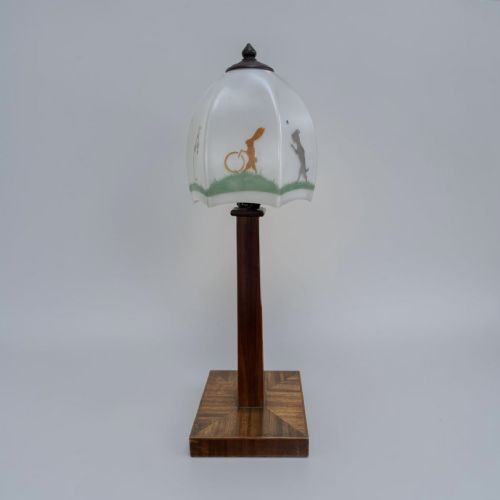
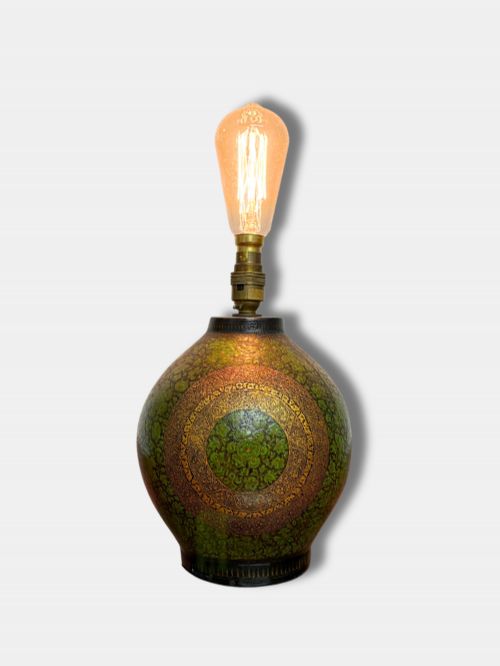
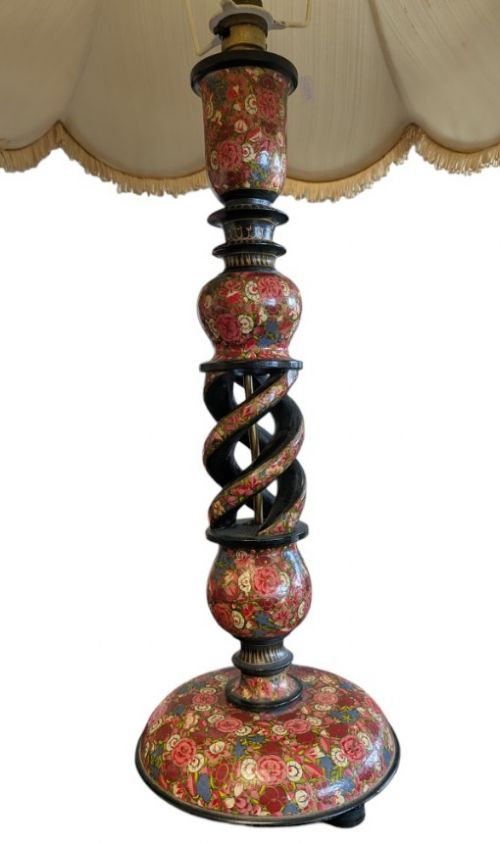
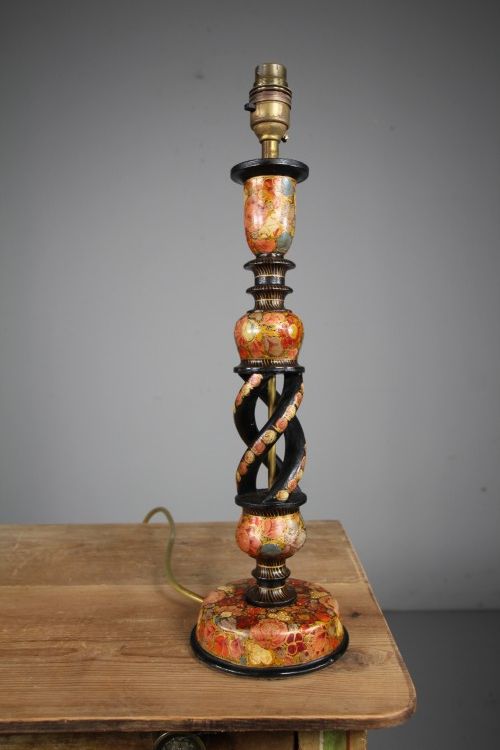
Many items incorporate metal mounts in brass or ormolu to secure the lamp holder and wiring components. Craftsmanship varies from delicate hand-painted cream Kashmiri surfaces to vibrant Art Deco faience and opaline glass.
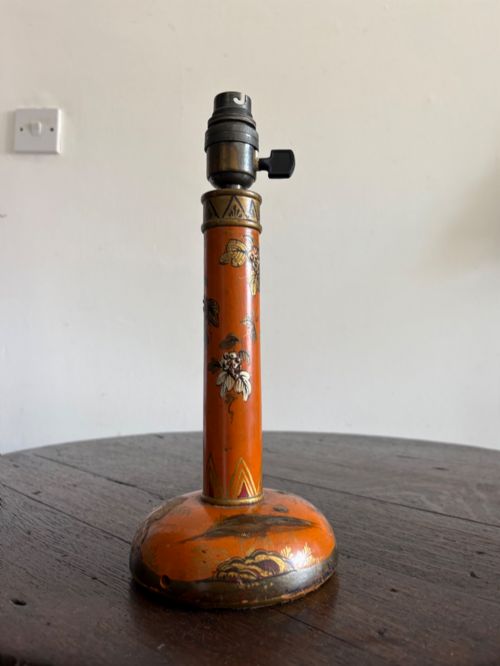
A mandarin orange lacquer finish from the 1920s brings surprisingly vibrant fruit tones to a quiet desk.
Distinctions in craftsmanship and condition
Quality depends upon the execution of the hand-painted decoration and the preservation of the original surface finish. Finer examples display precise brushwork, rich colour retention, and intact lacquer or gilding without heavy restoration.
The integrity of the underlying material, whether porcelain, bronze, or turned wood, dictates the overall durability and balance of the object. Converted vessels demonstrate superior quality when the conversion preserves the structural harmony of the original piece.
The Painted Desk Lamp Base Glossary
- Chinoiserie
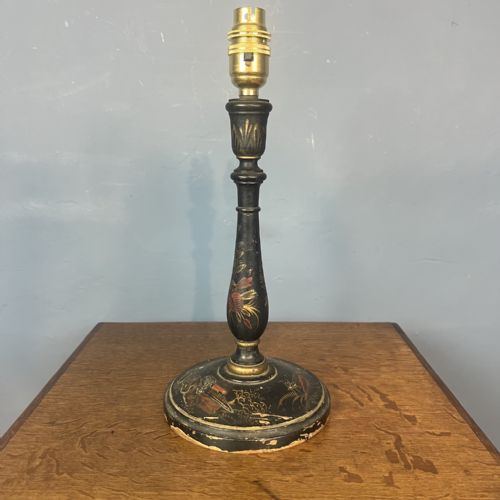
- European decorative style reflecting Chinese artistic influences, frequently seen on lacquered lamp bases from the Edwardian period.
- Famille Verte
- Chinese porcelain palette dominated by green enamel colours, often utilised on nineteenth-century vase lamps.
- Opaline glass
- A delicate, translucent glass developed during the nineteenth century, valued for soft pastel tones in Victorian lighting.
- Kashmiri
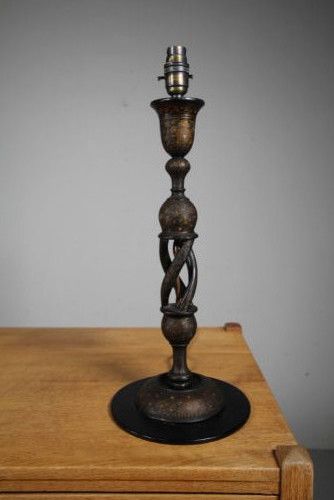
- Items originating from Kashmir featuring intricate hand-painted floral and twist wooden designs, prominent in early twentieth-century pieces.
- Tole peinte
- Painted sheet metal decorativeware popular during the Victorian era, offering durable coloured surfaces for lighting fixtures.
Painted Desk Lamp Base: Frequently Asked Questions
How are old lamp bases wired safely?
Many antique bases have been rewired with modern electrical components to meet current safety standards while retaining their historic bodies.
Buyers should inspect the cord and lamp holder to confirm the installation suits their domestic setup.
Can I use modern lamp shades?
Standard modern lamp shades fit most vintage bases provided the harp and fitter size match the threaded lamp holder.
Proportions remain key when pairing a contemporary shade with an antique ceramic or wooden body.
What periods do these bases come from?
The available inventory spans from the seventeenth century through to the Art Deco period of the 1930s.
Victorian and early twentieth-century pieces represent the most common eras encountered in these listings.
How do I identify a converted vase?
Converted vase lamps feature drilled holes for electrical cords near the base and fitted metal hardware at the neck.
These alterations allow traditional ginger jars and porcelain vases to function as stable table lighting.