




Indian Brass Coffer
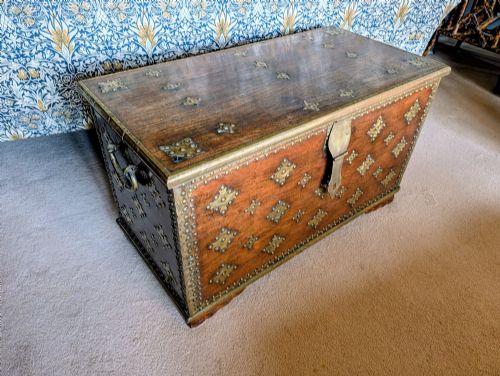
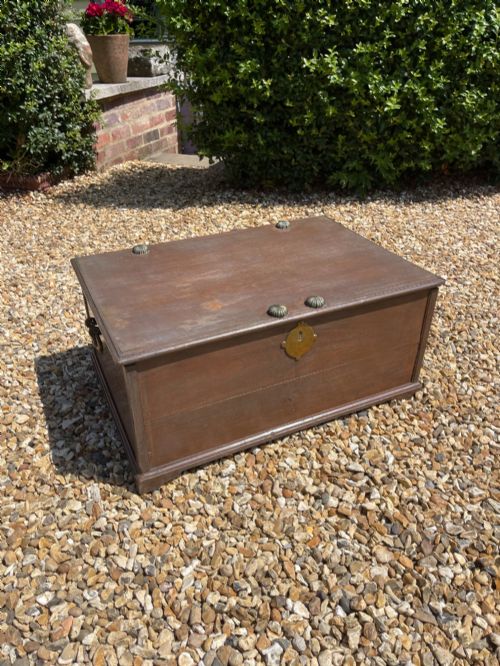
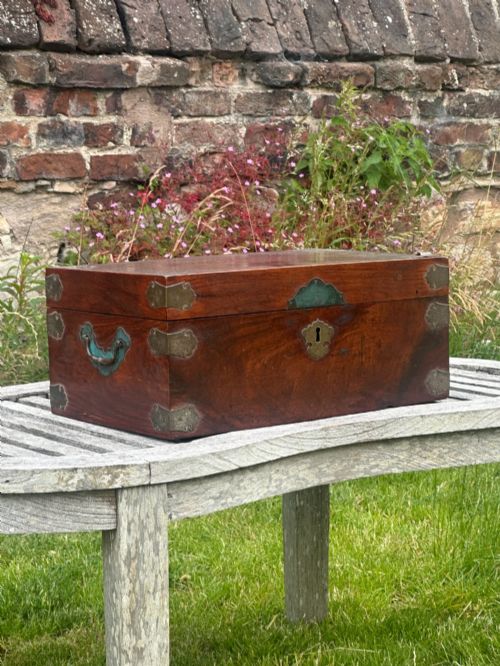
An indian brass coffer is a robust, metal-bound storage chest built for travel or trade, combining dense tropical timbers with striking brass decoration.
Indian Brass Coffer
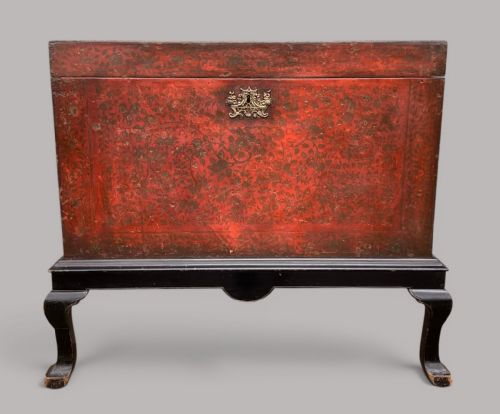
When you examine an indian brass coffer, you are looking at utilitarian storage trunks and blanket boxes adapted for colonial life, trade, and military campaigns during the nineteenth century. These vessels range from heavy merchant trunks and Zanzibar trade chests to campaign chests and miniature display boxes.
The most common examples on this page are nineteenth-century pieces reflecting Anglo-Indian, Victorian, and colonial styles. They serve as practical furniture for modern interiors while retaining the distinct character of historical long-distance transport containers.
How they were made
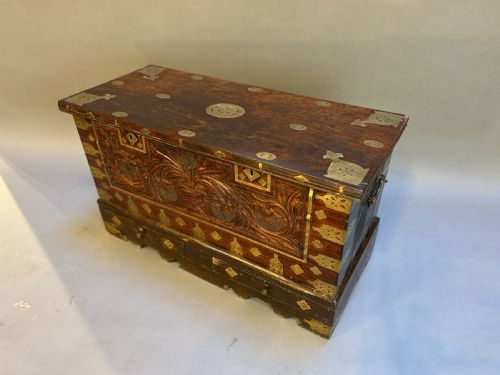
Craftsmen built these pieces using durable tropical hardwoods such as teak, padouk, camphor wood, rosewood, and satinwood, selected for their resilience against humidity and pests. These heavy timbers were joined with sturdy structural framing to withstand demanding journeys.
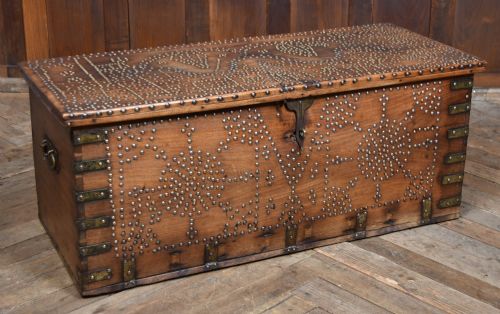
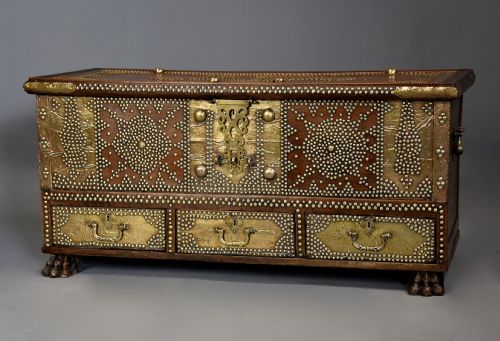
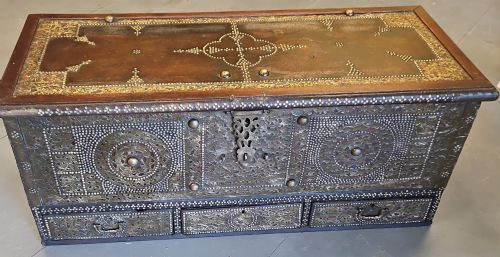
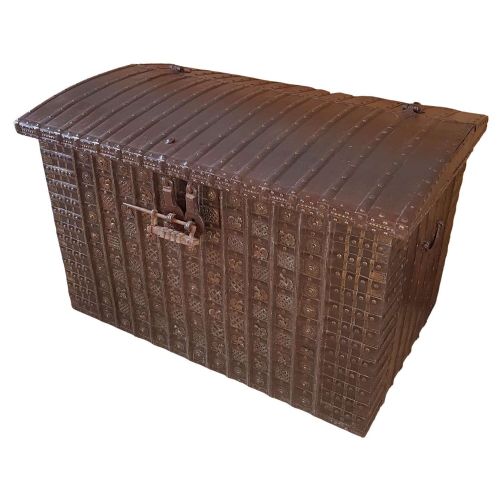
Makers reinforced the bodies with iron banding and elaborate brass stud or strap work decoration to protect corners and edges from heavy handling. This metalwork also formed intricate geometric patterns across the exterior surfaces.
Listings feature eighteenth and nineteenth-century pieces constructed from teak, camphor wood, padouk, rosewood, and iron-banded hardwoods.
What varies in quality
The standard of execution lies in the density of the brass studding, the complexity of the strap work, and the choice of primary timber. Dense padouk and rosewood command attention over simpler utility woods, while meticulous hand-chased brass detailing elevates an ordinary box into a piece of fine decorative art.
Proportion and original hardware integrity dictate the standing of a piece. Retaining working locks, keyplates, and intact internal compartments separates everyday utilitarian trunks from superior merchant and campaign examples.
The Indian Brass Coffer Glossary
- Campaign chest
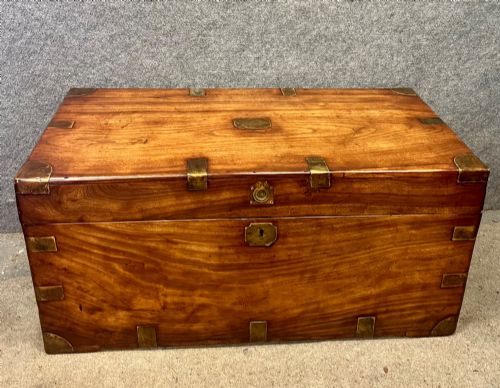
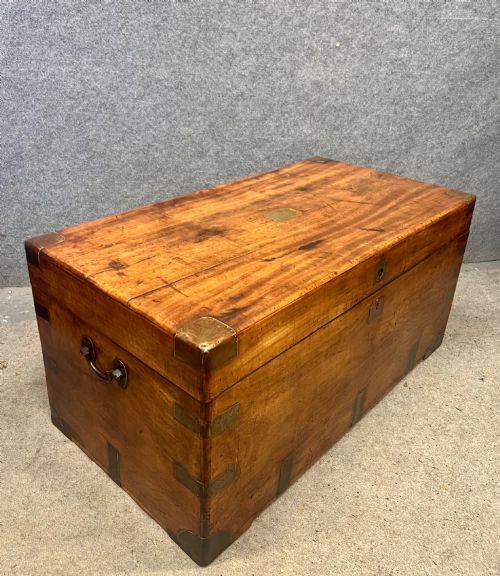
- A modular storage chest designed to split into sections for military transport during the nineteenth century. These units utilised recessed brass handles and corner brackets to prevent damage during transit.
- Zanzibar chest
- A heavily decorated merchant trunk originating from or influenced by East African trade routes, characterised by brass studding and strap work. They often featured internal secret drawers for valuables.
- Cellarette
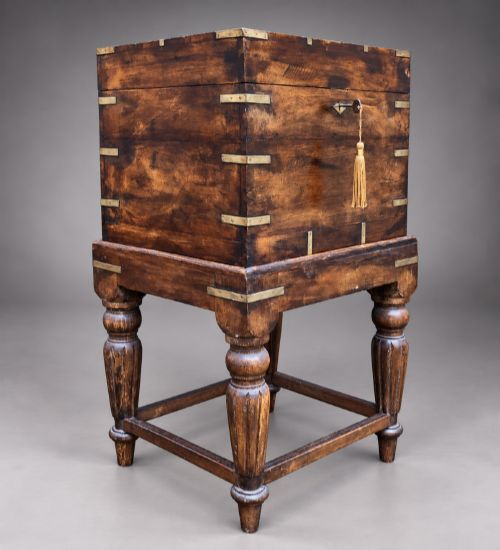
- A specialised lockable container designed for holding wine bottles and decanters. In colonial settings, these were frequently raised on stands for ease of access.
- Damchiya
- A traditional dowry chest originating from Rajasthan, typically featuring intricate iron banding and low relief carving. These functioned as ceremonial storage for household textiles and valuables.
- Padouk
- A heavy, durable tropical hardwood valued for its deep reddish-brown tone and resistance to decay. It formed the primary structure for many high-grade colonial chests.
Indian Brass Coffer: Frequently Asked Questions
What is an indian brass coffer used for?
These pieces served originally for transporting personal belongings, trade goods, and military gear across land and sea. Today, they function well as living room coffee tables, blanket storage boxes, or hallway feature furniture.
Their robust construction and deep internal cavities provide practical concealed storage for modern homes while displaying historical craftsmanship.
How do I identify a Zanzibar chest?
Zanzibar chests are identified by their dense brass stud decoration, elaborate metal strap work, and often a prominent central drawer beneath the main lid. They typically utilise tropical hardwoods like teak or rosewood.
These pieces reflect maritime trade connections and carry a distinctive visual weight compared to standard domestic blanket boxes.
What wood were these chests made from?
Makers utilised durable tropical timbers available in the regions of production, most commonly teak, padouk, camphor wood, and rosewood. Camphor wood was particularly favoured for blanket boxes due to its natural insect-repellent properties.
Each timber offered specific structural benefits suited to humid climates and rough transport conditions.
Are campaign trunks antique?
The authentic examples catalogued here date primarily from the nineteenth century, spanning the Victorian era and earlier colonial periods. Their construction methods, hardware types, and timber ageing confirm their antique status.
Unlike modern reproductions, genuine period pieces display hand-beaten brasswork and traditional joinery consistent with nineteenth-century workshop practices.
How should I care for a brass bound chest?
Maintain the timber by applying appropriate natural wax periodically to prevent the tropical hardwood from drying out in centrally heated rooms. Avoid abrasive cleaners on the brass elements to preserve their historical patina.
Gentle dusting and stable indoor humidity levels ensure the wood and metalwork remain secure over time.