
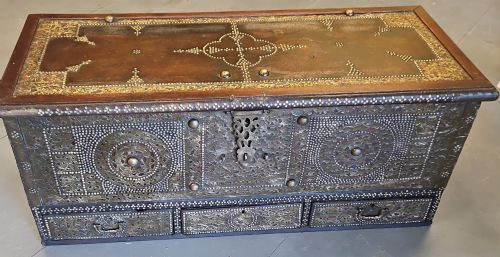
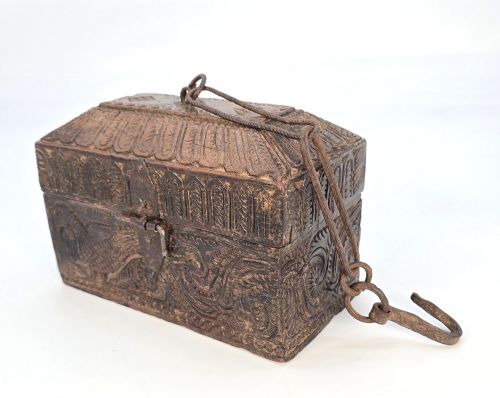


Dark Teak Chest
These dark teak chest pieces are substantial boxes and cabinets built for travel and storage, bringing dense colonial grain and heavy metal mounts into a modern room.
Dark Teak Chest
When you search for a dark teak chest, you encounter a robust mix of trunks, blanket boxes, cellarettes, and filing cabinets spanning the eighteenth, nineteenth, and early twentieth centuries. These forms reflect global trade and colonial administration, originating from regions such as India, Zanzibar, and Dutch colonies.
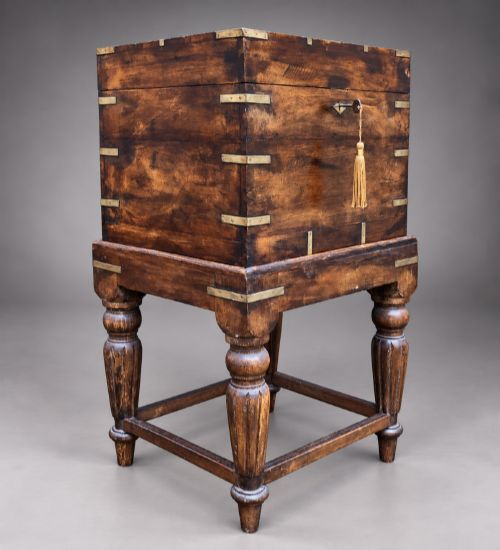
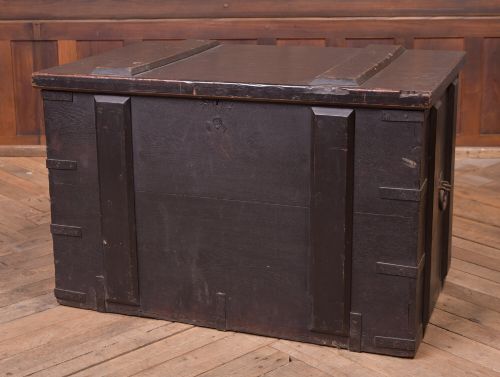
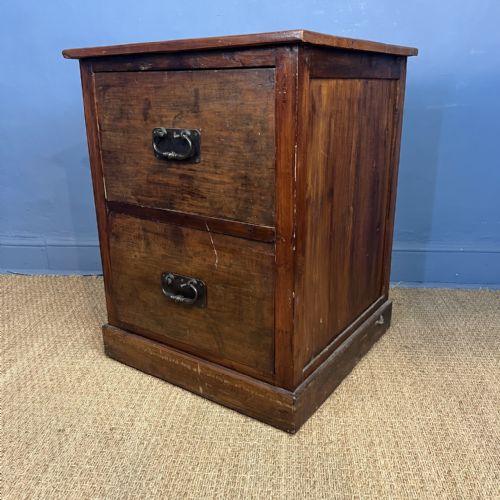
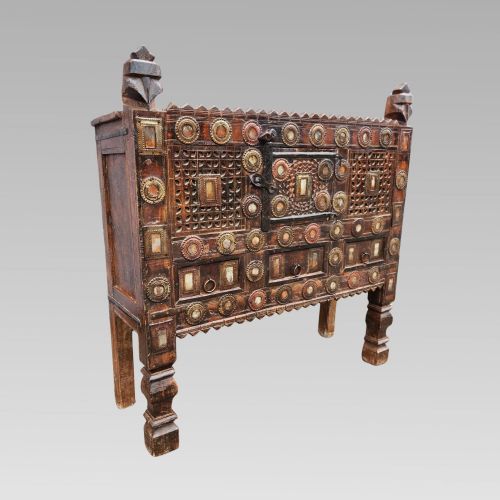
The most common examples on this page are nineteenth-century storage trunks and nineteenth-century Indian chests, often fitted with brass mounts or iron strapping. You will also find rarer specialised forms, including wine cellarettes on stands, dowry cabinets, and multi-drawer filing units.
Origin styles range from Anglo-Indian and Victorian Colonial to Dutch Colonial and Zanzibar designs, demonstrating how local cabinetmakers adapted European requirements to native hardwoods. Each piece served a practical purpose in transit or domestic storage before finding its way into the antiques market.
How they were made
Cabinetmakers built these pieces primarily using dense teak and padouk timbers, selected for their ability to withstand tropical humidity and hard travel. These primary hardwoods provided a stable carcass capable of taking deep carving and housing heavy metal reinforcement.
Workshops reinforced the joints and corners with brass banding, studded ironwork, and wrought iron straps to protect the timber during transport by sea or carriage. Internal configurations varied widely, from open storage wells for blankets to fitted partitions for wine bottles or small drawers for documents.
Listings feature pieces spanning the eighteenth century through to nineteen-twenty, utilising teak, padouk, brass, and iron across colonial and folk art styles.
What varies in quality
The distinction between ordinary utility items and exceptional pieces lies in the crispness of the carving, the integration of the brass or iron hardware, and the preservation of the original surface. Master workshops employed finer detail work on panels and mouldings, while standard campaign or storage trunks prioritised thick timber and sturdy straps over ornament.
Proportion and structural integrity dictate the standing of a piece within its type. Examples that retain their original stands, matching metal fittings, and unblemished timber surfaces command greater interest than those altered or stripped down over generations of use.
The Dark Teak Chest Glossary
- Teak
- A dense, durable tropical hardwood with a high oil content that darkens with age and exposure to light.
- Cellarette
- A specialised cabinet or box designed to store bottles of wine or spirits safely, often raised on a stand.
- Zanzibar chest
- A heavy storage trunk characterised by brass studding, strapwork, and a distinct arched lid with a secret compartment.
- Campaign chest
- Portable furniture built in sections with recessed brass carrying handles, designed for military officers on the move.
- Damchiya
- An ornate Indian dowry chest featuring deep relief carving and small storage compartments behind a drop front.
Dark Teak Chest: Frequently Asked Questions
What is a dark teak chest used for?
These pieces serve primarily as statement storage furniture in living rooms, hallways, or bedrooms. Their deep interiors accommodate blankets, linens, or bulky items while providing a flat surface on top.
Smaller variants function as side tables, cocktail cabinets, or bedside storage. Their robust construction makes them practical for daily domestic use.
Where were campaign chests made?
Campaign chests were manufactured in Britain, Europe, and colonial workshops in India and Southeast Asia for military officers and administrators. Workshops constructed them in modular sections so they could travel easily on horseback or ship.
They rely on flush brass handles and corner brasses to prevent snagging during transit. The timber used is frequently teak or padouk to resist warping in tropical climates.
How do I care for antique teak?
Maintain antique teak by keeping it away from direct heat sources and sudden temperature shifts that can dry out the timber. Dust the surface regularly with a dry, soft cloth and avoid silicone-based polishes.
Apply a light application of appropriate furniture wax occasionally to nourish the wood grain. This preserves the natural dark patina built up over centuries.
What is an Anglo-Indian chest?
An Anglo-Indian chest combines traditional British furniture forms with Indian carving techniques and native timbers. British commissioners and local craftsmen collaborated to produce pieces that met colonial needs using regional aesthetics.
These items often display intricate floral relief carving, brass banding, and complex internal drawer arrangements. They represent a distinct period of cultural and stylistic exchange.