


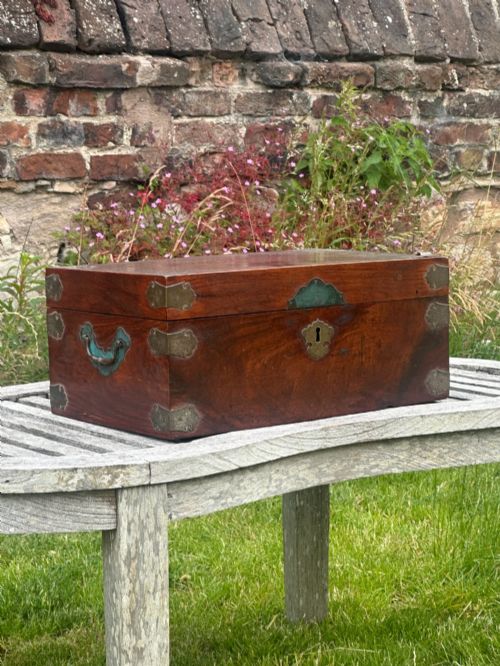
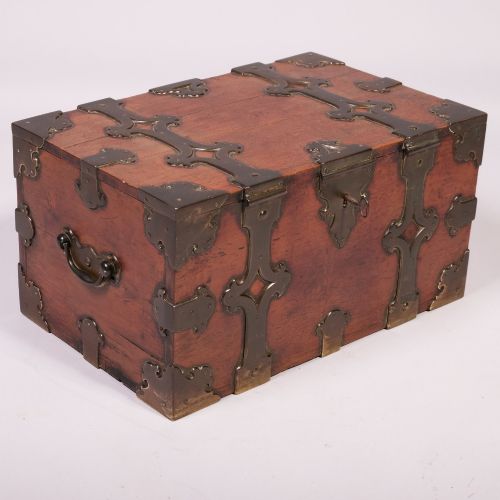
Colonial Brass Trunk
These colonial brass trunks are sturdy travel chests built for distant journeys, offering robust storage and rich historical character for the modern interior.
Colonial Brass Trunk
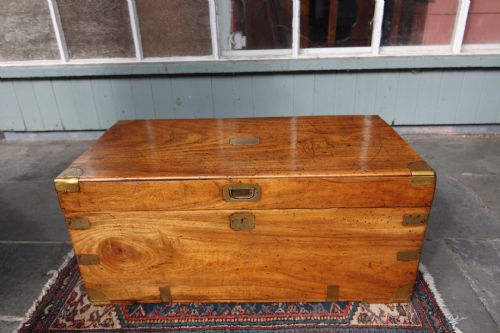
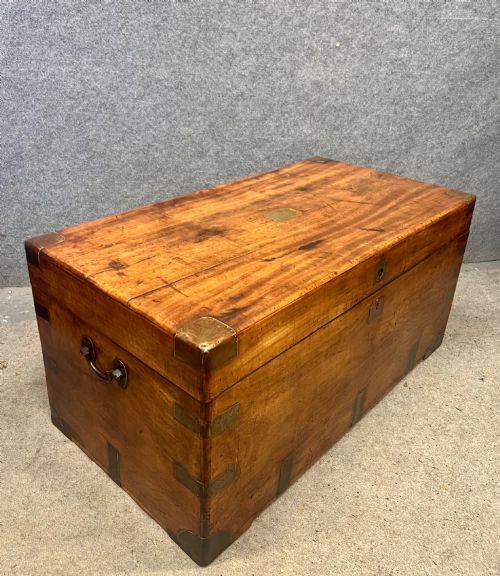
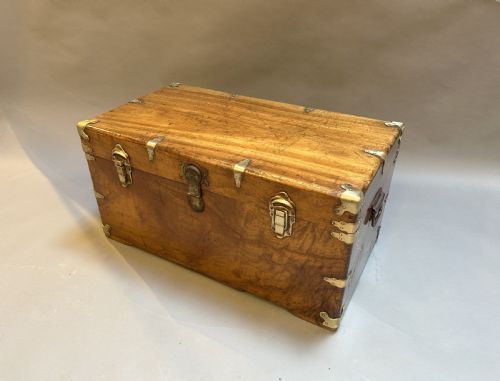
A colonial brass trunk is a heavy timber storage chest fitted with protective metal mounts, corner braces, and strapwork designed to endure long journeys by sea and land. When you search for this phrase, you encounter forms ranging from blanket boxes and deed boxes to compartmentalised campaign chests originating from British, Dutch, and Portuguese trade routes.
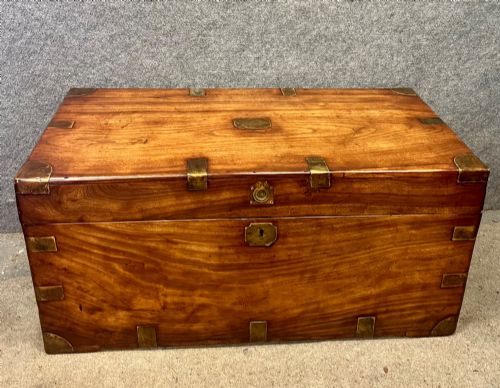
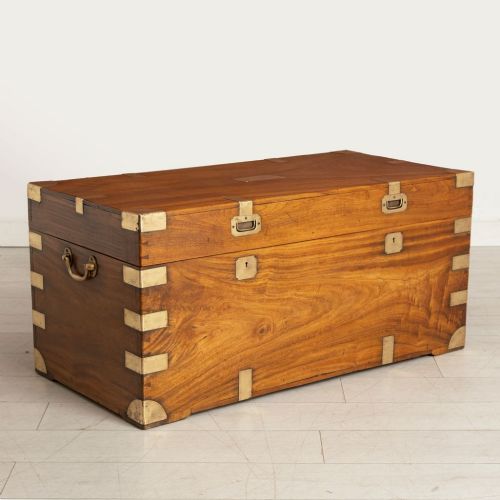
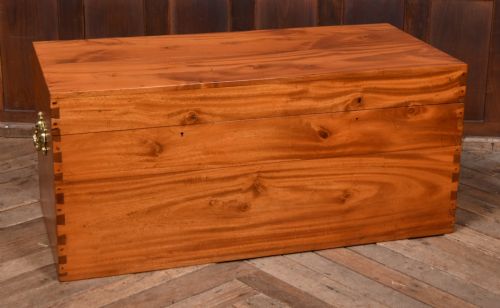
The versions most frequently seen on this page date from the nineteenth century, particularly the Victorian period, constructed in dense tropical hardwoods such as camphor wood and teak. These pieces combine utilitarian military design with decorative brass work, often featuring hinged lift-up lids, drop handles, and fitted interiors.
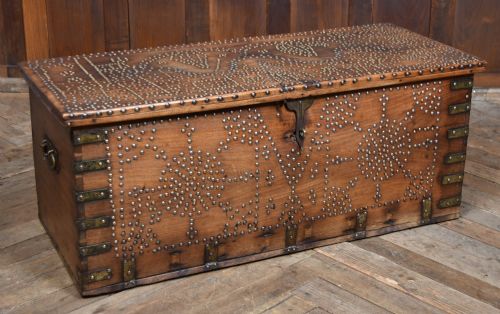
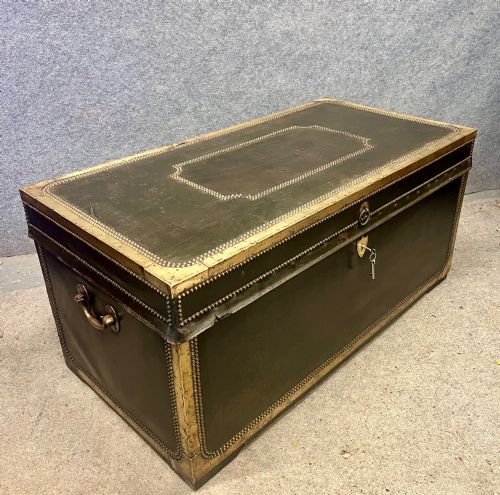
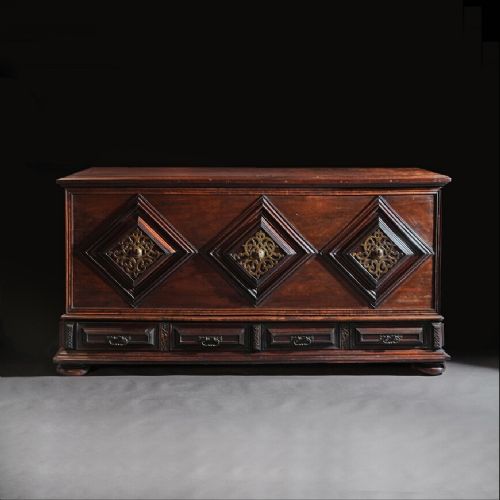
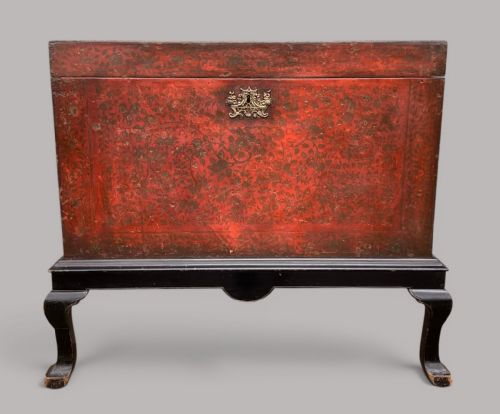
Earlier examples extend back to the seventeenth and eighteenth centuries, showing Spanish, Portuguese, and Dutch colonial influences with walnut, padouk, or leather-covered surfaces. These functional chests served merchants, military officers, and travellers across global stations before finding a permanent place in contemporary homes as coffee tables or statement storage furniture.
Materials and construction
Makers utilised durable tropical timbers like camphor wood, teak, padouk, and ebony because these woods resisted humidity, warping, and insect damage during transport. Camphor wood remains prized for its aromatic qualities, which naturally protected stored textiles from moths and dampness.
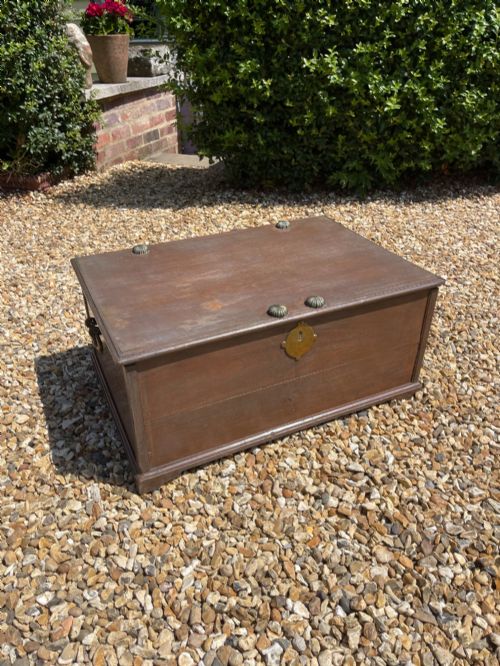
Brass formed the primary metalwork for reinforcement, appearing as heavy corner plates, strapwork, side carrying handles, and secure lock plates fastened with numerous small tacks or screws. Iron strapping and leather coverings also appear on specific regional variants to provide additional structural rigidity against rough handling.
Construction techniques prioritised portability and strength, frequently employing two-part sectional designs for military campaign chests so officers could dismantle them easily. Dovetail joints and robust internal framing ensured the timber boxes could bear immense weight on long voyages.
Some nineteenth-century camphor chests still retain the faint, distinct herbal aroma of distant maritime trade routes.
Judging quality and distinction
Quality rests heavily on the integrity of the primary timber and the complexity of the internal configuration, such as hidden drawers, trays, and original brass fittings. Superior pieces display dense, unblemished hardwoods with tight joinery that has survived decades of movement without major structural compromise.
The craftsmanship of the metalwork separates standard utility boxes from exceptional examples, with heavier gauge brass, intricate hand-engraved corner mounts, and original operational locks indicating higher status commissions. Retained original surface patination on both the wood and the brass hardware adds significantly to the character and authenticity of the piece.
The Colonial Brass Trunk Glossary
- Campaign trunk
- A portable storage chest designed for military officers or travellers, often featuring recessed brass handles and sectional construction for ease of transport.
- Camphor wood
- A fragrant tropical timber commonly used for colonial chests because its strong natural scent deters insects and protects stored garments.
- Brass bound
- Describes a wooden chest reinforced with brass straps, corner pieces, and plates to protect the edges and corners from impact during transit.
- Zanzibar chest
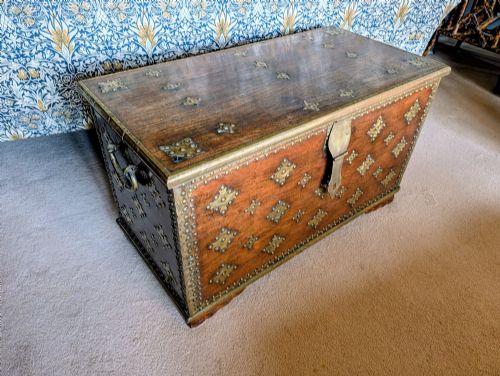
- A distinct type of heavily ornamented colonial chest featuring brass studwork, intricate plate mounts, and partitioned interiors, associated with East African and Indian trade routes.
- Coffer
- A large, sturdy box traditionally used for holding valuables, money, or precious documents, usually fitted with a hinged lid.
Colonial Brass Trunk: Frequently Asked Questions
What were colonial brass trunks used for originally?
These trunks served as durable travel luggage for military officers, diplomats, and merchants journeying across colonial territories. They protected clothing, documents, and valuables from moisture, dust, and rough handling during lengthy sea voyages.
Inside the home or camp, they doubled as writing desks, storage depositories, and even makeshift furniture. Their robust construction ensured that personal possessions remained secure in harsh climates.
How do I style a colonial trunk at home?
A colonial brass trunk makes an ideal coffee table in a living room, providing a flat surface for books while offering hidden storage inside. Position it centrally or at the foot of a bed as a blanket box to highlight its rich timber grain and polished metal mounts.
Because of their strong visual presence, these chests anchor a room well when paired with neutral upholstery or natural textures. They work equally well as standalone statement pieces in hallways or studies.
How can I tell the difference between periods?
Seventeenth and eighteenth-century examples often feature walnut, leather, or heavy ironwork alongside brass, displaying simpler domestic or trade forms. Nineteenth-century pieces lean towards standardised campaign furniture in teak or camphor wood with sophisticated brass corner strapping and recessed hardware.
Victorian and later nineteenth-century variations frequently incorporate elaborate brass studwork and specialised interior compartments. Examining the joinery, lock mechanisms, and wood species helps narrow down the manufacturing era.
Are camphor wood trunks safe for modern storage?
Camphor wood is traditionally prized for storage because its natural aroma repels moths and keeps textiles smelling fresh. This makes these chests exceptionally practical for storing heavy winter blankets, linens, and woollens.
The natural oils in the timber protect the contents from dampness, though delicate or vintage fabrics should be wrapped properly if stored for extended periods.