



Carved Hardwood Coffer
A carved hardwood coffer offers robust storage rooted in nineteenth-century craftsmanship, bringing distinct global grain and joinery to any room.

Carved Hardwood Coffer
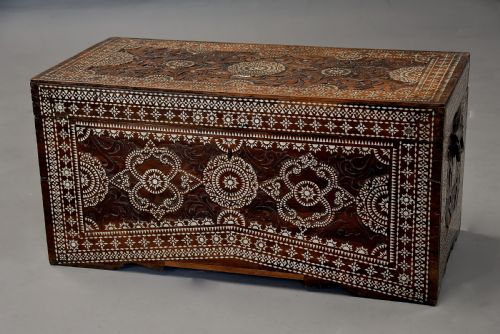
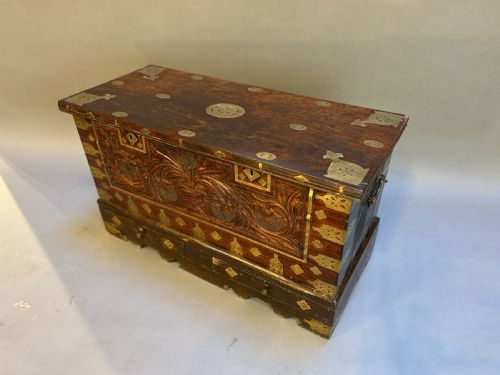
A carved hardwood coffer is a sturdy storage chest typically originating from the nineteenth century, built to secure valuable possessions during travel or domestic use. These pieces manifest in various forms, including Zanzibar chests, storage boxes, and trunks originating from Indian, Chinese, and Middle Eastern workshops.
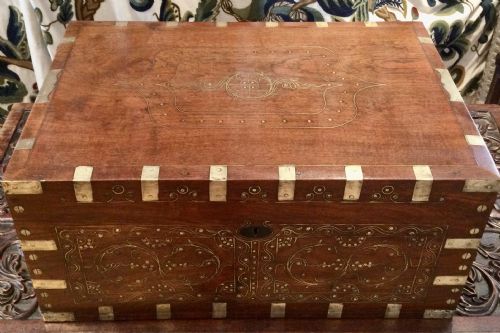
The versions most commonly encountered on this page date from the nineteenth century up to the nineteen-twenties, reflecting distinct regional carving traditions. Buyers often find these coffers paired with functional ironwork, brass fittings, or elaborate inlay.
Beyond standard blanket chests, the selection includes related seating and cabinetry such as hall benches and storage cabinets sharing the same heavy timber construction. Each piece demonstrates the heavy reliance on dense timbers characteristic of colonial and traditional export markets.
How they were made
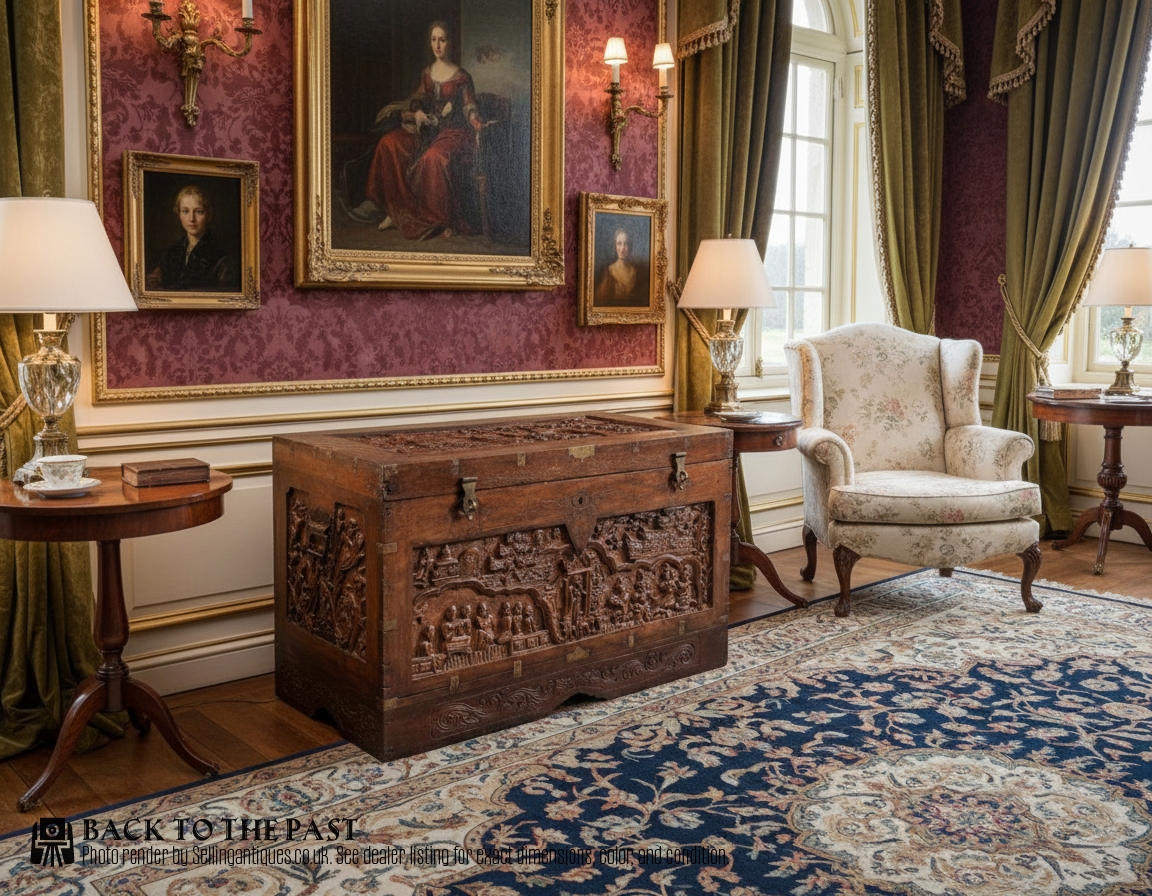
Makers constructed these coffers primarily from heavy tropical hardwoods such as teak, rosewood, elm, and general hardwood stock. These dense timbers provided the structural integrity needed for long-distance transport and daily household service.
Decoration relied heavily on deep chisel work, surface carving, and applied metalwork including brass and iron bindings. Artisans frequently integrated contrasting materials like mother of pearl inlay and copper elements to punctuate the dark wood surfaces.
Carved Hardwood Coffer Retail Price Guide 2026
Typical asking prices for carved hardwood coffer among the pieces listed under this phrase on Sellingantiques today, from the lower quarter to the upper quarter. They describe what is for sale here now, not the wider market.
Several trunks hide secret internal compartments designed to safeguard small valuables from curious hands.
What varies in quality
Quality in a carved hardwood coffer rests upon the depth and precision of the carving and the selection of the timber. Dense, well-figured rosewood or teak yields a finer surface than softer utility woods.
The integrity of the metal mounts, hinges, and internal compartments distinguishes standard storage boxes from finer ceremonial or export examples. Superior pieces maintain crisp detail in their mother of pearl inlay and original iron or brass hardware without excessive replacement.
The Carved Hardwood Coffer Glossary
- Hardwood
- Timber derived from broad-leaved trees, providing the dense and durable structure essential for these coffers. These woods resist heavy wear and hold intricate carved details exceptionally well.
- Zanzibar chest
- A specific style of heavy storage chest featuring distinctive brass studding and strapwork, often associated with trade routes in the Indian Ocean. They utilise sturdy tropical timbers and robust metal bindings.
- Mother of pearl
- An iridescent internal layer of shells used by artisans to create inlaid floral or geometric patterns across the wooden surface. This decorative technique contrasts sharply against dark hardwood.
- Anglo-Indian
- A descriptive term for furniture made in India during the British period, combining local timber and carving skills with British forms. These pieces often exhibit dense surface ornamentation.
- Qing Dynasty
- The final imperial dynasty of China, spanning the seventeenth to the early twentieth century, noted for traditional furniture production. Pieces from this era often utilise elm or mixed hardwoods.
Carved Hardwood Coffer: Frequently Asked Questions
How were these chests used originally?
These coffers served primarily to store valuable textiles, spices, and personal documents during domestic life and maritime trade. Their heavy construction and secure metal fittings protected contents from pests and theft.
Over time, many functioned as central furniture pieces in merchant homes, doubling as seating or display surfaces in public rooms.
Where do most carved coffers come from?
The pieces originate from diverse international trade hubs, spanning Indian workshops, Chinese provinces, and Middle Eastern centres. Each region imparted local carving styles and timber choices onto the basic trunk form.
British colonial trade routes heavily influenced the spread and design of these export pieces during the nineteenth century.
How do I care for hardwood furniture?
Maintain the timber by keeping the coffer away from direct heat sources and sudden temperature fluctuations that cause wood to split. Regular dusting with a dry cloth preserves the natural finish of the heavy wood.
Avoid excessive polishing, which can build up on intricate carved areas and obscure the fine grain of the rosewood or teak.
How can I tell the age of a coffer?
Examine the construction methods, interior surfaces, and wear patterns on the base and handles to estimate the period of manufacture. Nineteenth-century examples typically display hand-cut joinery and heavy iron or brass fastenings appropriate to their region.
Comparing the specific carving motifs and timber species against documented export styles helps narrow down the production decade.