


Indian Blanket Box
An indian blanket box brings substantial timber, metal bindings and regional character into a room.
Indian Blanket Box
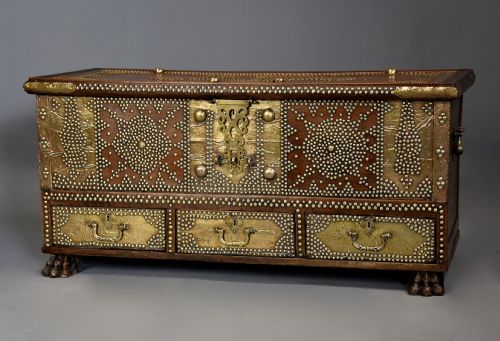
When you search for an indian blanket box, you encounter heavy storage chests originating from nineteenth-century trade and domestic use. The pieces appearing here span traditional dowry chests, campaign trunks and merchant coffers built for travel or household storage.
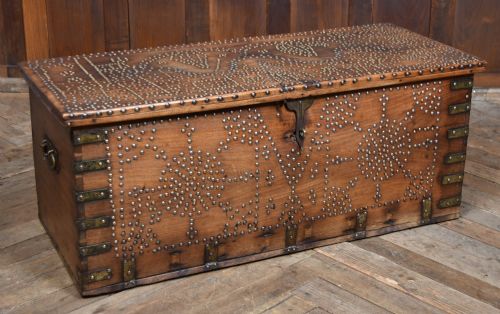
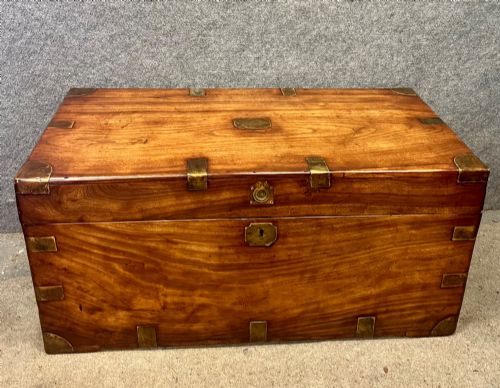
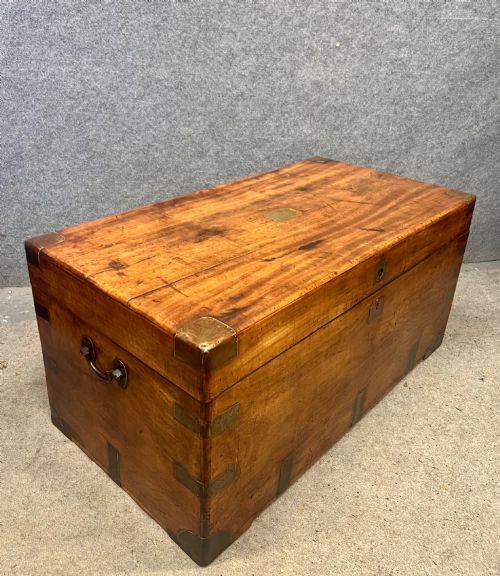
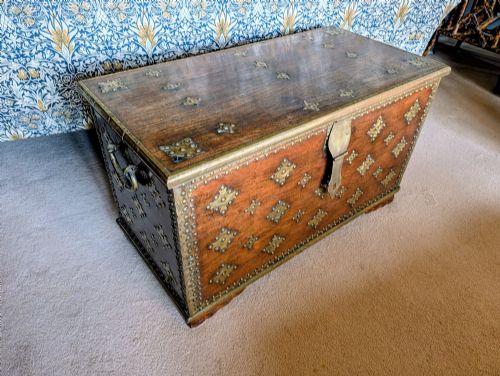
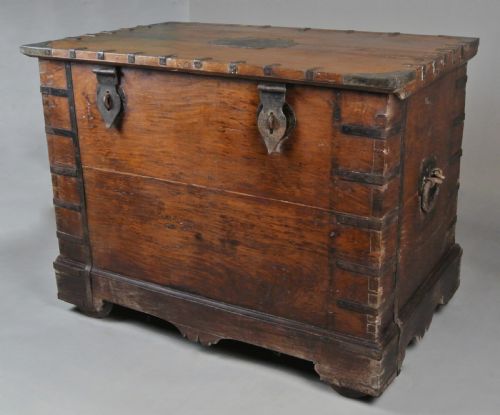
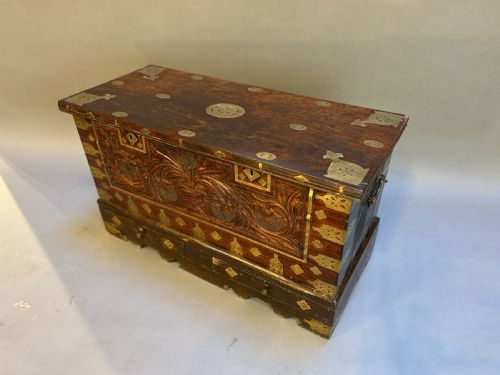
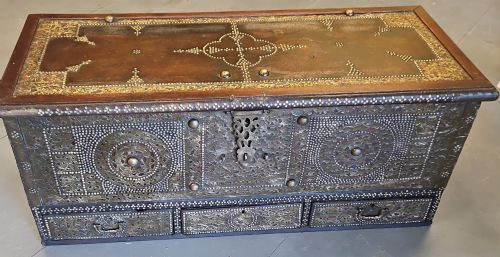
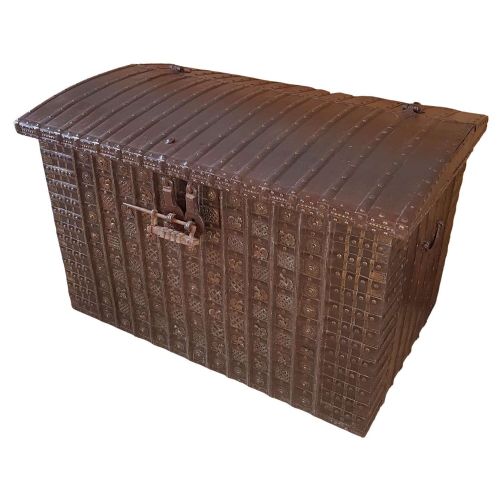
The most common examples on this page are nineteenth-century teak and camphor wood trunks featuring brass studwork or iron bindings. Many bear the distinct influence of Anglo-Indian and colonial craftsmanship, connecting them to maritime trade routes and regional Indian workshops.
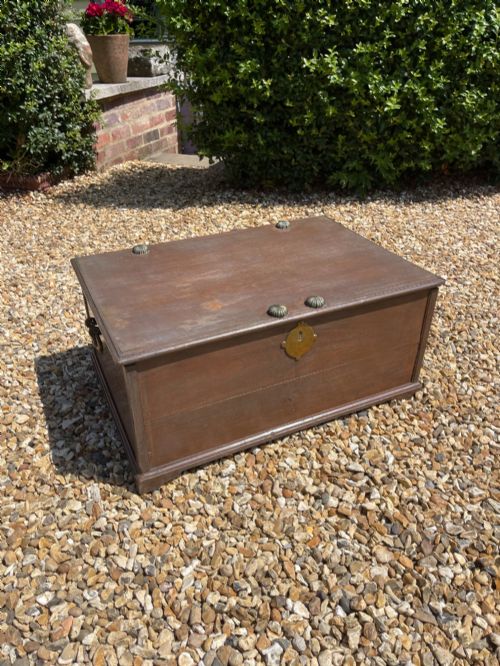
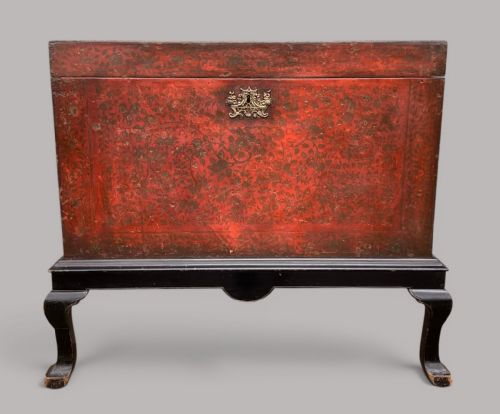
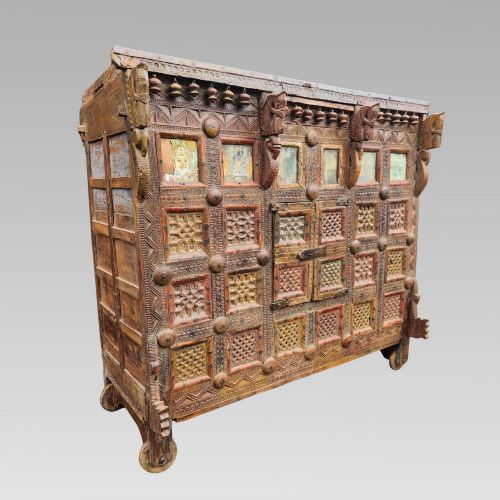
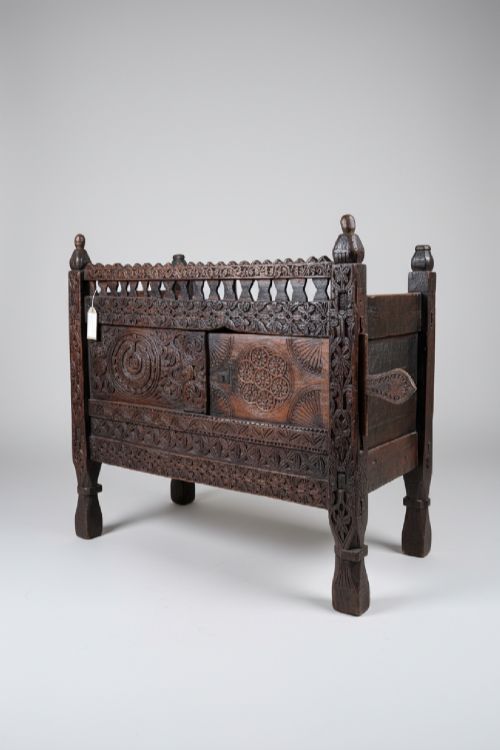
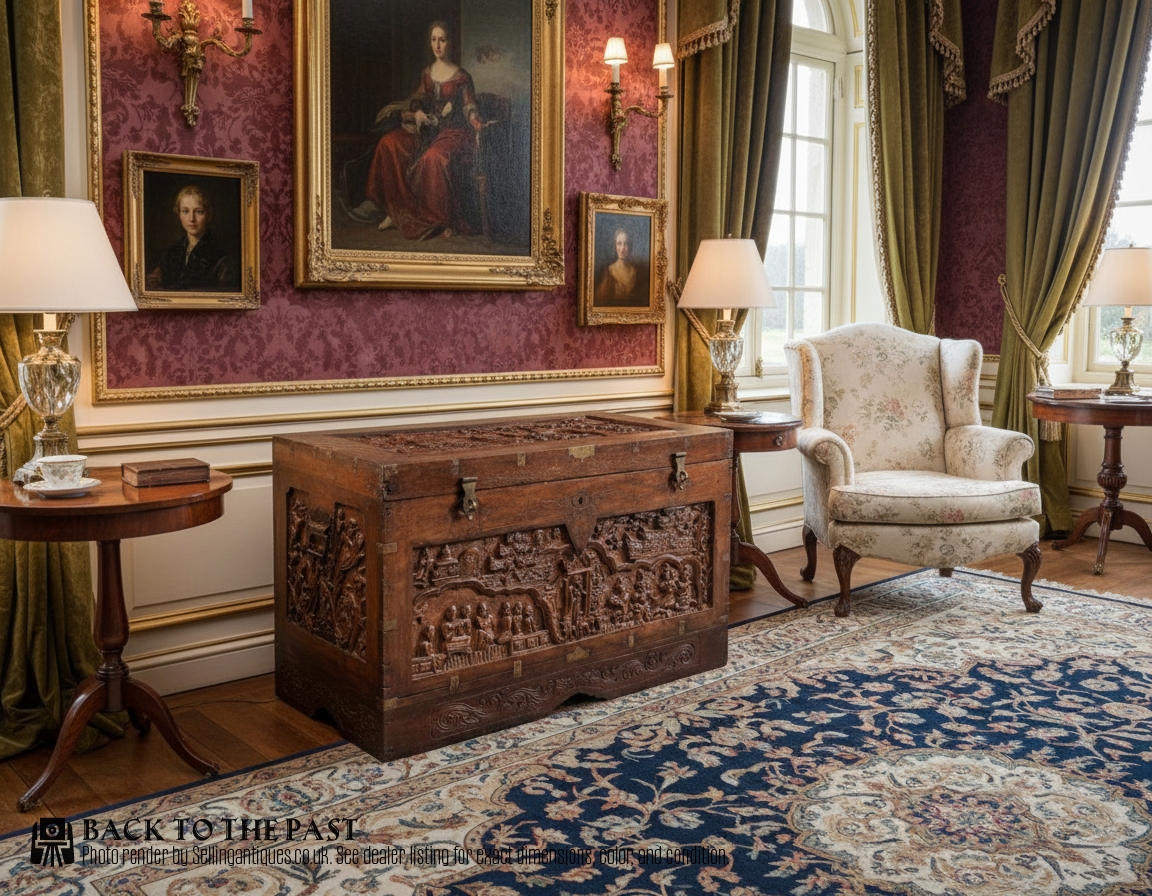
Forms range from simple lidded storage boxes to elaborate carved dowry chests and pieces raised on stands. Their origins cover various regions, including Rajasthan, Zanzibar and the Swat Valley, each bringing distinct decorative details.
Materials and construction
These chests rely on dense tropical hardwoods like teak, padouk, camphor wood and rosewood, selected for durability and resistance to insects. Joinery is reinforced to withstand heavy transit and humid climates.
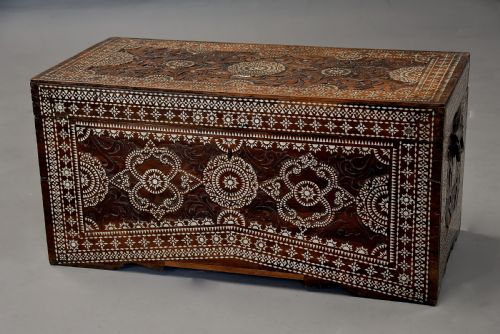
Metal reinforcement defines many pieces, utilising brass straps, decorative studding and heavy iron bands to protect corners and edges. Additional surface detail often includes mother of pearl inlay, carved panels and red lacquer finishes.
Camphor wood chests retain their distinct herbal aroma after two centuries to keep tropical insects away from stored garments.
Gradations in quality
Quality rests on the selection of timber and the density of the metal ornamentation. Fine examples display rich grain in padouk or teak paired with meticulous brass studding and robust, original hardware.
Construction methods also separate standard utility trunks from superior pieces. Finely carved panels, specialised locking mechanisms and intact original stands indicate higher workshop skill and careful regional provenance.
The Indian Blanket Box Glossary
- Campaign trunk
- A portable chest made in sections or with recessed handles for military transport. These pieces are designed for easy loading during travel.
- Zanzibar chest
- A heavy wooden storage chest characterised by brass studding and strapwork. They reflect trade connections between India and the East African coast.
- Damchiya
- A traditional Indian dowry chest featuring carved panels and substantial proportions. These cabinets often incorporate doors or lidded compartments for household goods.
- Padouk
- A heavy, durable reddish-brown tropical hardwood native to Asia. It is frequently utilised in quality nineteenth-century campaign furniture.
- Coffer
- A large box used for holding valuables or textiles. They typically feature sturdy timber construction and hinged lids.
Indian Blanket Box: Frequently Asked Questions
What is an indian blanket box used for?
These chests were originally built to store textiles, dowry items, or personal belongings during travel and domestic life. Today, they serve as functional living room coffee tables or storage trunks.
Their robust timber construction and generous interior capacity make them practical for hiding household clutter while adding historic character to a space.
How do I identify a Zanzibar chest?
Zanzibar chests are distinguished by dense brass stud decoration, strapwork, and elaborate hardware mounted on dark tropical hardwoods like teak. They often feature multiple internal small drawers.
These pieces reflect nineteenth-century trade routes linking Indian craftsmen with East African ports, creating a distinct fusion of styles.
What woods were used for these chests?
Craftsmen utilised durable tropical timbers suited to humid climates, most commonly teak, camphor wood, padouk, and rosewood. Camphor wood was particularly favored for its aromatic qualities that repelled insects.
Secondary woods and regional hardwoods also appear depending on whether the piece was constructed in Rajasthan, Ceylon, or other specific localities.
How should I care for a camphor wood chest?
Maintain the timber by keeping the chest away from direct heat sources and sudden humidity changes to prevent wood splitting. Occasional light treatment with appropriate wax preserves the dry or polished finish of the hardwood.
Avoid placing damp items directly onto the interior wood surface to protect the historic grain and natural fragrance.