


19th Century Indian Chest
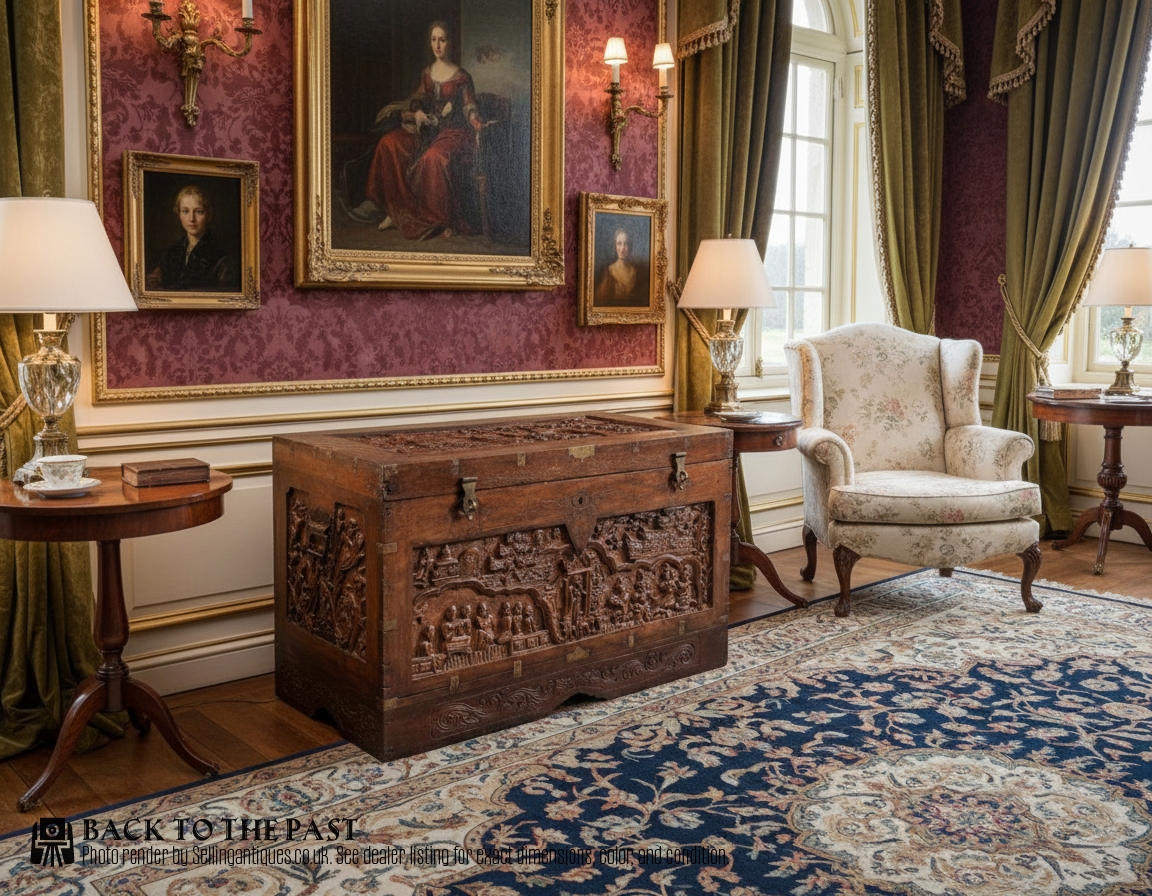
When you search for a 19th century indian chest, you seek substantial timber storage pieces carrying brass binding, iron straps, and colonial history.
19th Century Indian Chest
A 19th century indian chest encompasses sturdy dowry trunks, traders' coffers, and modular military campaign furniture built for travel and domestic use. Buyers encounter solid timber forms originating from distinct regional traditions, including Anglo-Indian workshops, Rajasthan, and Zanzibar.
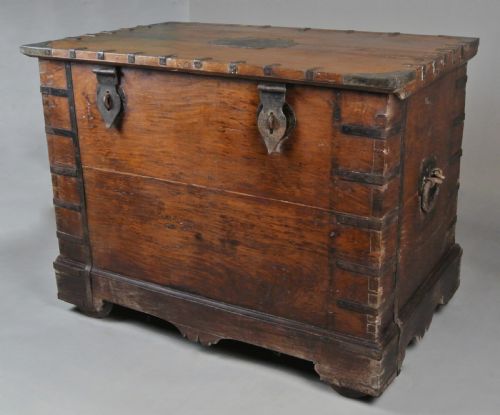
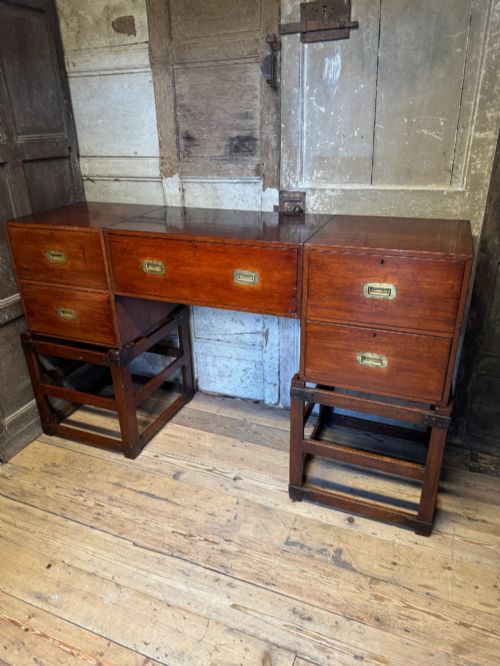
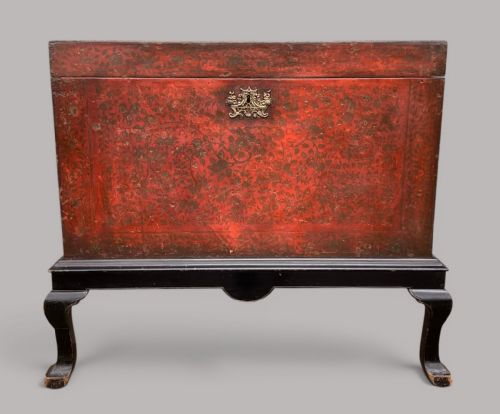
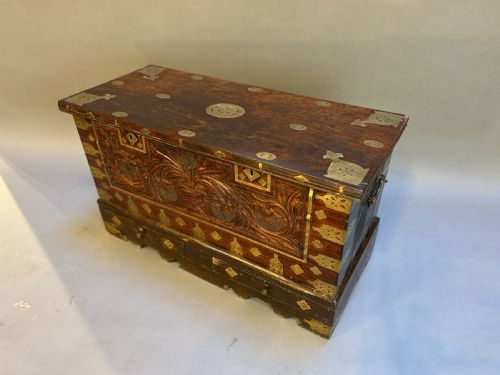
The domestic versions often appear as large dowry or marriage chests from places like Jaisalmer, frequently featuring red lacquer or intricate surface decoration. Traders' chests and campaign boxes built for officers lean toward functional portability with recessed brass handles and sectional construction.
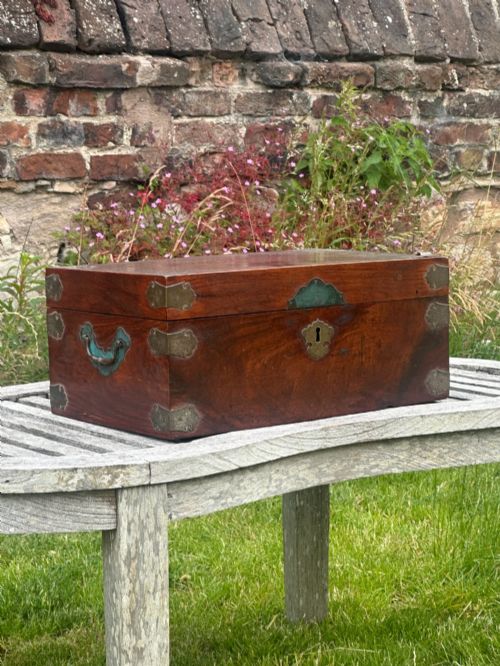
Most examples date across the Victorian era, spanning from the 1830s through to 1890, reflecting both local craftsmanship and British colonial influence. These pieces range from monumental iron-bound storage boxes to smaller writing slopes, deed boxes, and chests of drawers.
Materials and Construction Techniques
Craftsmen built these items using durable tropical hardwoods such as teak, padouk, camphor wood, and ebony, selected for their resistance to humidity and insects. Camphor wood appears frequently in trunks, valued for its aromatic qualities and stable grain, while heavier structural pieces utilise dense teak and rosewood.
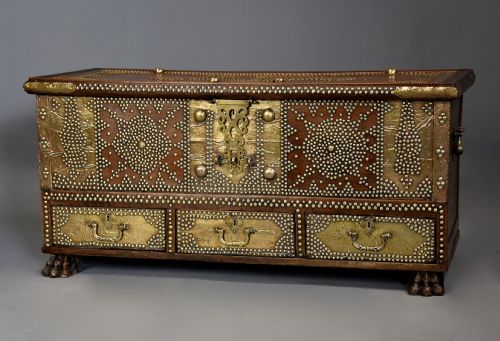
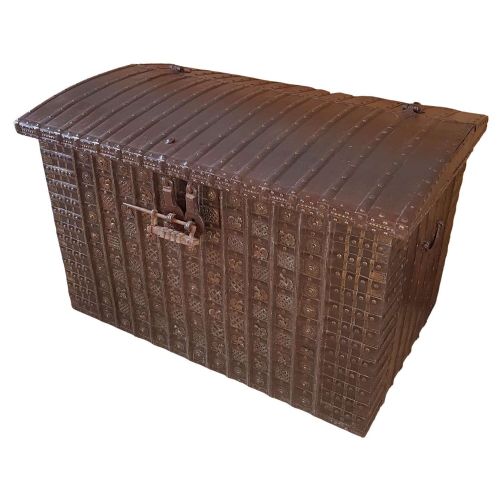
Metal reinforcement defines many examples, employing brass binding, brass stud decoration, and heavy iron straps fixed with numerous small nails. Campaign pieces incorporate specialised joinery, utilising recessed brass hardware and sectional boxes designed to separate easily for transport.
Some camphor wood chests retain a faint, lingering scent from the spice routes they traversed over a century ago.
Evaluating Quality and Authenticity
Quality depends upon the integrity of the original timber and the complexity of the metalwork, with hand-beaten brass strapping and dense padouk or ebony commanding attention. Finer examples retain their original surface finishes, whether polished rosewood, red lacquer, or untouched patinated teak.
The sophistication of the internal fittings separates standard utility trunks from superior pieces. Secretary drawers, secret compartments, original campaign carrying handles, and intact brass locking mechanisms distinguish higher-tier workshop output.
The 19th Century Indian Chest Glossary
- Campaign chest
- Modular furniture constructed in two or more stackable sections with recessed handles for military transport.
- Zanzibar chest
- A heavy hardwood chest featuring elaborate brass stud work, strapwork, and often a concealed internal compartment.
- Dowry chest
- A large decorative storage coffer associated with marriage customs, frequently featuring iron banding or vibrant lacquer.
- Padouk
- A heavy, durable tropical hardwood with reddish tones, commonly used in Anglo-Indian furniture construction.
- Teapoy
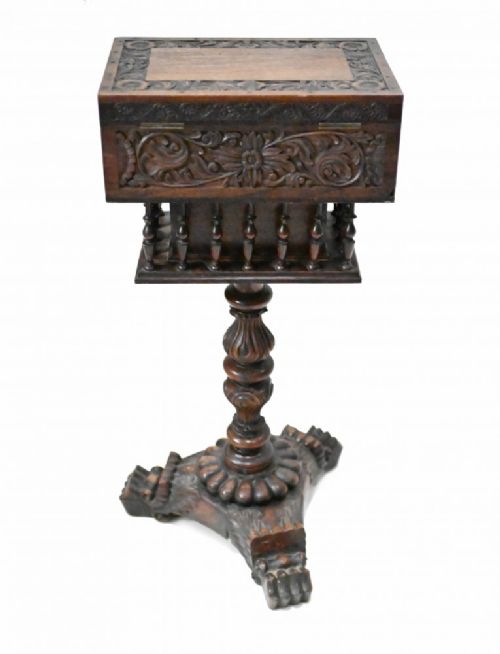
- A small occasional table or stand, often featuring carved wooden elements and colonial styling.
19th Century Indian Chest: Frequently Asked Questions
How were these chests originally used?
These chests served multiple purposes, from storing valuable textiles and household dowries in domestic settings to transporting officers' personal belongings during military campaigns. Traders utilised robust coffers to secure goods across maritime and overland routes.
Smaller boxes functioned as portable writing desks or deed storage for administrators working away from permanent offices.
What woods should I expect to find?
The primary timbers include dense tropical hardwoods like teak, padouk, ebony, and rosewood, chosen for their structural strength and resilience. Camphor wood is also prevalent, particularly for blanket and clothing trunks due to its natural aromatic properties.
Secondary woods sometimes appear in internal drawer linings, but exterior surfaces generally showcase these durable regional timbers.
How do I care for a camphor wood chest?
Keep the wood away from direct heat sources and sudden humidity changes to prevent the timber from splitting or warping. Dust regularly with a dry cloth and occasionally feed the surface with appropriate natural waxes to maintain the finish.
Avoid using harsh chemical polishes that can degrade the historic surface patina.
How can I tell a campaign chest apart from a standard trunk?
Campaign chests feature sectional construction designed to separate into distinct stacked boxes for easy transport. They typically incorporate flush brass corner braces and recessed folding handles to prevent snagging during travel.
Standard trunks are usually single, heavy un-split units intended for static placement rather than frequent movement.