
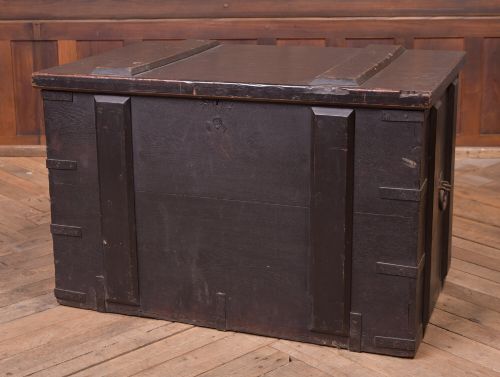


Dark Teak Blanket Box
A dark teak blanket box offers robust storage with deep colonial history, bringing rich wood and brass detail directly into a room.
Dark Teak Blanket Box
When you search for a dark teak blanket box, you encounter heavy storage trunks and coffers shaped by colonial trade and travel. The examples seen here span the eighteenth and nineteenth centuries, including Victorian, Dutch Colonial, Portuguese Colonial, and Anglo-Indian origins.
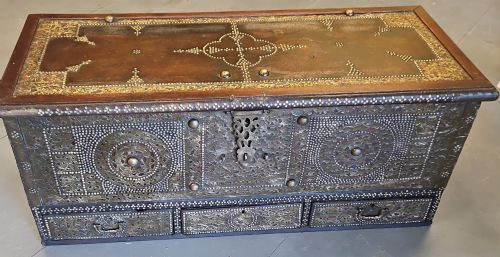
The most common form on this page is the Zanzibar chest or Indian trunk, often bound in brass or iron. These pieces combine substantial timber construction with functional storage designed for distant journeys and domestic use.
How they were made
These chests rely on dense teak and hardwood timbers joined to withstand long transport. Workshops shaped the heavy wood into deep coffers and trunks suited to domestic storage.
Metalwork forms an essential part of the construction, utilising brass and iron bindings, studs, and mounts. These metal elements reinforce the heavy corners and lids while adding decorative contrast to the dark timber.
The inventory records pieces from distinct regional traditions, including Anglo-Indian, Dutch Colonial, Portuguese Colonial, and Zanzibar workshops.
What varies in quality
Quality rests on the crispness of the brass or iron bindings and the density of the teak. Better examples display careful metal studding and secure corner plates that integrate cleanly with the hardwood body.
The depth of the carving and the presence of ripple moulding distinguish finer regional styles, such as Portuguese Colonial or Zanzibar pieces. Proportion and structural integrity determine how well a chest holds its presence in a modern interior.
The Dark Teak Blanket Box Glossary
- Teak
- A durable tropical hardwood known for its oily content and resistance to moisture. It provides the dark, dense body for these colonial trunks.
- Ripple moulding
- A decorative carved profile resembling small waves, seen on finer seventeenth and nineteenth-century furniture. It adds texture to the frame of a coffer.
Dark Teak Blanket Box: Frequently Asked Questions
What is a dark teak blanket box?
A dark teak blanket box is a heavy storage chest built from dense tropical hardwood, often featuring brass or iron reinforcement. These pieces originated in colonial trading hubs and domestic settings during the eighteenth and nineteenth centuries.
They serve as practical storage for blankets and linens while functioning as bold statement furniture. Their robust construction reflects origins in travel and long-distance trade.
How do I date a teak chest?
Dating relies on examining the construction methods, the style of the brass bindings, and the specific regional characteristics. Eighteenth-century examples often show simpler Dutch colonial lines, whereas Victorian pieces frequently display heavier brass studding.
Hardware changes over time, offering clues about the workshop origin and period. Comparing the timber grain and fastener types helps narrow down the decade of manufacture.
Where were these chests made?
These pieces were produced across various colonial regions, including India, Zanzibar, and Dutch or Portuguese settlements. Workshops in these areas adapted local timbers for both domestic use and export to Europe.
Trade routes deeply influenced the design, blending local woodworking traditions with European furniture forms. As a result, pieces carry distinct regional markers like Anglo-Indian or African carriage trunk styles.
How should I care for teak?
Teak requires minimal maintenance due to its natural oils, needing only occasional dusting with a dry cloth. Avoiding direct heat sources prevents the dense hardwood from splitting over time.
Applying specialised wax or oil is rarely necessary unless the wood appears dry. Keeping the chest in stable humidity preserves both the timber and the metal bindings.