
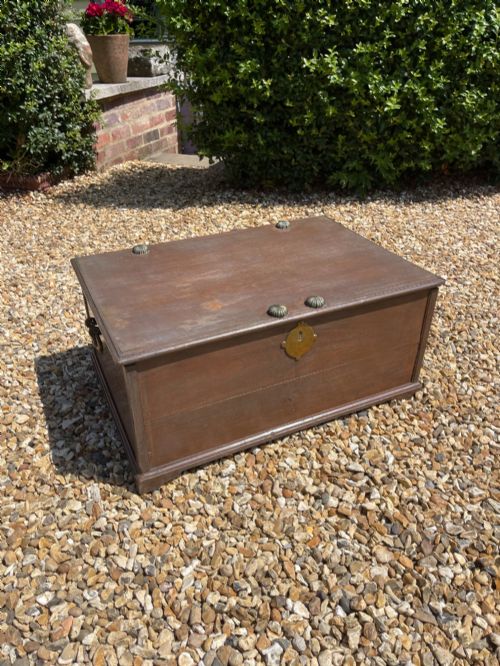
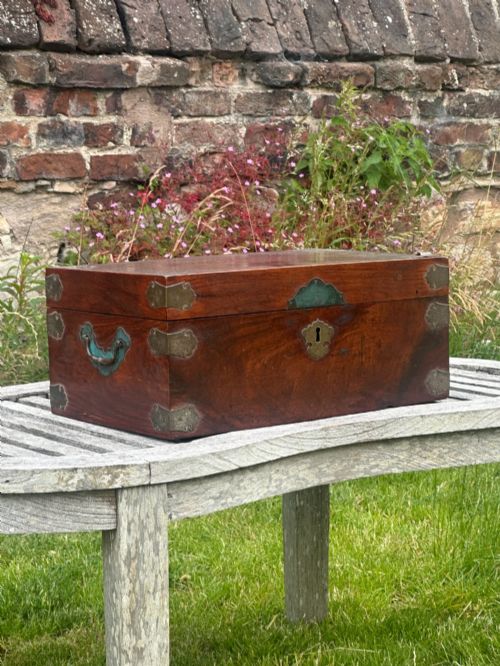
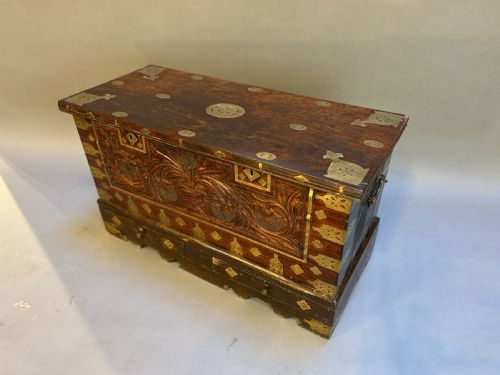
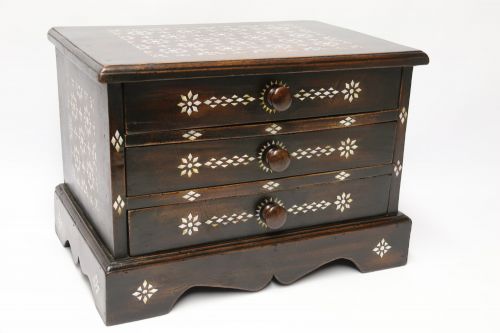


Anglo Indian Wooden Chest
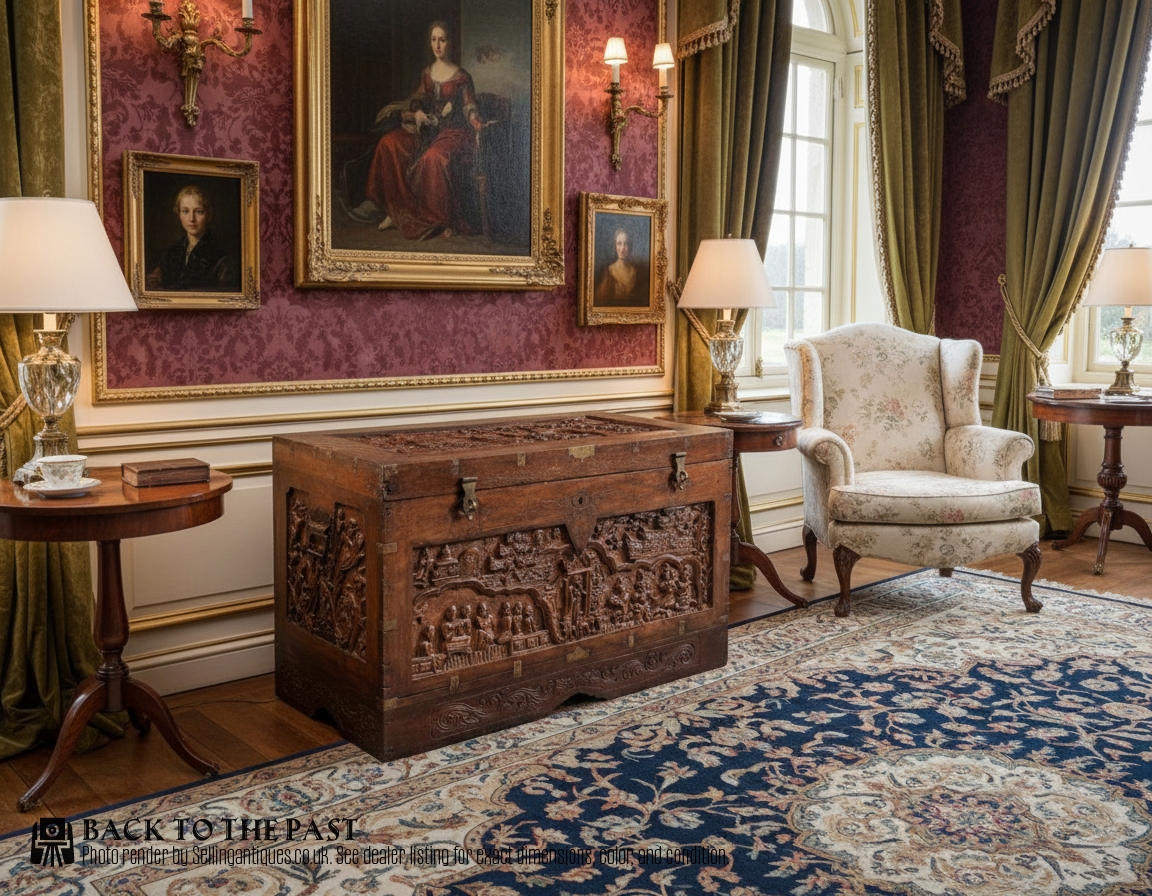
An anglo indian wooden chest brings heavy colonial craft into a room, offering robust storage built for distant travels.
Anglo Indian Wooden Chest
The versions most common here date from the nineteenth century and the early twentieth century, spanning styles from military campaign forms to heavily decorated domestic furniture. They range from massive iron bound dowry trunks to compact writing slopes and table cabinets.
Makers utilised dense timbers suited to tropical climates, adapting local joinery traditions to meet British domestic tastes. Buyers select these items for practical storage combined with striking decorative presence.
Materials and construction
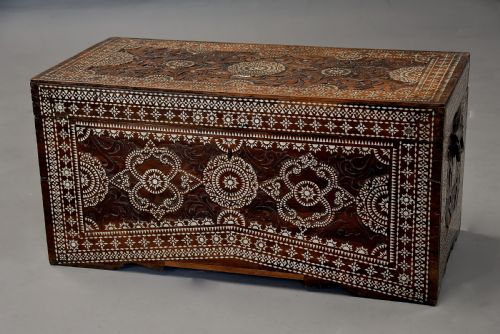
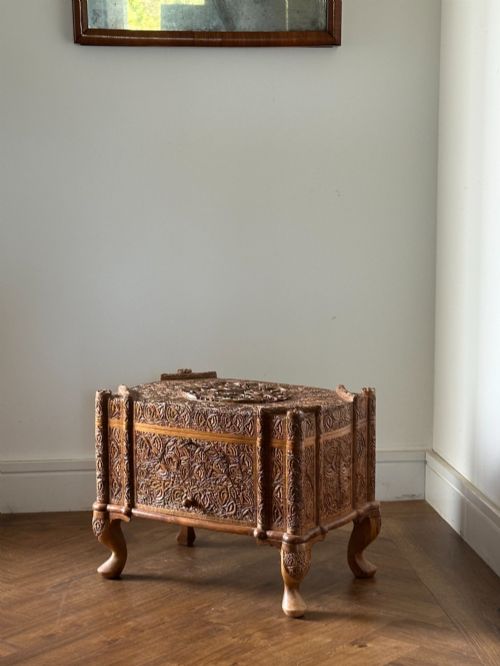
Carpenters constructed these pieces using dense tropical hardwoods such as teak, padouk, camphor wood, and ebony, which resisted humidity and insect damage. These woods often received surface enhancements including intricate carving, bone inlay, or contrasting mother of pearl.
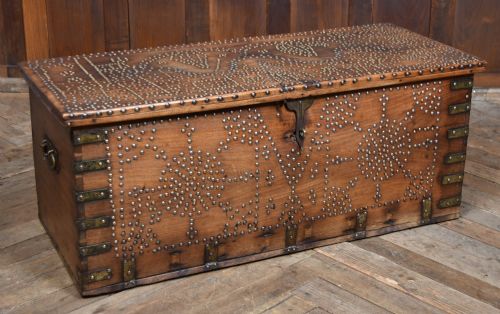
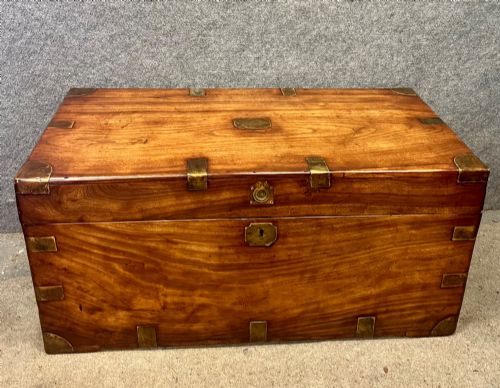
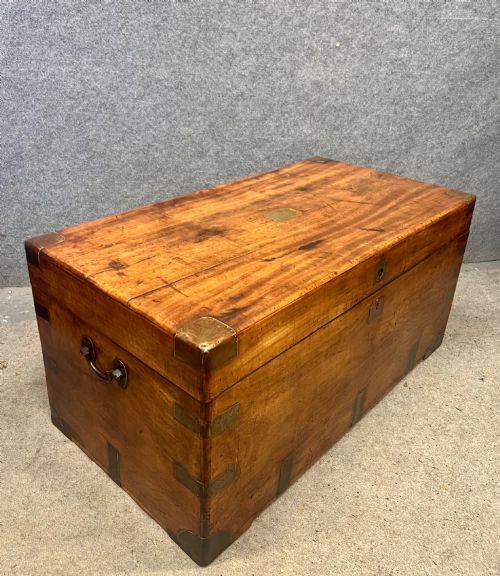
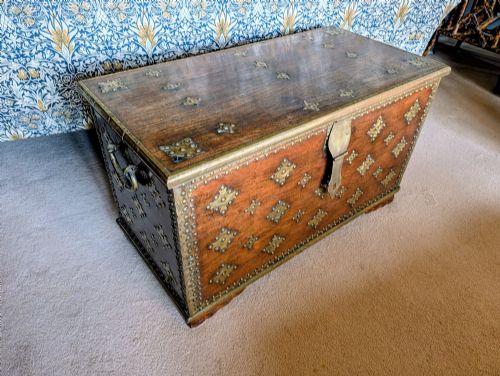
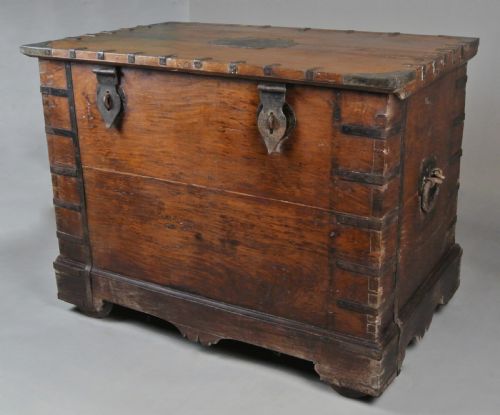
Metal reinforcement defined functional storage, utilising heavy brass straps, corner brackets, and iron bands secured with numerous small tnails. Flush-fitting brass handles and recessed drawer pulls allowed military officers and merchants to pack trunks tightly for transport.
Listings feature items spanning the nineteenth century through the nineteen thirties, constructed from teak, camphor wood, padouk, and ebony.
Judging quality and craft
Quality rests upon the selection of timber and the precision of the metal mounts rather than mere scale. Solid hardwoods with well-fitted joints and complete brass or iron hardware represent the upper tier of production.
Detailing distinguishes everyday utility items from exhibition pieces, particularly the fineness of hand-carved panels, the symmetry of brass strapwork, and the retention of original interior fittings such as secret compartments and writing ledges.
The Anglo Indian Wooden Chest Glossary
- Zanzibar chest
- A heavy storage trunk featuring distinct brass studding, strapwork, and a domed or flat lid. These pieces originated from trade routes passing through East Africa and India.
- Campaign chest
- A modular set of drawers or a trunk designed to split into separate sections for transport by military officers. They feature recessed brass handles and corner protection.
- Padouk
- A heavy, durable reddish-brown tropical hardwood favoured for colonial furniture and durable storage boxes. It darkens gracefully with age and exposure to light.
- Camphor wood
- A strongly aromatic timber utilised for chests and trunks to deter insects and protect stored textiles. The characteristic scent remains detectable decades later.
- Cellarette
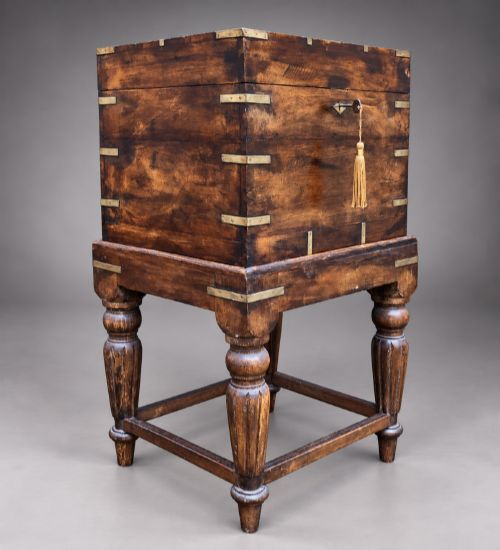
- A specialised container designed for storing wine bottles securely during transport or dining use. These often sit upon dedicated stands.
Anglo Indian Wooden Chest: Frequently Asked Questions
How were campaign chests used?
Campaign chests functioned as portable wardrobes and desks for military personnel on active service. Their modular design allowed quick dismantling into manageable sections for transport on animals or carts.
Once at a destination, they reassembled to provide stable storage and writing surfaces in temporary quarters.
How do I care for camphor wood?
Camphor wood requires stable indoor humidity away from direct heat sources to prevent timber movement. Dust the surfaces gently with a dry cloth and avoid harsh chemical polishes.
Keeping the interior clean preserves both the timber and the natural aromatic qualities of the wood.
How do I identify a Zanzibar chest?
Zanzibar chests are identified by heavy brass strapwork, numerous small brass studs, and elaborate decorative motifs across the front and lid. They frequently include a concealed internal compartment known as a till.
These pieces typically utilise dense hardwoods like teak or padouk and rest on small feet.