
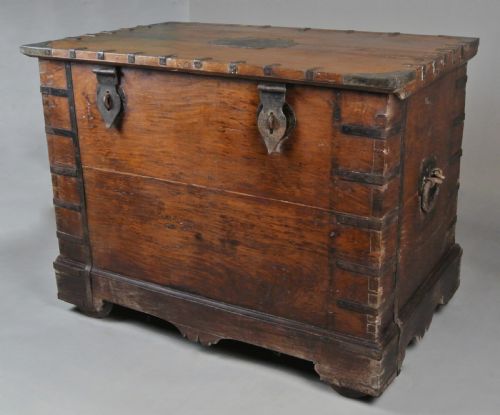
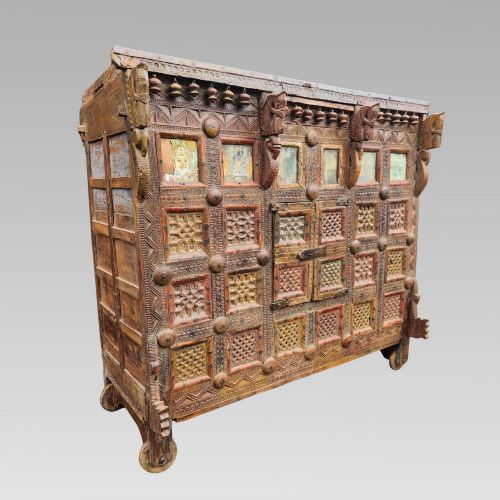
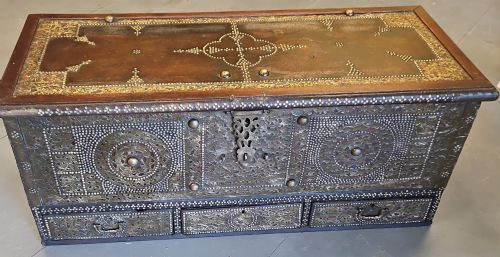


Carved Teak Blanket Chest
These carved teak blanket chest pieces are substantial storage trunks shaped by colonial trade, offering deep interiors and heavy timber construction for the home.
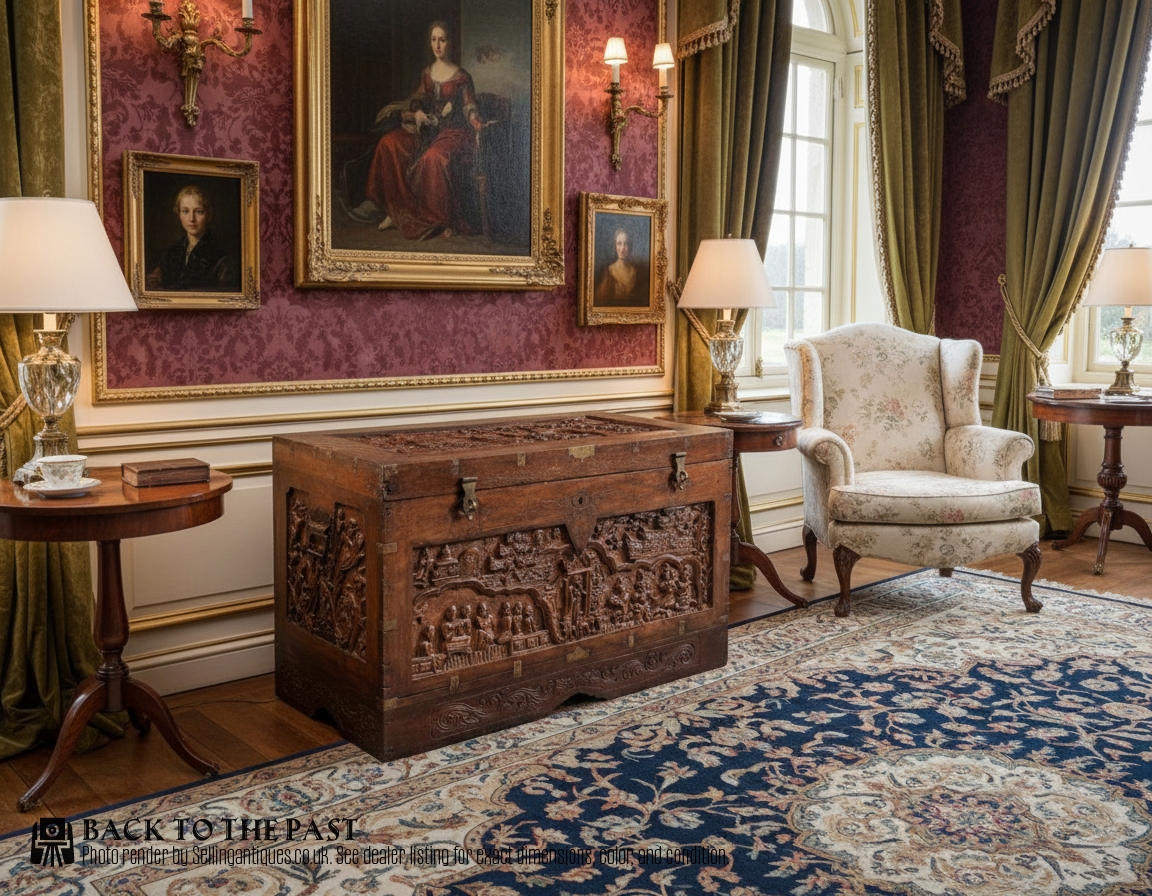
Carved Teak Blanket Chest
A carved teak blanket chest represents a heavy storage vessel originating from various global trade routes, spanning periods from the mid-nineteenth century to the early twentieth century. These pieces appear in forms such as dowry chests, coffers, and storage trunks, often associated with Anglo-Indian, Zanzibar, and Portuguese Colonial styles.
The design vocabulary draws on traditional regional woodworking combined with colonial influence, resulting in pieces that function as both practical storage and decorative furniture. These items range from plain panelled boxes to heavily carved celebration chests designed for domestic utility.
Materials and construction methods
Construction relies primarily on dense tropical timber, predominantly teak and assorted hardwoods, selected for durability and resistance to climate. Carpenters joined these heavy boards using traditional methods, often reinforcing the carcass with structural iron straps and substantial brass fittings.
Surface ornamentation combines deep relief carving with metalwork such as decorative brass studding and corner plates. Certain examples incorporate applied lacquer finishes or ripple moulding to the exterior surfaces, reflecting regional decorative traditions.
Many Zanzibar chests include a secret internal compartment known locally as a 'hiba' box, perfect for hiding small treasures.
Assessing quality in construction and detail
Quality in a carved teak blanket chest is determined by the depth and crispness of the hand-carved detail across the panels and lid. Superior pieces display intricate, well-defined motifs rather than shallow or mechanical execution, showing careful hand work by the maker.
The choice of secondary materials and hardware also indicates standard, with substantial brass strapping, secure corner joints, and original iron reinforcement distinguishing finer trunks. The integrity of the heavy timber carcass and the survival of original surface treatments further separate standard examples from finer works.
The Carved Teak Blanket Chest Glossary
- Anglo-Indian
- A descriptive term for furniture made in India during the British period, combining local timber and craftsmanship with European forms.
- Coffer
- A heavy wooden box or chest traditionally used for holding valuables, money, or precious textiles.
- Zanzibar Chest
- A distinct type of heavy wood trunk featuring brass studding, strapwork, and often a concealed internal compartment, associated with East African trade ports.
- Ripple Moulding
- A decorative wood machining technique creating undulating wave patterns, found on seventeenth-century revival and colonial furniture frames.
- Damchiya
- A traditional Indian storage cabinet or chest often featuring ornately carved panels and front-opening doors.
- Dowry Chest
- A large trunk or box prepared for a bride, built to store household linens, garments, and valuables as part of a marriage settlement.
Carved Teak Blanket Chest: Frequently Asked Questions
What is a carved teak blanket chest?
A carved teak blanket chest is a heavy storage trunk fashioned from dense tropical timber, featuring regional carving styles from nineteenth-century trade routes.
These pieces served functional domestic roles for holding textiles, garments, and valuables in colonial and trading households.
How were these chests used originally?
These trunks functioned primarily for secure domestic storage and transportation of household goods, linens, and dowry items across maritime trade networks.
Their robust timber construction and heavy metal bindings allowed them to withstand long journeys on merchant vessels.
How do I care for a teak chest?
Maintenance involves keeping the timber away from direct heat sources and sudden humidity changes to prevent movement in the heavy boards.
A light application of natural wax helps nourish the dry hardwood surface without sealing the grain.
How are different regional styles told apart?
Regional styles are distinguished by specific combinations of carving motifs, metal hardware, and structural framing methods.
For instance, Zanzibar pieces often feature heavy brass studding and strapwork, while Anglo-Indian examples display deep floral relief carving.