




Imari Porcelain Scallop Plate
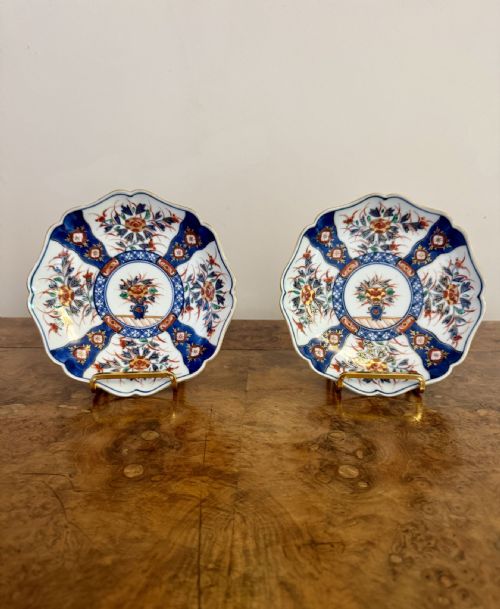
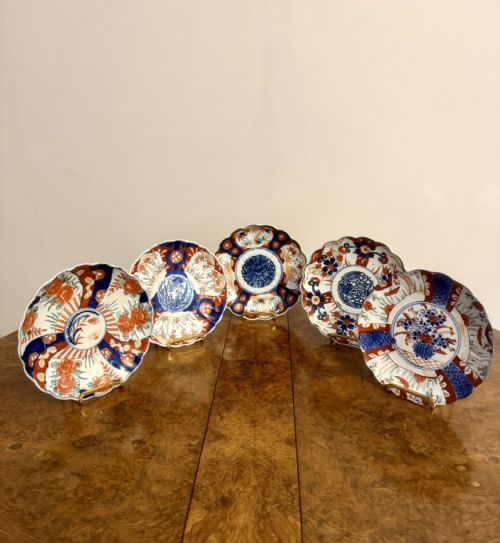
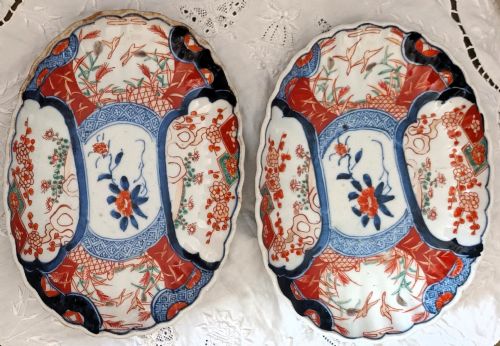
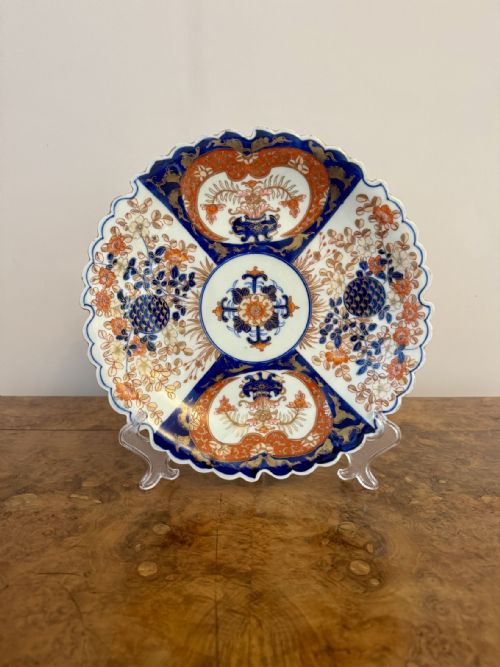
An imari porcelain scallop plate brings together rich cobalt underglaze and overglaze enamel on shaped edges that suit decorative display.
Imari Porcelain Scallop Plate
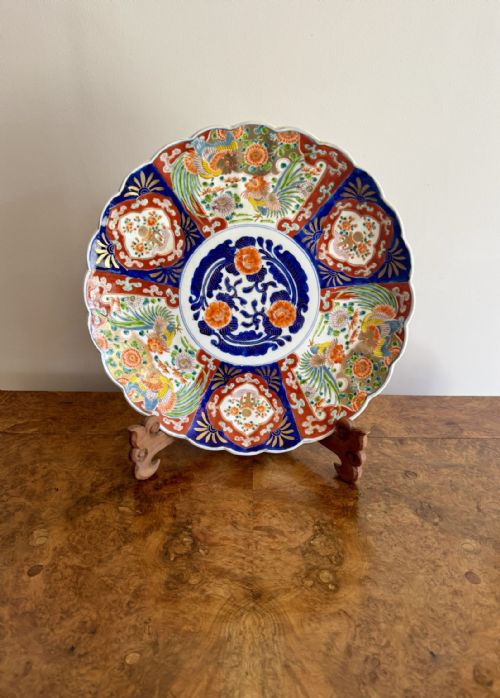
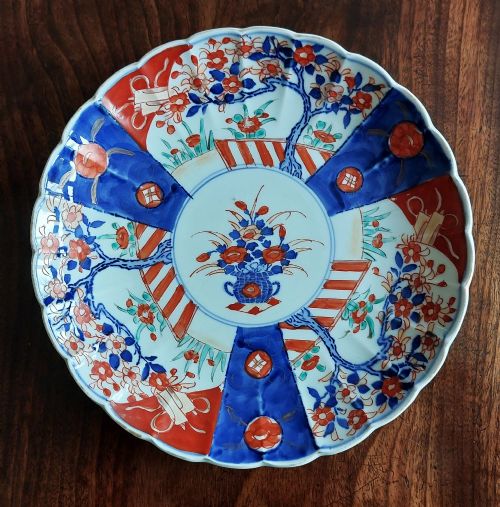
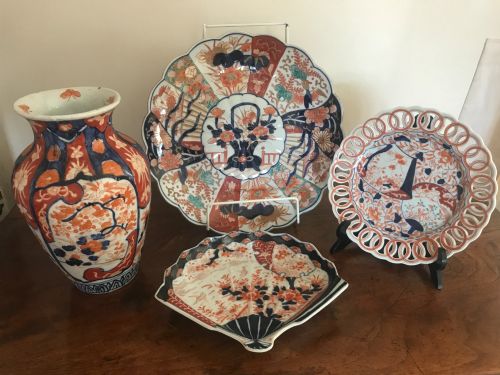
When you search for an imari porcelain scallop plate, you encounter decorative ceramics created primarily during the Meiji period and the nineteenth century. These objects include plates, chargers, and dishes featuring distinct shaped borders and characteristic painted surfaces.
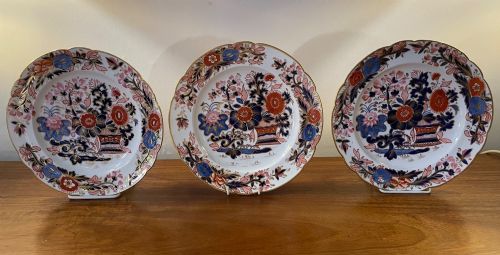
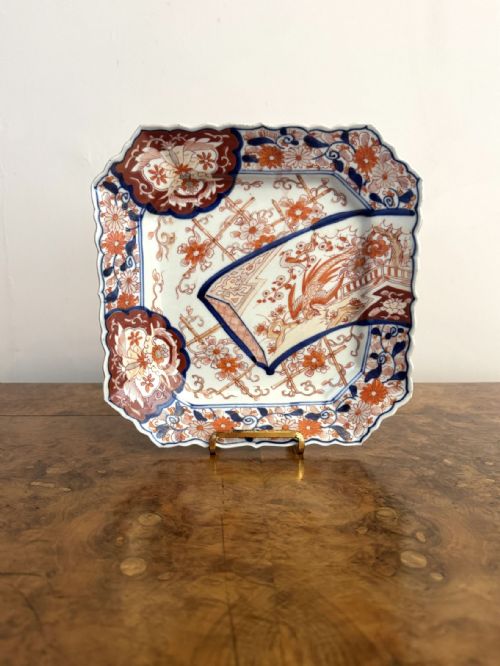
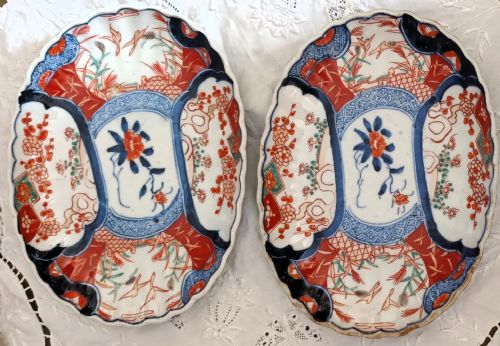
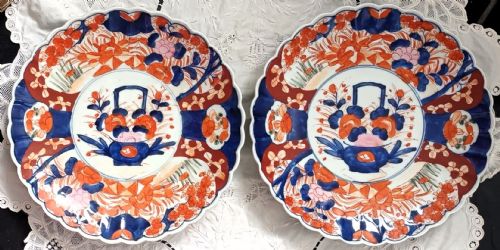
The selection here draws heavily on Japanese Imari production, alongside occasional early nineteenth-century Staffordshire and eighteenth-century Derby pieces utilising the Imari palette. Forms range from standard circular plates to oval, square, hexagonal, and shell-shaped variations intended for wall display or tabletop use.
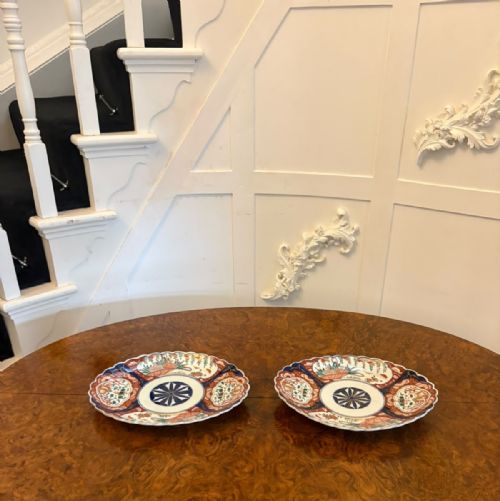
Buyers frequently meet pairs and larger sets alongside single chargers, often decorated with motifs such as exotic birds, floral designs, and the Seven Lucky Gods. The predominant surviving examples reflect late nineteenth-century craftsmanship from Japanese kilns.
How they were made
Potters shaped porcelain bodies into scalloped, fluted, or geometric outlines before applying cobalt underglaze decoration by hand. Artisans then fired the pieces to fix the blue pigment beneath a clear glaze.
Makers added overglaze enamel colours, including iron red and supplementary pigments, alongside gold leaf, gilt, or gilding for fine detailing. A secondary firing fused these surface enamels and metallic highlights to the glazed porcelain.
Listings feature porcelain pieces spanning the eighteenth century, the Victorian era, the nineteenth century, and the Meiji period.
What varies in quality
The distinction between standard items and the top of the range lies in the precision and complexity of the hand-painted brushwork across the surface. Finer examples display meticulous control in the cobalt underglaze lines and precise application of overglaze enamel and gold leaf.
Design complexity also separates pieces, with intricate depictions of figures such as the Seven Lucky Gods or detailed exotic birds commanding attention over simpler floral arrangements. Furthermore, the crispness of the moulded scallop edge and the overall balance of the decorative scheme determine the aesthetic success of the plate.
The Imari Porcelain Scallop Plate Glossary
- Imari palette
- A decorative scheme typically combining cobalt underglaze blue with iron red and gold overglaze. This distinct colour combination originated in Japan and was later copied by European potteries.
- Cobalt underglaze
- A blue pigment applied directly to the unglazed ceramic body before firing. It withstands high temperatures and remains protected beneath a transparent glaze layer.
- Overglaze enamel
- Coloured glass decoration applied on top of the fired and glazed ceramic. Pieces require a subsequent lower-temperature firing to bond these pigments to the surface.
- Charger
- A large decorative plate intended primarily for display on a wall or sideboard rather than for practical dining use. These substantial pieces often showcase the most elaborate artistry.
- Meiji Period
- A Japanese historical era spanning from eighteen sixty-eight to nineteen twelve, noted for prolific porcelain production exported widely to Western markets.
Imari Porcelain Scallop Plate: Frequently Asked Questions
What is an imari porcelain scallop plate?
An imari porcelain scallop plate is a decorative ceramic dish featuring a moulded, wavy edge and traditional Japanese or European Imari patterning. These pieces combine cobalt blue underglaze with red and gold enamels.
They were produced extensively during the nineteenth century and the Meiji period for both domestic use and export. Collectors prize them for their vibrant palettes and varied geometric or floral forms.
How were these plates used historically?
Historically, these ceramics served both functional dining purposes and decorative display within wealthy households. Larger chargers and shaped plates were frequently mounted on walls or set upon sideboards.
Today, surviving examples function primarily as decorative display items rather than everyday tableware. Their robust glaze protects the vibrant enamels from light wear during exhibition.
How do I care for antique imari plates?
Living with these porcelain pieces involves gentle handling and avoiding abrasive cleaning materials that might harm the overglaze enamels and gold leaf. Display them securely using appropriate plate hangers or stands.
Keep them away from direct heat sources and harsh sunlight to preserve the integrity of the glaze and pigments over time. Hand washing in lukewarm water with mild soap is recommended if cleaning is necessary.
How do I tell Japanese Imari from European copies?
Distinguishing Japanese Imari from European versions involves examining the characteristics of the porcelain paste, the hue of the cobalt underglaze, and the style of the brushwork. Japanese pieces often feature a slightly greyer body and spontaneous, fluid painting. <br><br> European equivalents, such as early Derby or Staffordshire wares, typically present a whiter paste and stiffer, more formal interpretations of the traditional Japanese motifs. Examining the foot ring and any hidden kiln marks also provides clues to the origin.