
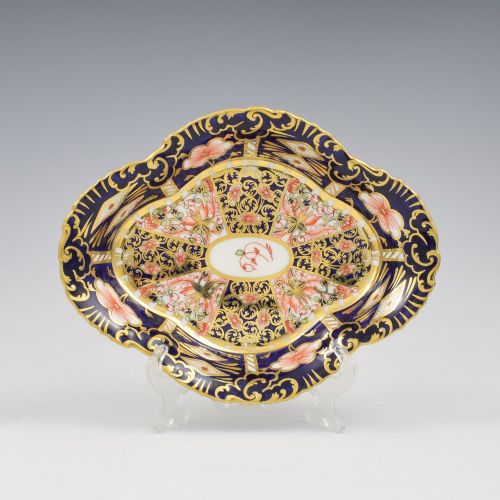
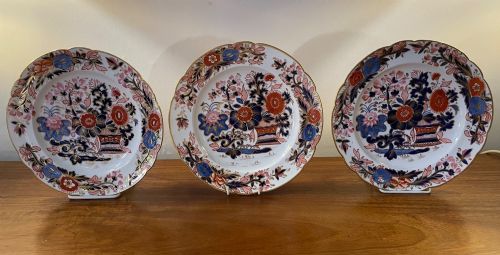


Japanese Imari Cabinet Plate
A Japanese imari cabinet plate brings rich iron-red and cobalt-blue decoration into a room, offering a striking focal point for a wall or display stand.
Japanese Imari Cabinet Plate
A Japanese imari cabinet plate sits among the decorative plates, chargers, and dishes found in this selection, often taking circular, scalloped, hexagonal, or shell-shaped forms. Most examples encountered here date from the nineteenth century, the Victorian era, or around nineteen hundred, reflecting robust production from that broad span. Buyers will also spot occasional nineteenth-century Staffordshire and Derby pieces executed in an imari palette alongside the core Japanese porcelain.
The objects serve primarily as decorative wall or cabinet pieces rather than functional tableware, celebrated for their elaborate patterns. Forms range from standard circular plates to larger chargers and unusual shaped edges like scallops and shells. This variety allows collectors to curate displays that mix standard rounds with distinctive geometric and organic silhouettes.
Materials and Techniques
Makers shaped these items from porcelain, ceramic, and earthenware before applying underglaze blue and overglaze enamel colours. The decorative schemes frequently integrate gold leaf, gilt, gilding, and clear glaze to add metallic lustre and depth to the surface.
Firing procedures fused the body with durable glazes, while subsequent low-temperature kilns set the delicate enamel pigments and precious metal accents. This multi-step process ensured the characteristic dense patterns remained vibrant across decades of handling and display.
Two quails peek out from historic imari patterns, bringing a touch of quiet avian charm to busy ceramic borders.
Quality Variations
Differences in quality manifest through the precision of the hand-painted brushwork and the complexity of the cobalt and enamel motifs. Superior examples display crisp registration between the underglaze blue lines and the overlaid red and gilt details.
The refinement of the porcelain paste and the evenness of the glaze further distinguish standard production from exceptional pieces. Form also plays a role, with unusual silhouettes such as shell or hexagonal shapes demanding greater skill from the potter.
The Japanese Imari Cabinet Plate Glossary
- Imari palette
- A traditional decorative scheme dominated by cobalt blue, iron red, and supplementary gold. This distinct colour combination originated in Japan and was later emulated by European potteries.
- Cabinet plate
- A decorative ceramic piece intended for display in a cabinet or on a wall rather than for everyday dining use. These items usually feature intricate surface work.
- Charger
- A large decorative plate or dish utilised for ceremonial display or as a base for other vessels. They command attention through sheer scale and bolder pattern work.
- Meiji Period
- The historical era spanning from eighteen sixty-eight to nineteen twelve, coinciding with significant ceramic exports to Western markets. Pieces from this time often show confident enamel painting.
- Kakiemon style
- An asymmetrical decorative approach featuring sparse, refined pictorial motifs like birds and foliage. European factories frequently borrowed this aesthetic during the early nineteenth century.
Japanese Imari Cabinet Plate: Frequently Asked Questions
How do I hang a cabinet plate safely?
Use a coated spring wire hanger that distributes pressure evenly across the rim without biting into the ceramic body. Ensure the wall fixing is anchored securely into a stud or uses a proper wall plug.
Check the tension of the springs periodically to make sure the plate remains firmly gripped. Avoid hanging pieces in areas subject to heavy vibration or direct sunlight.
Are these plates suitable for food use?
These pieces function primarily as decorative objects for display cabinets or walls rather than for serving meals. Overglaze enamels and gold gilding from earlier periods can degrade or contain metallic residues if subjected to acidic foods.
Maintain their condition by dusting them gently with a soft, dry cloth instead of washing them in water. Keeping them out of active kitchens protects the surface from grease and moisture.
How do I distinguish Japanese imari from European copies?
Examine the body paste through the unglazed foot ring for the characteristic greyish-white density of Japanese porcelain versus softer European earthenwares. Japanese examples from this period often display specific brushwork habits and spur marks from kiln supports.
Compare the quality of the cobalt blue underglaze and the crispness of the iron red overglaze. European factories like Derby often adopted the palette but left different potting signatures on the reverse.
What is a charger?
A charger is a substantially larger version of a standard plate, typically measuring well over twelve inches in diameter. They were designed to dominate a sideboard or wall display.
Because of their grander canvas, artists filled them with more complex, layered compositions of floral and geometric motifs. They represent the more ambitious output of the kiln.