


Imari Porcelain Cabinet Plate
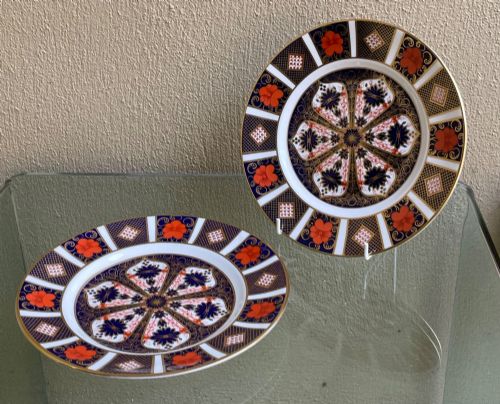
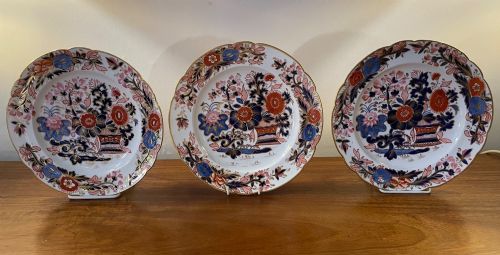
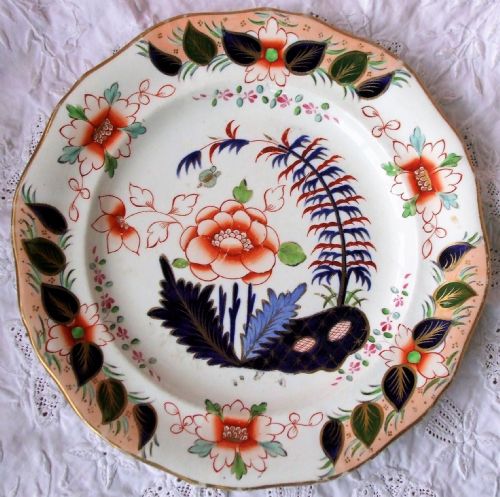
These imari porcelain cabinet plate examples range from 18th-century imports to later English interpretations, prized for their vibrant palettes and decorative forms.
Imari Porcelain Cabinet Plate
An imari porcelain cabinet plate brings together centuries of ceramic history, spanning Japanese origins, Chinese export work, and English adaptations. When you examine an imari porcelain cabinet plate, you encounter a distinct decorative tradition defined by iron red, underglaze blue, and gilt highlights.
The selections available here lean heavily toward Japanese imari porcelain cabinet plate examples from around 1900, alongside English ironstone and bone china interpretations from the Georgian and Victorian eras. These decorative plates, chargers, and dishes served primarily for display in formal rooms rather than daily dining.
Forms vary from standard circular plates to scalloped edges, hexagonal silhouettes, and shell shapes. Makers such as Royal Crown Derby, John Davenport, Masons, and Worcester adapted the palette to bone china and ironstone, creating a bridge between Asian prototypes and British tastes.
Judging Quality and Execution
Quality rests upon the crispness of the hand-painted brushwork and the vibrancy of the enamel and gold leaf application. Finer pieces display precise control over the cobalt blue and iron red motifs without bleeding into the surrounding glaze.
The sophistication of the moulding also separates standard production from superior examples. Scalloped edges, hexagonal geometry, and shell-moulded forms require greater skill from the potter compared to plain circular plates.
Listings feature periods ranging from the 18th century through Georgian, Victorian, and Meiji times, utilising materials like porcelain, ironstone, and bone china.
Royal Crown Derby·John Davenport of Longport·Flight Barr And Barr·Chamberlain Worcester·Masons Ironstone China
The Imari Porcelain Cabinet Plate Glossary
- Imari style
- A decorative scheme employing underglaze blue, iron red, and gilt, originating in Japan and later copied in Europe. This palette creates a striking contrast that remained popular across multiple centuries.
- Cabinet plate
- A decorative ceramic piece intended for display in a cabinet or on a wall rather than functional dining use. These items typically feature higher quality painting and more ambitious forms.
- Ironstone
- A heavy, durable type of ceramic patented in the 19th century as a robust alternative to porcelain. Factories like Masons utilised this material for patterned tableware.
- Kakiemon
- An asymmetric style of Japanese enamel decoration featuring delicate pictorial motifs such as birds and flowers. This influence appears on several early English porcelain plates.
- Charger
- A large decorative plate or dish used historically for ceremonial service or prominent display. These substantial pieces provide a wider canvas for complex imari patterns.
Imari Porcelain Cabinet Plate: Frequently Asked Questions
How do I display an imari plate?
Secure the piece in a dedicated wall mounting or a stable cabinet stand designed for heavy ceramics. Ensure the display method supports the full weight of the plate without putting pressure on the edges.
Keep the plate away from direct sunlight to protect the enamel colours and gold leaf highlights from fading over time.
Are these plates safe for food use?
Antique cabinet plates are intended for decorative display rather than daily dining or serving. Historic glazes and enamels can wear down or contain materials unsuitable for modern food contact.
Hand wash the piece gently with tepid water and mild soap only when necessary, avoiding dishwashers and harsh abrasives entirely.
How can I tell Japanese imari from English imari?
Japanese examples from the Meiji period and earlier often feature specific body characteristics, lighter potting, and distinct stacking ring marks on the base. The iron red and blue tones also carry a different depth compared to European interpretations.
English makers such as Derby and Worcester marked their pieces with factory stamps, painted ciphers, or impressed initials, whereas many 19th-century Japanese imports relied on visual style alone.
What does the imari palette consist of?
The traditional imari palette centres on deep underglaze blue and fiery iron red, augmented by generous applications of gold leaf. This combination delivers a rich, multi-layered appearance across the ceramic surface.
Additional enamel colours like green, yellow, and aubergine frequently support the primary red and blue tones within floral and landscape motifs.