




Imari Patterned Porcelain Charger
An imari patterned porcelain charger brings deep cobalt underglaze, iron-red enamel, and gold leaf together on heavy ceramic bodies.

Imari Patterned Porcelain Charger
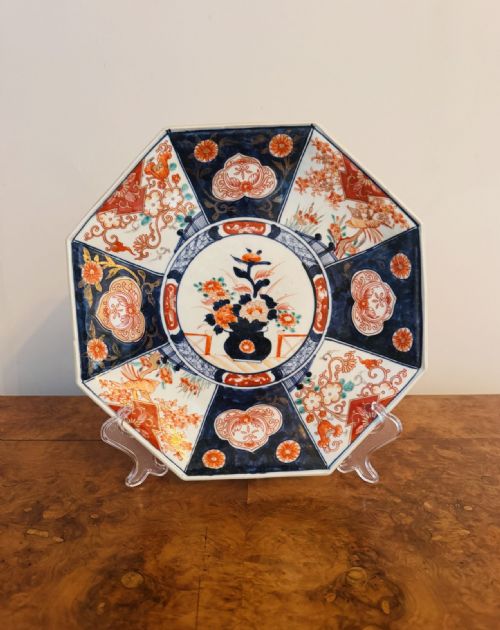
An imari patterned porcelain charger is a broad decorative dish or plate displaying the distinctive red, blue, and gilt palette associated with Japanese and Chinese export traditions. Buyers browsing this page encounter pieces ranging from late seventeenth-century Arita dishes to nineteenth-century English ironstone interpretations and twentieth-century Japanese plates.
The forms span circular plates, scalloped edges, octagonal shapes, and larger bowls grouped under plates and chargers. Origins stretch across Japanese Meiji and Edo periods alongside Chinese export imari and Georgian English adaptations.
The selection reflects both East Asian porcelain traditions and domestic European responses to them. Pieces vary from simple domestic wares to carefully painted octagonal collector examples.
How they were made
Porcelain and ironstone bodies provide the structural base, shaped into plates, dishes, and chargers before firing. Cobalt underglaze is applied prior to the initial glaze firing, establishing the deep blue tones beneath the glassy surface.
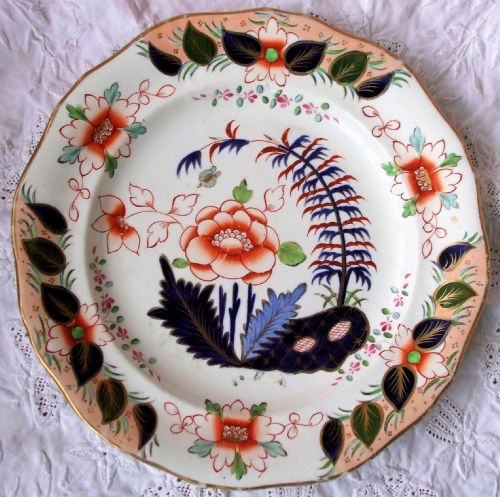
Enamel colours and gold leaf are added over the glaze in subsequent low-temperature firings to build up the characteristic red and metallic highlights. Some English examples utilise heavy ironstone ceramics painted in imitation of the imported Asian prototypes.
Imari Patterned Porcelain Charger Retail Price Guide 2026
Typical asking prices for imari patterned porcelain charger among the pieces listed under this phrase on Sellingantiques today, from the lower quarter to the upper quarter. They describe what is for sale here now, not the wider market.
Listings span seventeenth-century Arita dishes, eighteenth-century Chinese export imari, nineteenth-century English ironstone, and early twentieth-century Japanese plates.
What varies in quality
Precision and crispness in the cobalt underglaze painting separate standard production from finer work. The thickness and purity of the iron-red enamel and the generosity of the gold leaf application determine visual richness.
Purity of the porcelain body, uniformity of the glaze, and complexity of shapes such as scalloped rims or octagonal forms distinguish higher-tier examples from simpler domestic plates.
John Davenport of Longport
The Imari Patterned Porcelain Charger Glossary
- Cobalt Underglaze
- A blue pigment applied directly to the raw ceramic body before glazing and high-temperature firing. This technique ensures the colour remains permanent and protected beneath the glass surface.
- Ironstone
- A heavy, durable type of ceramic developed in nineteenth-century England as a robust alternative to true porcelain. It accepts enamels and gilding readily.
- Aka-e
- A Japanese term meaning red pictures, used to describe wares decorated with iron-red enamel. It forms a primary component of the imari palette alongside blue and gold.
- Arita
- A Japanese town and production centre in Hizen province famous for pioneering porcelain manufacture. Its kilns supplied the core aesthetic imitated across the world.
Imari Patterned Porcelain Charger: Frequently Asked Questions
What is an imari patterned porcelain charger?
An imari patterned porcelain charger is a wide decorative plate or dish decorated in the traditional palette of cobalt blue underglaze, iron-red enamel, and gilt highlights. These pieces originate from Japanese kilns, Chinese export workshops, and English factories.
They function primarily as display items rather than utilitarian tableware. The style bridges Eastern ceramic traditions and Western decorative tastes.
How were these chargers used historically?
Historically, large chargers served as centrepieces on dining tables or were displayed upright on sideboards and walls to demonstrate wealth and taste. Their striking colours made them focal points in formal rooms.
Over time, many shifted entirely from dining use to pure decorative display. Their sturdy ceramic and ironstone bodies ensured survival across generations.
How do you tell Japanese imari from English ironstone versions?
Japanese imari pieces typically utilise fine translucent porcelain bodies with hand-painted cobalt and enamel details. English imari pieces often employ heavy ironstone ceramics produced by makers such as John Davenport.
Examining the foot ring, weight, and body texture reveals whether a piece is true oriental porcelain or a nineteenth-century European adaptation.
How do you care for antique imari plates?
Antique imari plates require gentle hand washing in lukewarm water with mild soap when cleaning is necessary. Dishwashers must be avoided due to the risk of damaging overglaze enamels and gold leaf.
Displaying them securely on stable plate stands or wall hangers protects them from accidental drops. Sudden temperature changes should also be avoided.