







Imari Style Display Platter
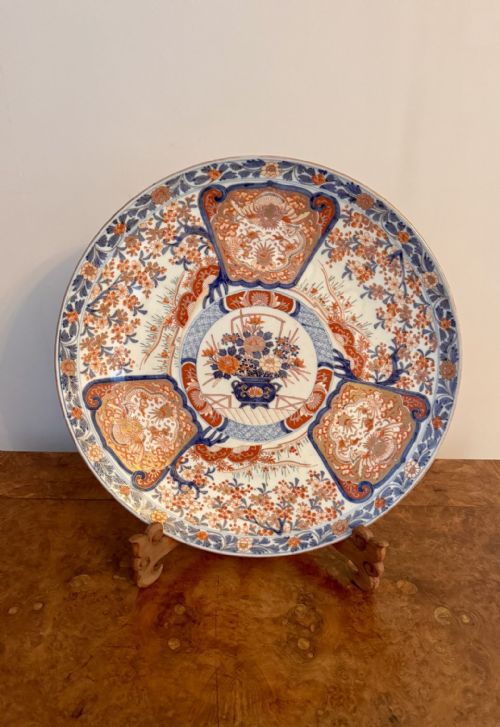
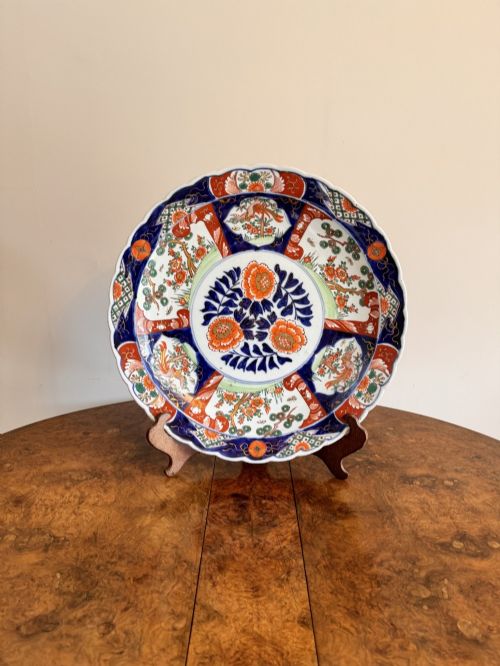
These imari style display platter pieces bring striking colour and pattern to a room, driven by rich cobalt and enamel palettes.
Imari Style Display Platter
When you search for an imari style display platter, you encounter decorative plates, chargers, and dishes primarily originating from Japan, alongside English interpretations. The selection leans heavily toward Japanese porcelain examples from around 1900, carrying traditional cobalt underglaze and enamel work.
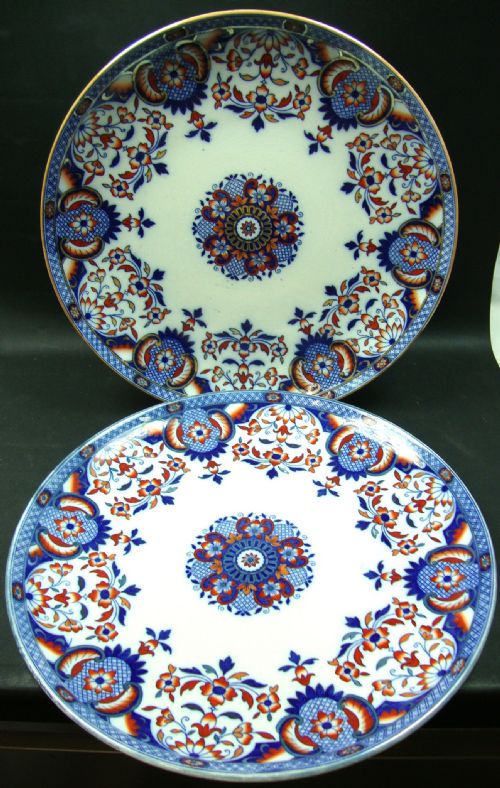
You will also find English ceramic and stoneware variations dating to the Victorian era, including makers such as John Ridgway and Mintons. These pieces often feature scalloped edges, oval shapes, or large round charger formats intended for visual impact rather than daily dining.
The styles span Japanese Imari, Chinese Export, and Qing Dynasty influences, as well as Victorian Chinoiserie and Aesthetic Movement interpretations. This mix reflects a sustained European fascination with East Asian decorative arts throughout the nineteenth and early twentieth centuries.
How they were made
Makers utilised porcelain, ceramic, and stoneware bodies as the foundation for these platters, applying cobalt underglaze for deep blue tones. Enamel and gold leaf were then added to build up the characteristic layered palette seen across the surface.
Kiln firing set the cobalt pigment beneath a clear glaze before secondary overglaze enamels were fused in a subsequent low-temperature firing. This technique created the durable, glossy finish that defines the category.
Imari Style Display Platter Retail Price Guide 2026
Typical asking prices for imari style display platter among the pieces listed under this phrase on Sellingantiques today, from the lower quarter to the upper quarter. They describe what is for sale here now, not the wider market.
Listings feature porcelain, stoneware, and ceramic bodies decorated with cobalt underglaze, enamel, and gold leaf across periods from 1850 to 1920.
What varies in quality
Execution of the painted detail separates standard items from exceptional examples, particularly in the precision of cobalt underglaze work and the density of enamel and gold leaf application. Finer chargers display crisp brushwork and balanced compositions that hold the eye.
The weight and finish of the ceramic body also signal distinction, with heavier porcelain and stoneware forms showing greater substance. Additionally, scalloped edges and unusual oval shapes indicate more ambitious moulding techniques during production.
John Ridgway·Mintons
The Imari Style Display Platter Glossary
- Imari
- A style of ceramic decoration originating in Japan, characterised by a palette of cobalt blue, iron red, and gold. It was widely imitated in Europe during the Victorian period.
- Charger
- A large decorative plate traditionally used for ceremonial display rather than serving food. These pieces form the focal point of many collections.
- Cobalt Underglaze
- A blue pigment applied directly to the raw clay body before glazing and firing. It withstands high kiln temperatures and produces a deep, permanent hue.
- Enamel
- Opaque glass-like paint applied over the fired glaze and fixed in a muffle kiln. It provides the vibrant red, green, and orange details characteristic of this style.
- Aesthetic Movement
- A late nineteenth-century design ethos emphasising visual beauty over narrative meaning. It heavily influenced British makers adopting Eastern motifs.
Imari Style Display Platter: Frequently Asked Questions
What is an imari style display platter?
These items are decorative ceramic plates and chargers featuring the distinctive blue, red, and gold palette associated with Japanese export ware. They include both nineteenth-century Japanese imports and British Victorian interpretations.
Most examples found here date from around 1900, reflecting a strong period interest in East Asian design. They were created primarily for visual display on walls or sideboards.
How were these chargers used originally?
Unlike tableware meant for dining, large chargers and platters served a purely decorative function in Victorian and Edwardian homes. They were displayed on tables, mounted on walls, or placed in cabinets to showcase wealth and taste.
The robust porcelain and stoneware bodies ensured these large formats survived decades of handling. Their bright enamel and gold leaf details caught the gaslight or daylight in formal reception rooms.
How do I care for antique ceramic platters?
Keep these pieces out of direct sunlight to protect the stability of the overglaze enamels and gold leaf. Dust them gently with a dry, soft cloth rather than using liquid cleaners.
Avoid using them for serving food, as historic glazes and overglaze pigments can be sensitive to modern detergents. Secure proper wall mountings or stable plate stands if you choose to display them upright.
How can I tell Japanese from English pieces?
Japanese examples usually employ translucent porcelain bodies with cobalt underglaze and iron-red enamel, often reflecting traditional Arita techniques. British pieces from makers like Mintons or John Ridgway tend to utilise stoneware or dense earthenware with Victorian date marks.
Examining the foot ring and the style of the base will often reveal factory marks or characteristic potting traits. British plates from the 1850s or 1880s frequently bear specific registry or date ciphers.