







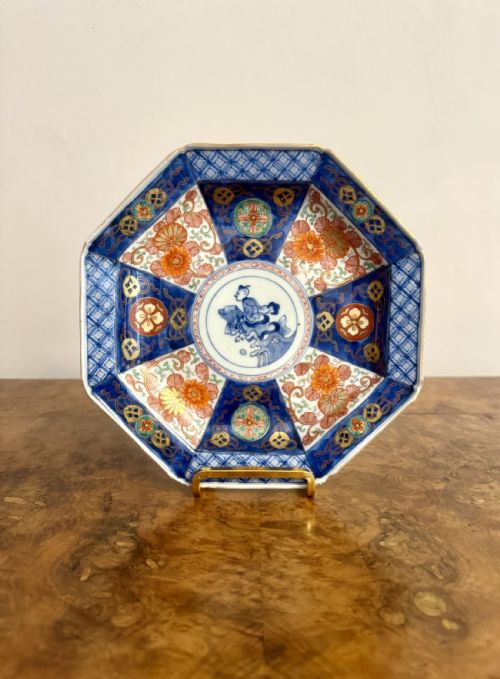
Imari Floral Porcelain Dish
An imari floral porcelain dish brings rich cobalt and iron-red palettes to a table, offering centuries of decorative tradition.
Imari Floral Porcelain Dish
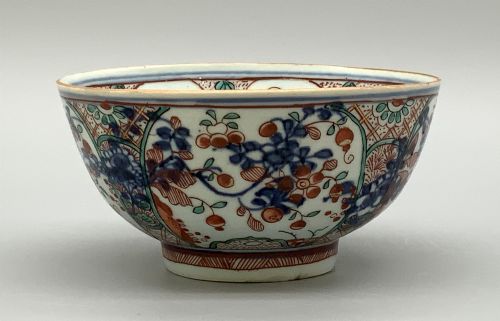
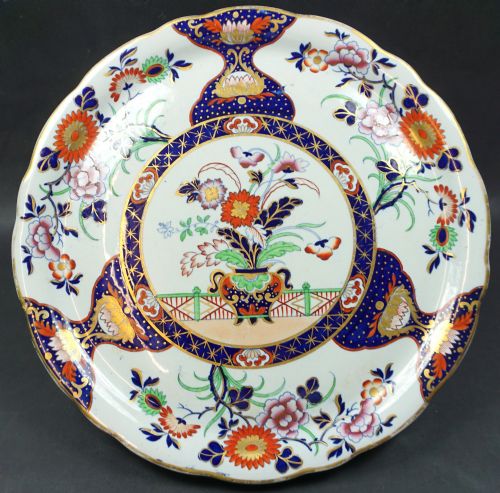
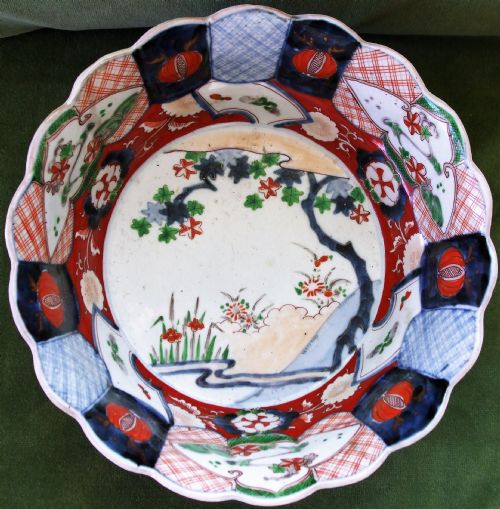
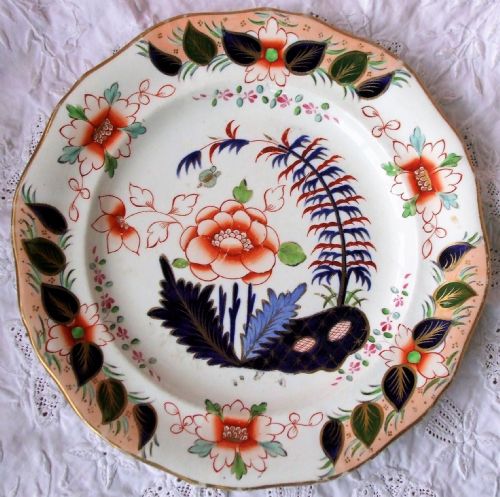
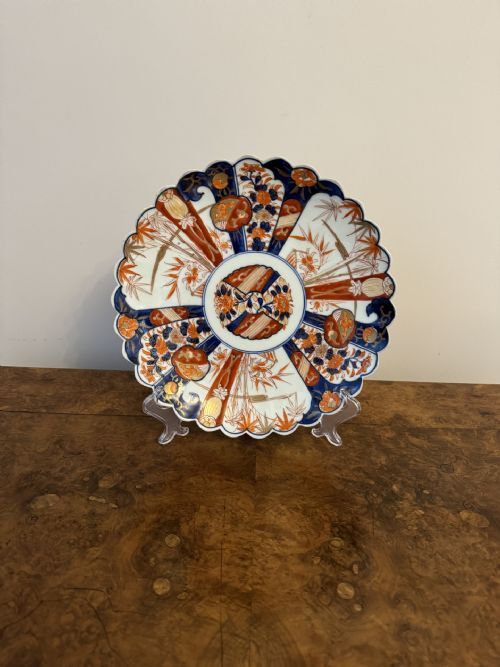
An imari floral porcelain dish is a ceramic piece defined by its distinctive palette of underglaze blue and iron-red, frequently accented with gilding. These items range from small plates and serving bowls to large wall chargers.
The pieces on this page span several centuries and origins, with Japanese Meiji period examples and 19th-century works appearing most frequently. Buyers also encounter Chinese export pieces from earlier periods alongside British interpretations.
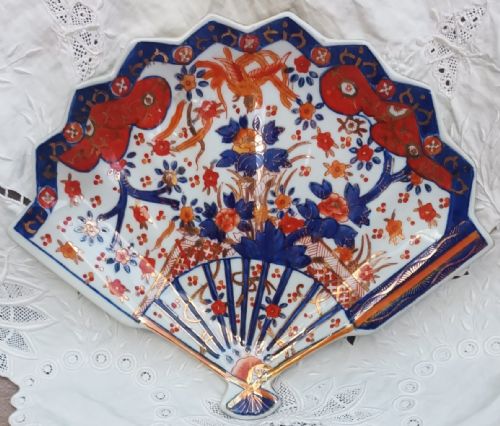
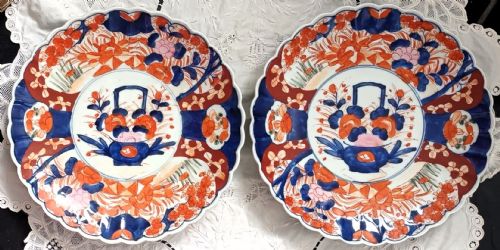
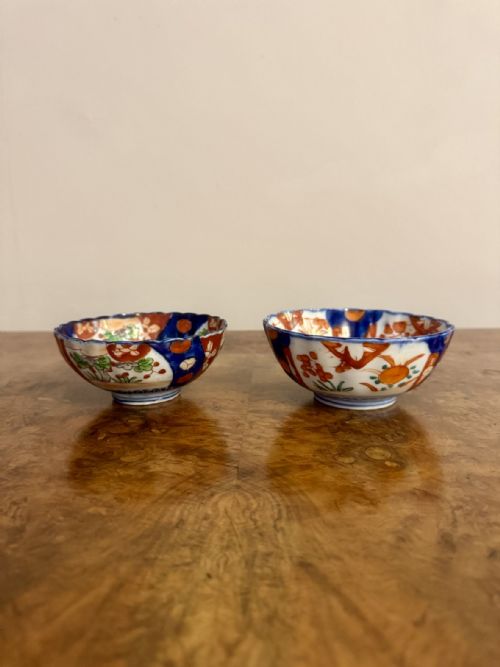
Forms vary from simple round plates to scalloped edge dishes, hexagonal plates, and deep bowls. Many feature floral and bird designs painted by hand across the ceramic surface.
Judging the range of quality
Quality rests in the crispness of the hand-painted floral and bird design, where finer brushwork yields sharper lines and more expressive detail across the porcelain. The precision of the cobalt underglaze and the application of gold leaf also elevate certain chargers and dishes above standard production pieces.
The weight and potting of the ceramic body contribute to desirability, with well-balanced scalloped edges and even glazes marking out superior examples from the 19th century and earlier periods.
Several plates sport scalloped edges designed purely to mimic the organic curve of a sea shell, because straight lines were simply too dull for a proper Victorian dining room.
Hicks & Meigh·John Davenport of Longport
The Imari Floral Porcelain Dish Glossary
- Cobalt Underglaze
- A blue pigment applied to the ceramic body before glazing and high-temperature firing. This technique ensures the blue colour remains permanent and protected beneath the glassy surface.
- Imari
- A style of ceramic decoration originating in Japan and copied in China and Europe. It typically combines underglaze blue with iron-red enamel and gilt highlights.
- Charger
- A large decorative plate or dish used historically for ceremonial display rather than daily dining. These pieces often feature complex floral motifs.
- Scallop Edge
- A decorative border shaped into a series of continuous curves resembling a scallop shell. This shaping appears frequently on Japanese porcelain plates and bowls.
- Gilt
- A thin layer of gold applied to the surface of the porcelain or enamel. It adds reflective warmth to the traditional blue and red palette.
Imari Floral Porcelain Dish: Frequently Asked Questions
What is an imari floral porcelain dish?
An imari floral porcelain dish is a decorative ceramic plate, charger, or bowl decorated in the traditional Japanese or Chinese imari style. These objects use a distinct colour scheme of cobalt blue, iron-red, and gold.
They were produced across multiple centuries, appearing in records from the Edo and Meiji periods as well as 19th-century Europe.
How do I date an imari floral porcelain dish?
Dating relies on examining the potting style, the quality of the porcelain body, and the specific pigments used in the floral and bird designs. 18th-century pieces often reflect Chinese Kangxi styles, whilst 19th-century and Meiji period examples display distinct Japanese manufacturing traits.
Comparing the glaze texture and the vibrancy of the iron-red enamel helps narrow down the period of production.
Were these dishes meant for food?
Many larger chargers and decorative dishes were intended primarily for display on walls or sideboards rather than everyday dining. Smaller bowls and plates saw practical use for serving food.
Their robust porcelain construction allowed for functional use, though heavily gilded pieces were often treasured as decorative items.
How do I display an imari floral porcelain dish?
Dishes and chargers are commonly exhibited on plate stands or hung securely on walls to showcase their intricate hand-painted motifs. Placing them away from direct sunlight helps preserve the iron-red enamel and gold leaf.
Pairing matching plates or combining bowls of varying sizes creates a balanced display on a table or cabinet.