




Imari Export Ware
These imari export ware pieces bring together blue, iron red, and gold porcelain from Japanese kilns.
Imari Export Ware
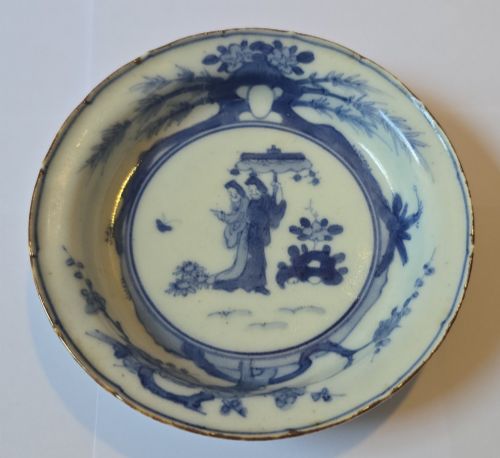
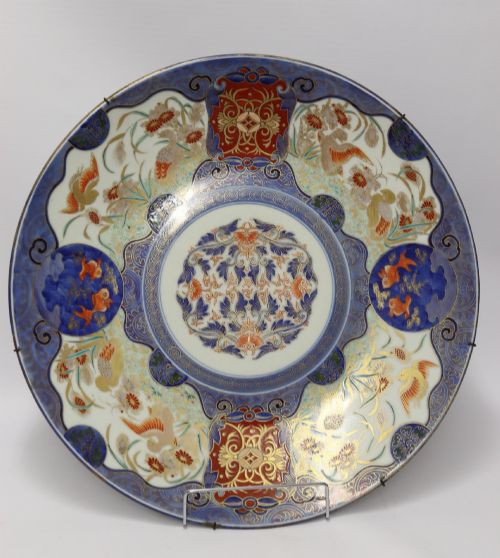
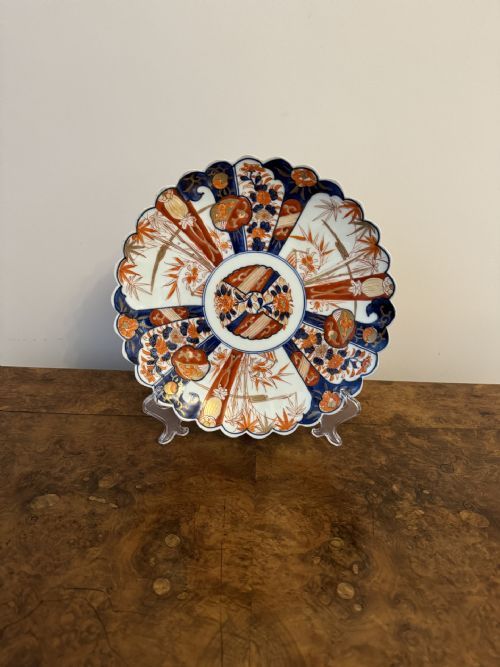
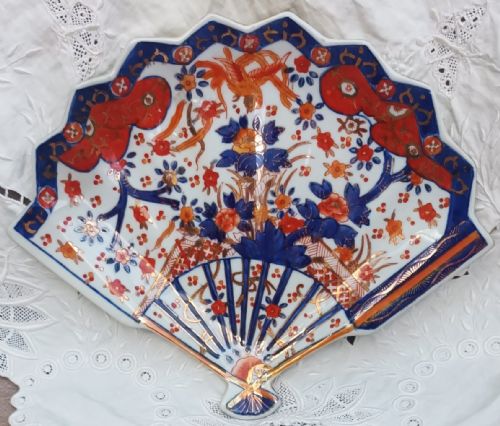
When you search for imari export ware, you encounter porcelain vessels and plates produced in Japan for international markets across the seventeenth, eighteenth, nineteenth, and early twentieth centuries. The selection on this page centres heavily on Meiji period pieces and 1900 examples, alongside items dating back to the Edo period.
The forms span large chargers, scalloped edge bowls, shaped vases, and decorative dishes. Buyers meet both individual plates and pairs or garnitures of three vases intended for display.
Kilns in Arita produced the foundational wares that reached European and global buyers. These objects display characteristic palettes applied to porcelain bodies.
How they were made
Potters shaped porcelain bodies before applying underglaze cobalt glaze and overglaze enamel. Artisans then added details using gold leaf and gilding to enrich the surface designs.
Hand painting forms the decorative technique across the dishes and vases on this page. Enamel glaze sits over fired porcelain, combining rich blue underglaze with red and gold highlights.
Imari Export Ware Retail Price Guide 2026
Typical asking prices for imari export ware among the pieces listed under this phrase on Sellingantiques today, from the lower quarter to the upper quarter. They describe what is for sale here now, not the wider market.
Listings feature porcelain forms ranging from seventeenth century Arita dishes to Meiji period chargers and twentieth century vases.
What varies in quality
The precision and density of the hand painting separate standard production from finer examples. Skilful brushwork on porcelain creates depth within the cobalt glaze and enamel details.
The application of gold leaf and gilding dictates visual presence on chargers and vases. Greater care in kiln firing and pigment selection produces sharper contrast and richer colour.
The Imari Export Ware Glossary
- Imari palette
- A decorative scheme employing underglaze blue, iron red, and gold on white porcelain. This combination defines the visual identity of these wares.
- Arita
- The Japanese town and production centre where Hizen province kilns manufactured porcelain for export. It represents the geographic origin of these items.
- Meiji period
- The era of Japanese history spanning from 1868 to 1912. Many pieces on this page originate from this time of increased trade.
- Edo period
- The period from 1603 to 1867 governed by the Tokugawa shogunate. Early examples on this page date to this earlier era of production.
- Charger
- A large decorative plate intended for display rather than service at table. These form a major category in export porcelain.
Imari Export Ware: Frequently Asked Questions
What is imari export ware?
These items are Japanese porcelain pieces decorated in cobalt blue, red enamel, and gold, created for markets outside Japan.
The tradition spans from seventeenth century Arita pieces through nineteenth century Meiji period examples and later wares.
How do I identify Edo period pieces?
Edo period items date between 1603 and 1867, encompassing early export wares from the seventeenth and eighteenth centuries.
Listings specify these earlier dates alongside specific production centres like Arita.
Where were these pieces made?
Kilns in Hizen province, centred around the town of Arita, produced the porcelain objects found in this category.
Potters there developed the techniques for the blue, red, and gold palette exported abroad.
How were these vessels used?
Export pieces served primarily as decorative items for display in European and global interiors rather than functional tableware.
Large chargers, scalloped bowls, and matched vase garnitures adorned rooms as ornamental focal points.
What colours define this porcelain?
The palette relies on underglaze cobalt blue combined with overglaze red enamel and supplementary gold leaf or gilding.
This distinct three-colour scheme unites pieces made across different centuries.