








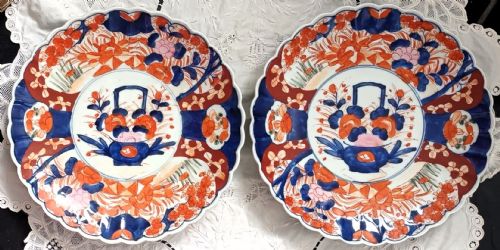
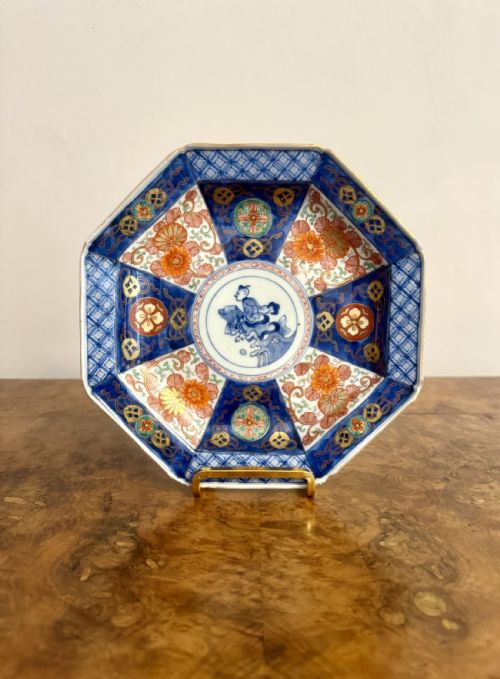
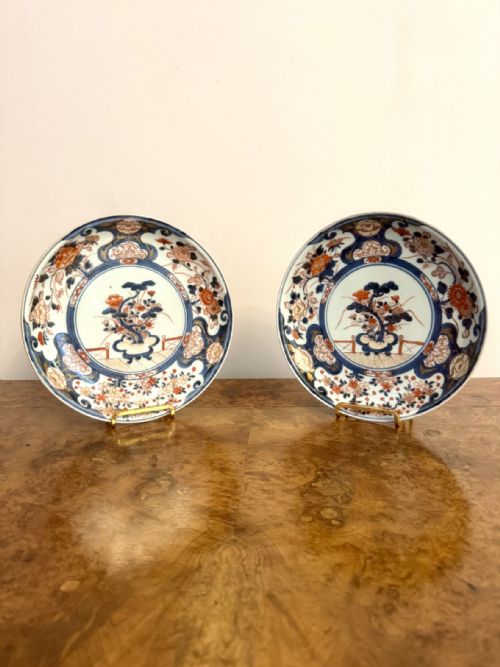
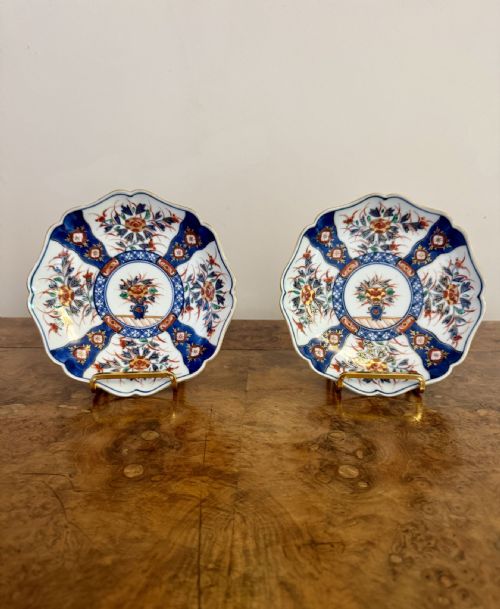
Imari Display Dishes
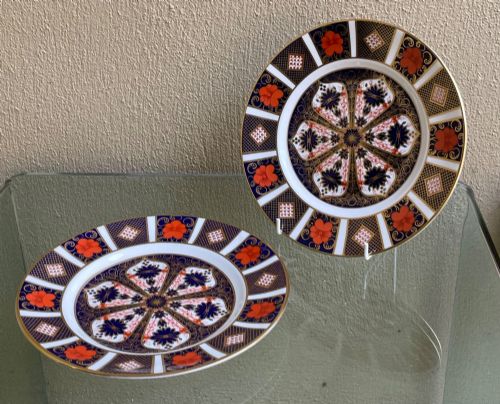
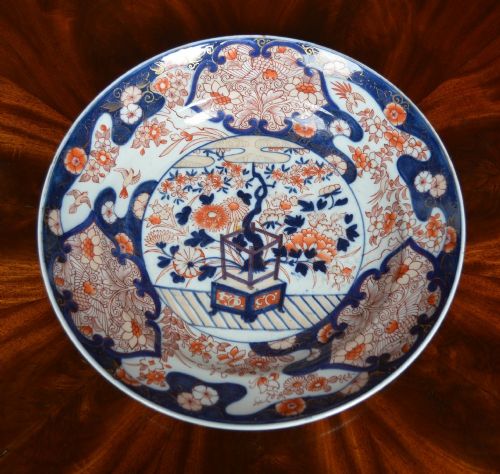
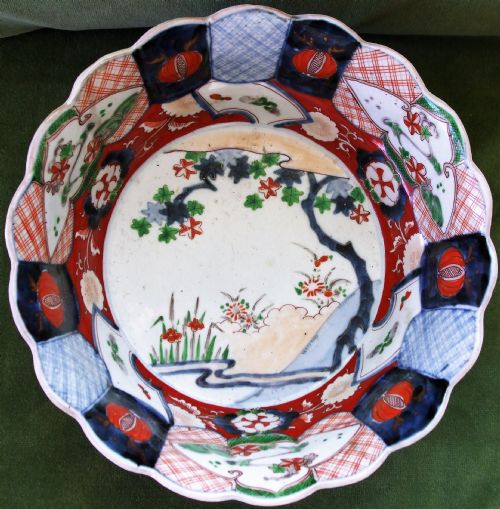
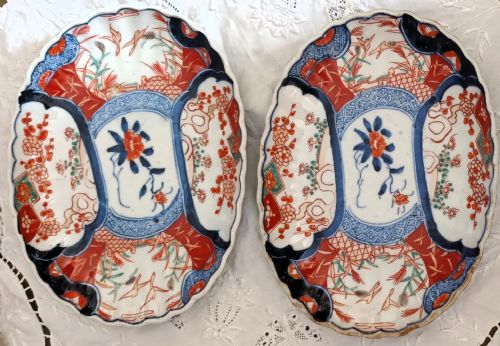
These imari display dishes bring robust iron-red, cobalt blue and gilt patterns to walls and cabinets.
Imari Display Dishes
When you search for imari display dishes, you encounter heavy porcelain plates, chargers and bowls created for visual impact rather than dining use. Most examples stem from the nineteenth century, including Meiji period Japanese pieces alongside eighteenth century Chinese export and later English adaptations.
The common formats on this page are large round chargers, scalloped plates and occasional hexagonal or square vessels. Makers utilised traditional motifs such as exotic birds, floral arrangements and narrative scenes depicting figures like the Seven Lucky Gods.
These ceramics span origins from Japanese kilns in Arita to Chinese workshops and English potteries like Royal Crown Derby and Worcester. Collectors select them for their saturated palette and strong decorative presence within traditional and eclectic interiors.
Materials and Manufacture
Potters shaped hard-paste ceramic and porcelain bodies by hand or on wheels before applying cobalt blue underglaze decoration. After an initial firing, artisans added overglaze enamels in iron-red and green, often finished with gold leaf or gilding.
The multi-stage firing process fixed the underglaze cobalt at high temperatures, while subsequent lower-temperature kilns set the delicate enamel pigments and metal leaf details on the surface.
The listings span Victorian, Meiji period and Georgian eras, uniting Japanese Arita kilns with English porcelain factories.
Assessing Quality
Quality rests upon the crispness of the hand-painted brushwork and the complexity of the composition across the surface. Superior vessels display precise line work in the underglaze blue and richly layered overglaze enamels that sit evenly without running.
The crispness of moulded edges, such as scalloped or hexagonal rims, distinguishes finer specimens from standard production. Weight, proportion and the integration of gilding further separate standard export items from exceptional works.
Royal Crown Derby·Flight Barr And Barr·Worcester
The Imari Display Dishes Glossary
- Imari Style
- A decorative ceramic aesthetic characterised by a palette of cobalt blue, iron-red and gold, originating in Japan and widely copied in China and Europe. It translates bold colour schemes onto heavy porcelain surfaces.
- Charger
- A large decorative plate intended for display on a sideboard or wall rather than for serving food. These substantial dishes measure well beyond standard diningware.
- Meiji Period
- The era in Japanese history spanning from eighteen sixty-eight to nineteen twelve, noted for prolific porcelain production for export markets. Pieces from this time often exhibit intricate floral and avian themes.
- Overglaze Enamel
- Coloured glass paste applied over the fired glaze and fixed in a second, cooler kiln firing. This technique allows for bright reds, greens and yellows alongside the primary blue.
- Underglaze
- Pigment applied directly to the unfired or biscuit ceramic body before the transparent glaze is added. Cobalt is the most common underglaze pigment because it withstands high kiln temperatures.
Imari Display Dishes: Frequently Asked Questions
How do I hang a heavy charger?
Display chargers require specialist spring-loaded wall hangers that distribute the weight safely across the rim and base without causing structural stress to the porcelain.
Ensure the wall fixing is secured into a stud or uses an appropriaterawl plug to support the considerable weight of nineteenth-century ceramic pieces.
Are these dishes safe for food?
Antique display ceramics were made primarily for visual decoration and often contain overglaze metallic enamels that can wear with cutlery use. They are best reserved for display on walls, cabinets or plate stands.
Hand-washing in lukewarm water without harsh detergents protects the delicate gold leaf and enamel pigments from chemical degradation.
How do I date an Imari piece?
Dating relies on examining the porcelain body, foot rim finish, glaze characteristics and the vibrancy of the iron-red and cobalt pigments. Nineteenth-century Meiji examples often show specific potting traits distinct from earlier eighteenth-century Chinese export pieces.
Maker marks, where present on the reverse, provide further chronological clues but many export wares carry pseudo-marks or none at all.