
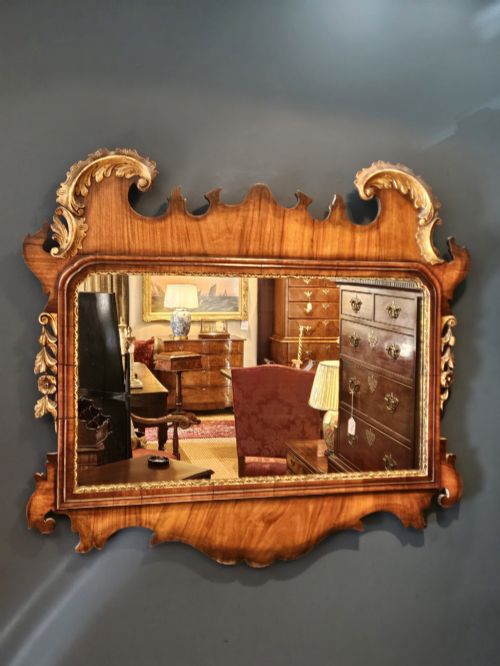

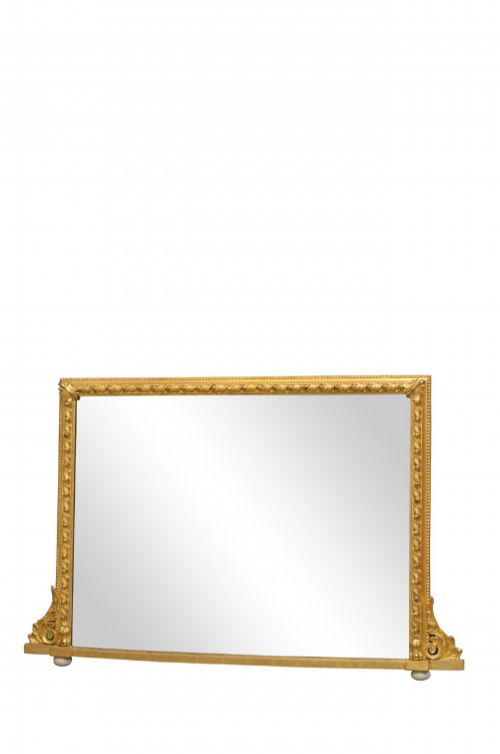


Horizontal Gilt Mirror
A horizontal gilt mirror brings scale and reflected light to a room, and on this page you will find pieces ranging from grand overmantels to smaller wall-hung designs.
Horizontal Gilt Mirror
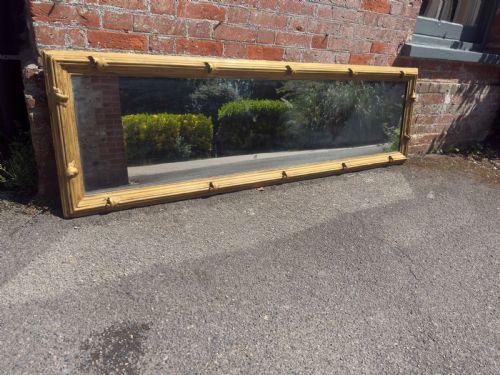
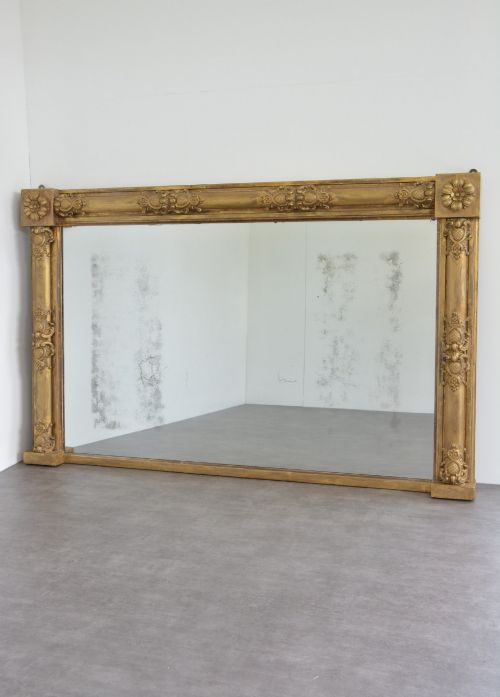
A horizontal gilt mirror is typically encountered as a substantial overmantel mirror designed to sit above a fireplace, or as a wider landscape wall mirror spanning a chimney breast or sideboard. These pieces originate across the eighteenth, nineteenth and early twentieth centuries, drawing on Regency, Victorian, George III and Art Deco styles.
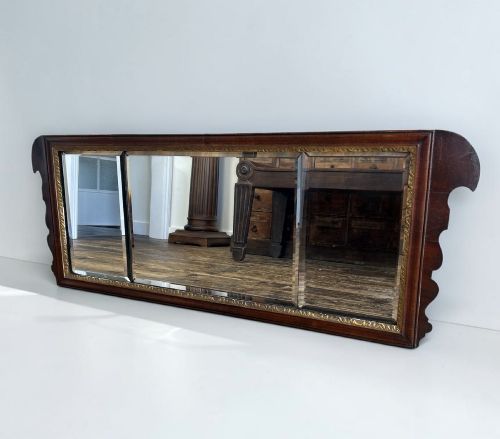
The format frequently incorporates triple plates, tryptic configurations or landscape orientations that visually expand interior space. Walnut, mahogany, birds-eye maple and rosewood carcasses appear beneath parcel gilt, painted or gilded surfaces, alongside simpler metal-framed variations from the twentieth century.
Materials and construction
Carved wood provides the structural foundation for many examples, utilising timbers such as mahogany, walnut and pine beneath decorative schemes. Gesso and composition ornamentation are applied over wood to build up relief details and classical mouldings before finishing.
Gold leaf or gilt applications coat the carved and moulded surfaces to achieve the characteristic reflective sheen. Plate glass forms the reflective element, sometimes showing age through light foxing or surviving in original condition.
Listings feature horizontal gilt mirror designs spanning from George I and George III periods through Regency, Victorian, and Art Deco eras.
Judging quality in a horizontal gilt mirror
The crispness and depth of the carved wood and gesso ornamentation distinguish finer examples from simpler production. Superior pieces retain their original gilding and historic mirror plates, showing harmonious ageing rather than unsympathetic repainting.
Proportion and timber selection also mark out better work, particularly where figured walnut, mahogany or birds-eye maple form part of the framing. The integrity of the structural joints and the retention of original backing boards indicate higher standards of period craftsmanship.
The Horizontal Gilt Mirror Glossary
- Overmantel mirror
- A large horizontal mirror specifically scaled to hang above a fireplace mantelpiece. These pieces often feature landscape orientations designed to fill the wall space beneath the cornice.
- Giltwood
- Timber that has been coated with gold leaf or metal leaf over a prepared base. This surface treatment defines the bright appearance characteristic of these frames.
- Gesso
- A plaster-like mixture applied to wood frames to create a smooth surface for gilding or to be moulded into intricate relief decorations. It allows for sharp detail in classical and revival motifs.
- Tryptic
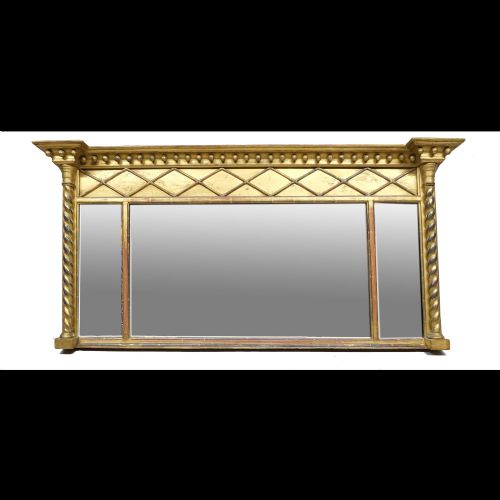
- A mirror divided into three distinct vertical sections within a single frame. This configuration appears frequently in Regency and Georgian horizontal designs.
- Foxing
- Small dark spots and patination that develop on mirror glass over time due to the degradation of the silver backing. Collectors often value original lightly foxed plates as evidence of genuine age.
Horizontal Gilt Mirror: Frequently Asked Questions
Where should I hang a horizontal gilt mirror?
These pieces traditionally anchor a room when positioned above a fireplace mantelpiece, where their length balances the hearth below. They also function effectively above sideboards, low bookcases or sofas to draw light across the floor.
Because of their substantial weight, secure wall fixings into masonry or properly located studs are essential to support the frame safely.
How do I identify a Regency horizontal gilt mirror?
Regency examples frequently display classical architectural motifs such as reeding, ball ornament details or triple plate configurations within the frame. The proportions tend to emphasise width, often utilising parcel gilt and painted elements alongside traditional gilding.
Checking the construction methods behind the frame helps confirm the period, as nineteenth-century carcase timbers and backboards differ from later reproductions.
What does original glass look like?
Original period glass often exhibits minor imperfections, slight distortions in the reflection, and light foxing where the silvering has aged. These natural signs of wear distinguish historic plates from modern replacements.
Examining the depth and clarity of the reflection reveals whether the glass has survived from the date of the frame's manufacture.
How do I care for a giltwood frame?
Giltwood surfaces require gentle dusting with a dry, soft brush to prevent the accumulation of dirt without disturbing the fragile metallic leaf. Moisture and chemical cleaning products should be avoided entirely to protect the historic gesso and gilding.
Placing the mirror away from direct sunlight and damp environments helps preserve the stability of both the wood carcase and the finish.