
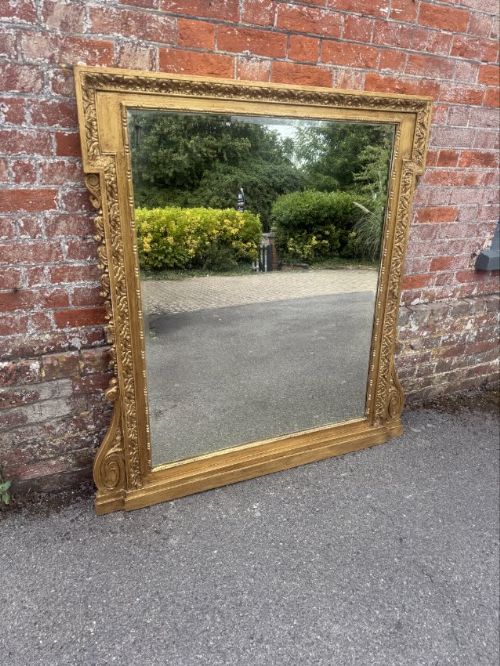
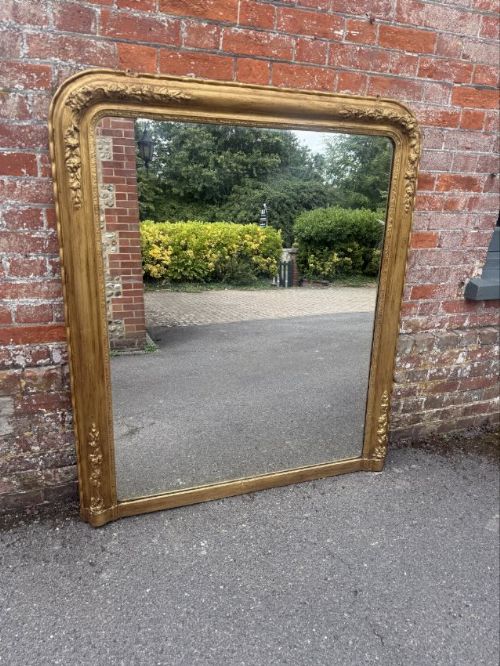
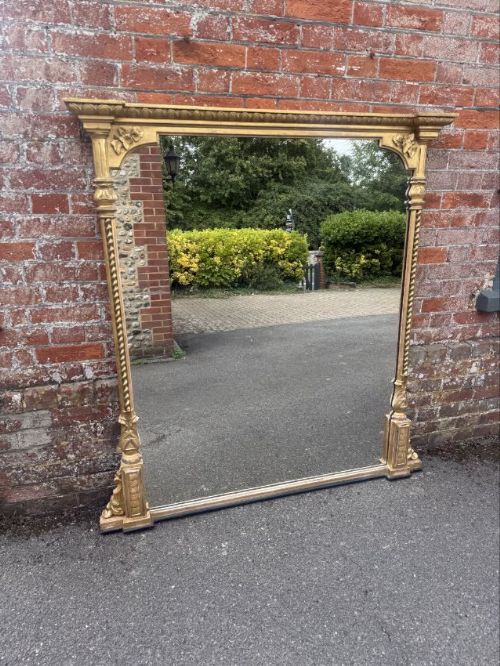
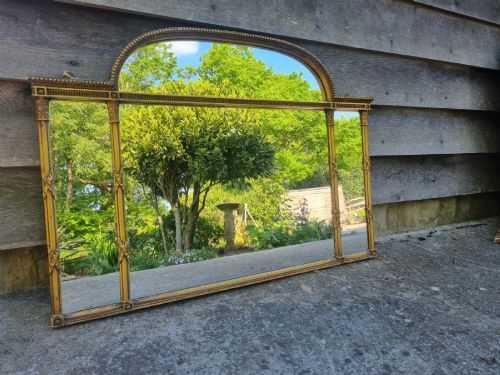
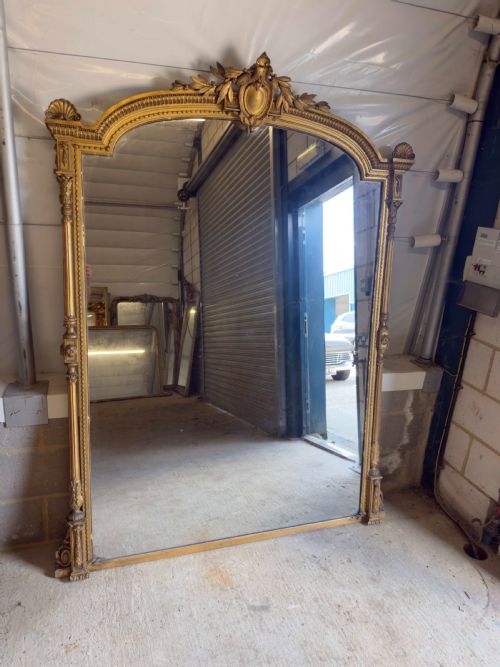
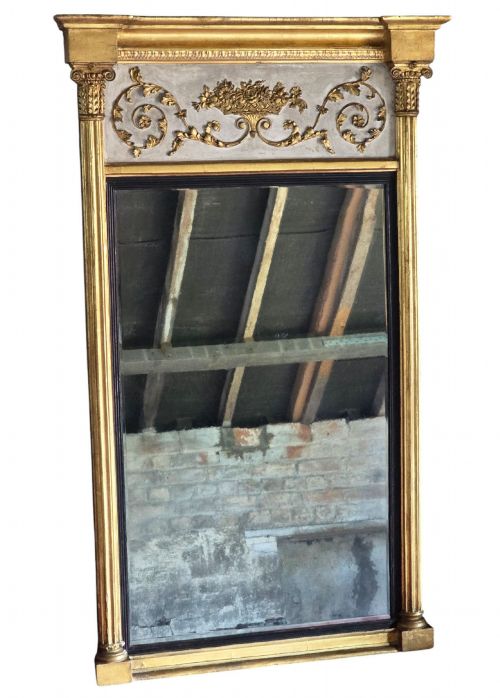
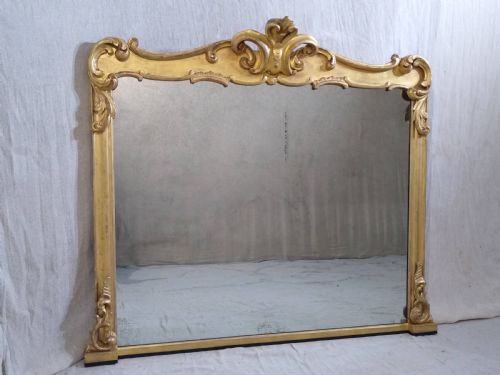
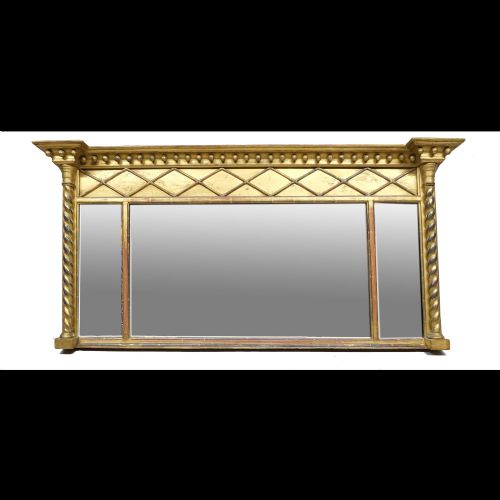
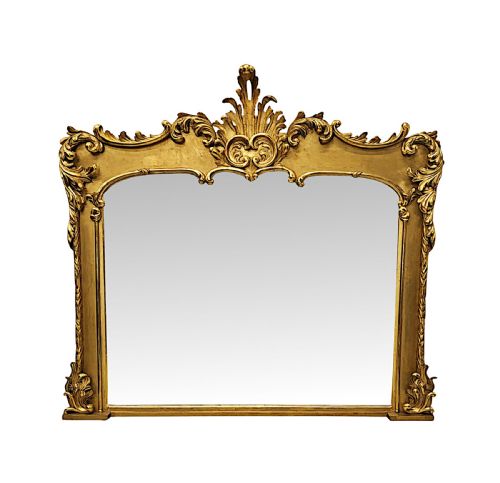
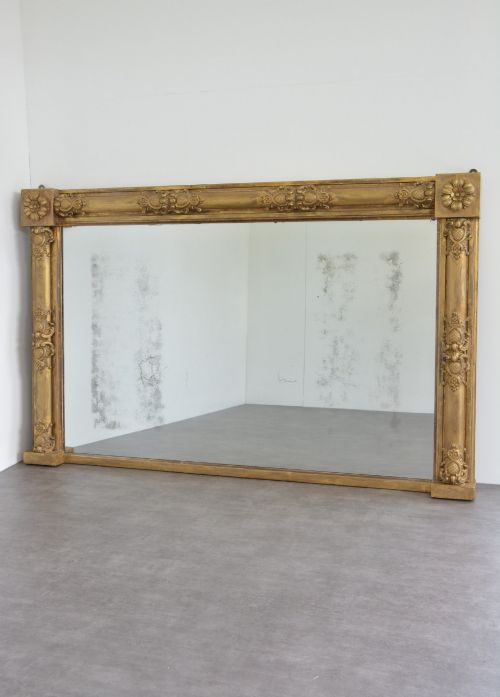


Giltwood Chimney Mirror
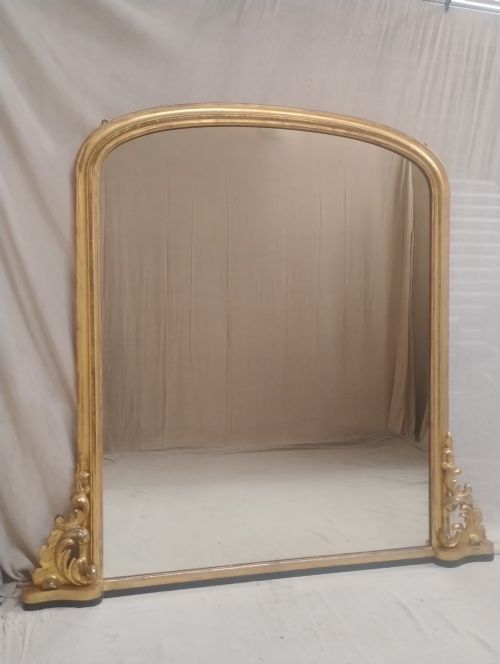
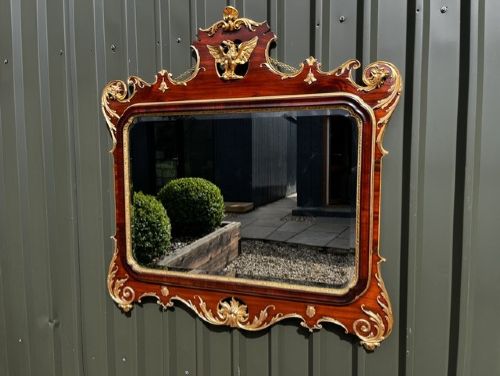
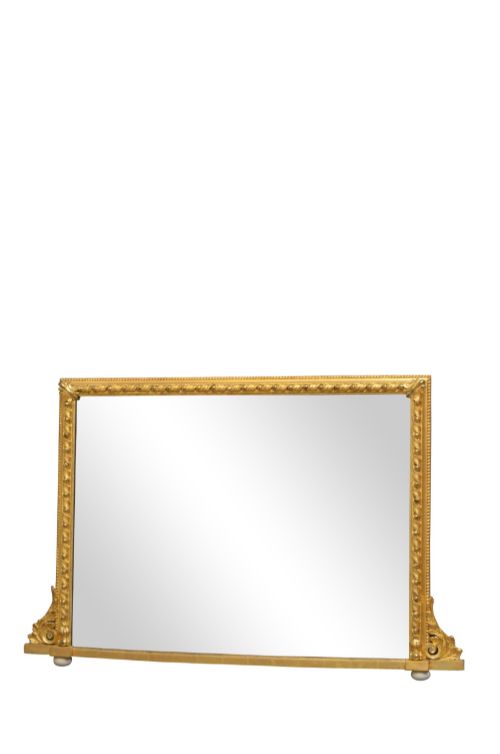
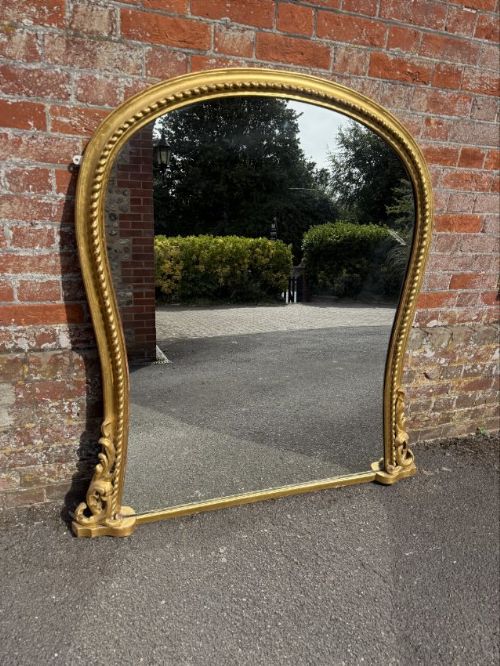
A giltwood chimney mirror commands the room above a fireplace, reflecting light and adding architectural presence.
Giltwood Chimney Mirror
A giltwood chimney mirror is designed specifically to hang on the wall directly above a fireplace mantelpiece, often spanning a grand scale to fill the vertical space. These pieces reflect natural light around the room and serve as a central focal point in period interiors.
Most examples found here date from the nineteenth century, including Regency and Victorian eras, alongside select eighteenth-century and early twentieth-century interpretations. Common forms include large overmantels, pier mirrors, and architectural trumeau panels incorporating oil paint or carved motifs.
Materials and construction
Carved wood provides the structural frame, typically overlaid with gesso to build up intricate decorative profiles, rope twists, and ribbed columns before gilding takes place. Gold leaf and composition ornament are applied over the prepared surface to create the bright metallic finish characteristic of these frames.
Mirror glass sits within the rebate, often retaining original foxing or silvering imperfections that indicate age. Certain items incorporate oil paint panels or specialised details such as trumeau plates and wooden pediments.
The listings span the eighteenth, nineteenth, and early twentieth centuries, featuring Regency, Victorian, and Neoclassical styles.
Distinctions in quality
Depth of carving and sharpness of the gesso mouldings separate standard production from finer craftsmanship. Crisp relief work on neoclassical decorations, rosettes, and rococo scrolls indicates skilled hand-carving rather than mass-produced composition ornament.
The integrity of the original gilding and the condition of the mirror plate determine the visual impact. Patina built up over centuries on the gold leaf and authentic ageing on the glass surface distinguish superior survivals from later restorations.
The Giltwood Chimney Mirror Glossary
- Giltwood
- Wood that has been coated with gold leaf or metal leaf. This traditional finish gives the frame its luminous golden surface.
- Gesso
- A plaster-like mixture applied to wood frames to create a smooth surface for carving and gilding. It allows for intricate relief ornamentation.
- Overmantel
- A large mirror or painting designed to hang specifically above a fireplace mantel. These pieces were proportioned to match the width of the fireplace below.
- Trumeau
- An architectural mirror or decorative panel placed on the wall between windows or above a mantel. They frequently combine painted scenes or carved woodwork with the mirror plate.
- Foxing
- Age-related spots and discolouration within the mirror glass. This natural degradation creates a mottled reflection unique to antique mirrors.
Giltwood Chimney Mirror: Frequently Asked Questions
How do I hang a heavy chimney mirror safely?
Large overmantel mirrors carry significant weight from their wooden frames and thick glass plates. They require heavy-duty fixings secured directly into wall studs or masonry.
Professional installation is recommended to distribute the load evenly and protect the antique frame from strain.
What is the difference between an overmantel and a pier mirror?
An overmantel mirror is specifically proportioned to sit horizontally or vertically above a fireplace mantelpiece. They are usually wide and designed to anchor the hearth area.
Pier mirrors, by contrast, traditionally hung on the narrow wall space between two windows to maximise light reflection.
Can I clean the original glass without damaging it?
Original mirror glass with historic foxing requires gentle cleaning to preserve the delicate silvering behind the plate. Use a soft, dry microfibre cloth to remove dust.
Avoid harsh chemical glass cleaners that can seep behind the edges and accelerate degradation of the backing.
How do I identify a Regency period frame?
Regency frames often feature classical architectural motifs, reeded columns, and bold geometric shapes influenced by neoclassical design. Gilded surfaces from this era frequently utilise brighter gold leaf.
Proportions tend to be balanced and restrained compared to later ornate Victorian revivals.