




Hongmu Pedestal Table
A hongmu pedestal table brings dense, richly coloured hardwood and carved detail into a room, offering a solid surface for plants and urns.
Hongmu Pedestal Table
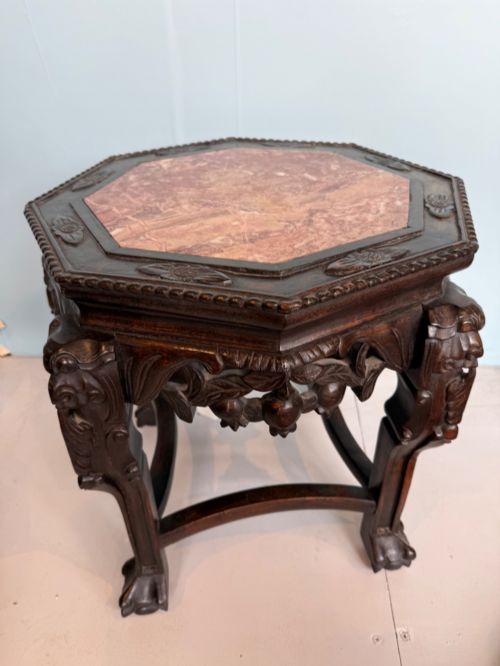
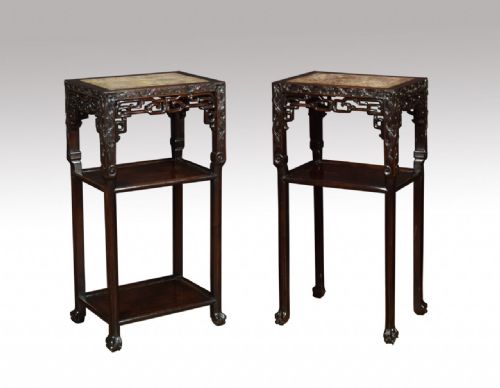
A hongmu pedestal table is a sturdy, decorative support designed for display, appearing in forms such as plant stands, urn stands, side tables, and small centre tables. These pieces originate primarily from the nineteenth century, including Qing Dynasty and Republic Period examples, bringing traditional craftsmanship into domestic spaces.
Buyers encountering this selection will frequently find carved hardwood and rosewood constructions, often featuring inset marble tops in shades like rouge. The forms range from single-tier plant stands to two-tier stands and tripod tables, reflecting varied utilitarian and decorative functions in historical interiors.
How they were made
Makers utilised dense timbers such as hongmu, rosewood, and general hardwood to build these tables, selected for their weight, strength, and deep natural grain. Artisans shaped these resistant materials using traditional joinery methods that allowed the wood to remain stable over decades of use.
Carving formed an essential part of the construction, adorning the aprons, legs, and surfaces with intricate motifs characteristic of Chinese export and Qing Dynasty styles. Inset marble tops, particularly rouge varieties, were fitted directly into wooden frames to provide a cool, durable upper surface.
Listings feature items from the nineteenth century, including specific dates like eighteen eighty and nineteen thirty, alongside Victorian era entries.
What varies in quality
Quality in these stands rests upon the crispness of the wood carving and the depth of colour in the timber. Pieces with deeply sculpted floral or geometric details demonstrate greater skill from the maker than simpler, flatter surfaces.
The integration of the marble insert affects the overall execution, with tighter joints and well-selected stone elevating the piece. The choice of heavier, more densely figured hongmu or rosewood further distinguishes the finer examples from standard hardwood items.
The Hongmu Pedestal Table Glossary
- Hongmu
- A traditional Chinese term denoting dense, fragrant hardwoods, often translated as red wood. It encompasses several heavy species prized for dark colour and durability.
- Jardiniere stand
- A tall, small-topped table specifically designed to hold a ceramic plant pot or flower bowl. These stands elevate greenery to display it effectively within a room.
- Qing Dynasty
- The last imperial dynasty of China, lasting from sixteen forty-four to nineteen twelve. Pieces from this era often exhibit formal carved motifs and traditional joinery.
- Tripod table
- A small table supported by three legs rather than four. This configuration offers steady placement on uneven floors and creates a lighter visual silhouette.
Hongmu Pedestal Table: Frequently Asked Questions
What is hongmu wood?
Hongmu is a general category for dense, heavy hardwoods used in traditional Chinese furniture making. It is valued for its rich natural colour and substantial weight.
Furniture made from this material resists wear and takes intricate carved detail exceptionally well.
How are marble top stands used?
These stands serve primarily to display heavy decorative items such as ceramic urns, bronze vases, and large indoor plants. The stone surface provides a practical shield against moisture and soil.
They also function as compact side tables or bedside supports in smaller spaces.
How do I date a Chinese hardwood stand?
Dating relies on observing construction methods, timber patination, and stylistic markers associated with periods like the Qing Dynasty or the nineteenth century. Tool marks and the ageing of the wood fibres offer further clues.
Comparing the decorative carving style to dated examples helps narrow down the decade of manufacture.
Are these tables sturdy enough for daily use?
The dense hardwoods used in these pieces make them remarkably heavy and structurally robust. They easily support everyday objects like lamps, books, and decorative bowls.
Care should be taken to protect the carved edges and the inset stone from heavy impact.