
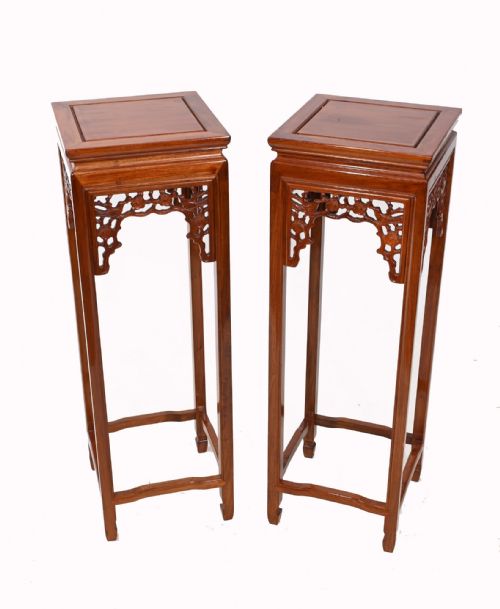
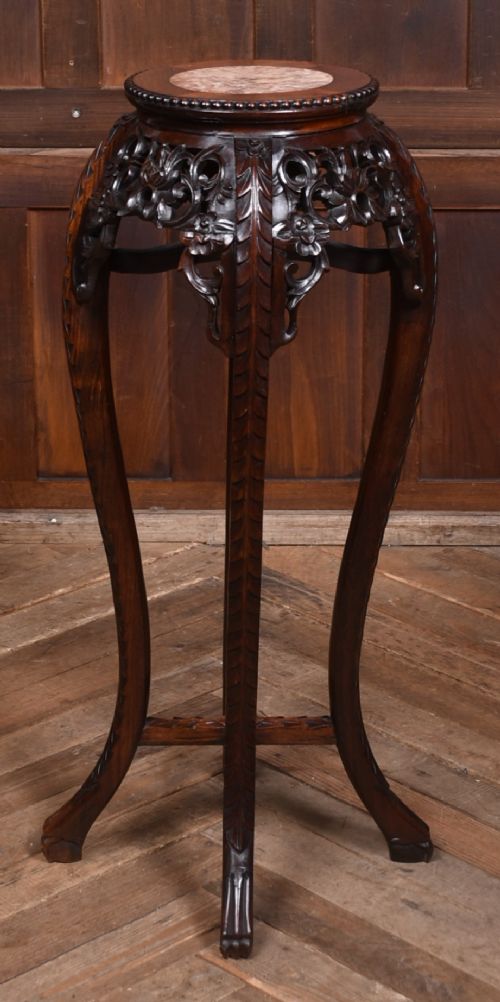

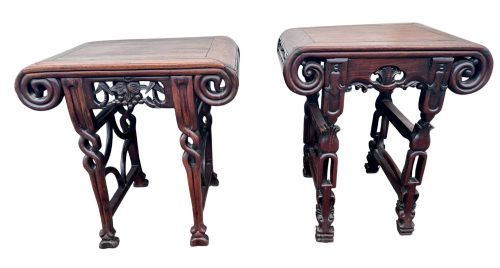


Asian Rosewood Pedestal
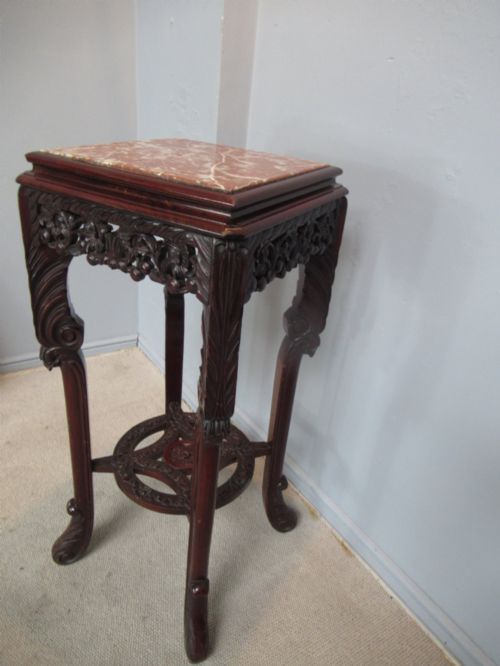
An asian rosewood pedestal anchors a room with dense timber and cool stone, serving as a sturdy stage for a heavy urn or trailing plant.
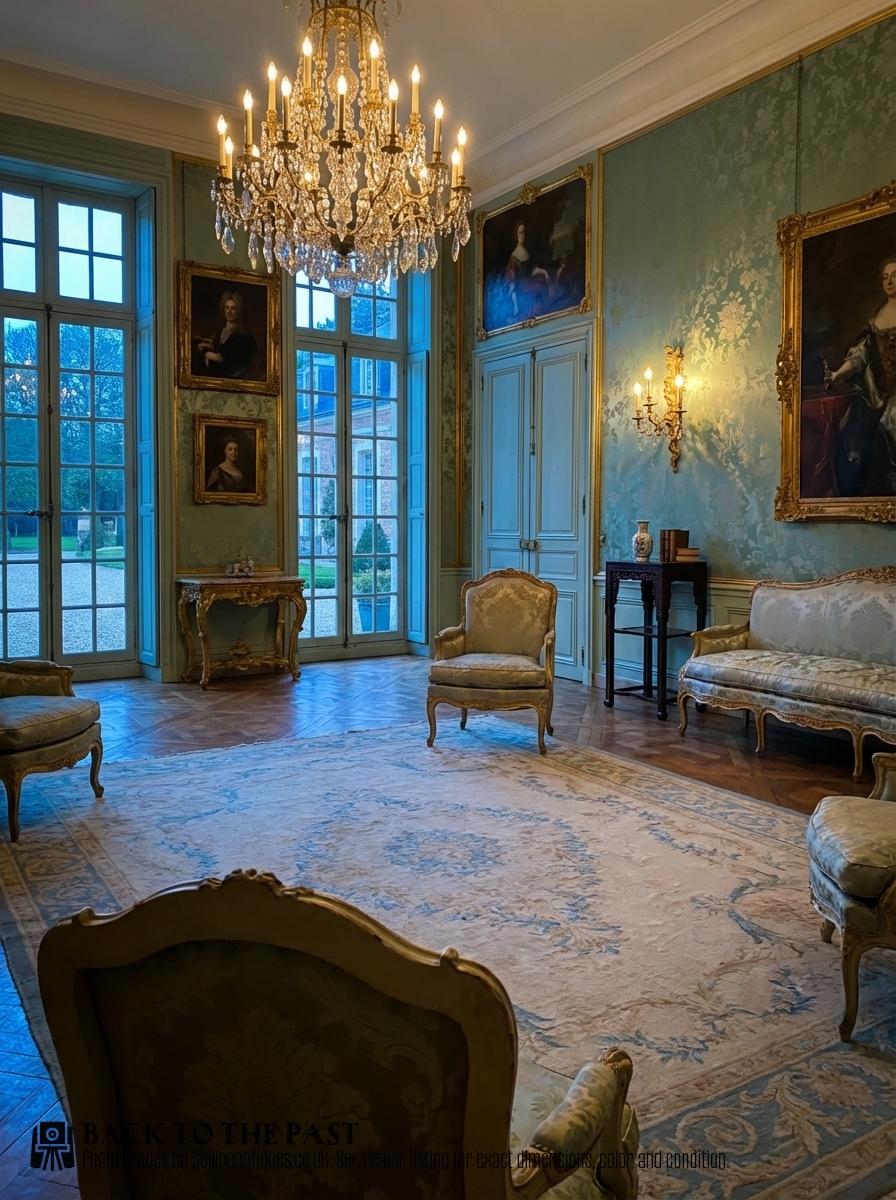
Asian Rosewood Pedestal
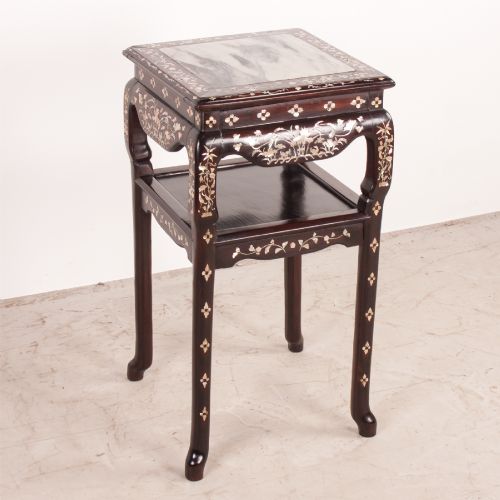
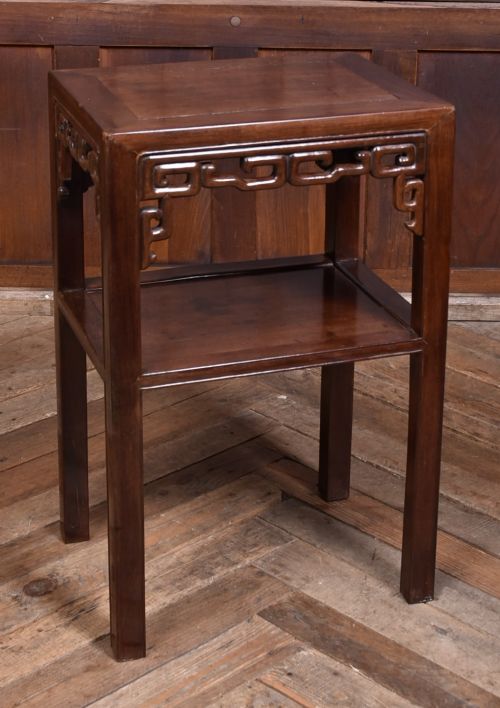
When searching for an asian rosewood pedestal, a buyer encounters solid timber furniture designed to elevate plants, vases, and decorative objects. These pieces include plant stands, jardiniere stands, torchère stands, and occasional tables spanning the nineteenth and early twentieth centuries.
Materials and Construction
Workshops utilised dense tropical timbers, including huali wood, hongmu, and general Asian hardwoods, combined with inset marble panels. These heavy woods provided the structural stability required for tall plant stands and multi-tiered urn tables.
Artisans employed traditional joinery alongside deep hand carving, occasionally adding mother-of-pearl inlay to accent the dark timber surfaces.
Evaluating Quality
Distinction across these stands lies in the depth and crispness of the hand carving and the selection of the timber. Dense, heavily figured huali or hongmu displays sharper detail in floral and foliage motifs than simpler secondary woods.
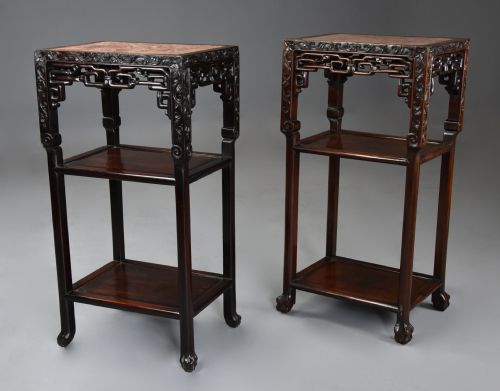
The integration of the marble top into the wooden frame, along with the survival of matching pairs and original surface patination, separates standard utility tables from finer display pieces.
The Asian Rosewood Pedestal Glossary
- Hongmu
- A dense, dark tropical hardwood used traditionally for fine Chinese furniture. It translates literally to red wood.
- Huali
- A fragrant and highly valued Chinese hardwood prized for its rich grain and durability. It frequently appears in Qing Dynasty tables.
- Jardiniere stand
- A low or tall pedestal specifically designed to hold a large ceramic plant pot or flower bowl. These often feature inset marble tops to protect against moisture.
- Torchère
- A tall standalone pedestal or pedestal table originally built to support a lamp or candleholder. Surviving examples now commonly display vases or sculptures.
Asian Rosewood Pedestal: Frequently Asked Questions
What is an asian rosewood pedestal used for?
These pieces serve primarily as elevated platforms for heavy decorative items, porcelain vases, and indoor plants. Their sturdy construction safely supports concentrated weight while adding architectural height to a corner or seating area.
Historically, they functioned as display surfaces in formal rooms, allowing prized vessels to sit at eye level. Today, they integrate easily into modern interiors as lamp tables or plant holders.
How do I identify a Qing Dynasty stand?
Qing Dynasty stands typically feature dense native hardwoods like hongmu or huali, often combined with hand-carved floral motifs and inset marble tops. The joinery is robust and relies on traditional framing methods rather than modern metal fasteners.
Examining the underside and the wear patterns on the timber helps confirm age. Nineteenth-century examples display deep patination built up through decades of handling and polish.
Are these pedestals sold in pairs?
Many listings include matching pairs of plant stands or side tables, which workshops originally built to flank doorways, windows, or large pieces of furniture. Single stands also appear frequently.
Pairs offer symmetry when placed on either side of a fireplace or sofa. Single pedestals work well as focal points in smaller spaces or empty corners.
Why do many stands have marble inserts?
Marble tops provided a cool, flat, and moisture-resistant surface capable of supporting damp flower pots and heavy ceramic jardiniere bowls without damaging the underlying timber. This stone inset also added a decorative contrast of grey or white veining against the dark red or brown rosewood.
Over time, the stone becomes integrated into the wooden frame through precise rebate joinery. The quality of the marble grain often matches the status of the overall table.