


Heavy Copper Cookware
Heavy copper cookware brings tactile warmth to the kitchen, offering exceptional heat control for serious cooks and collectors alike.
Heavy Copper Cookware
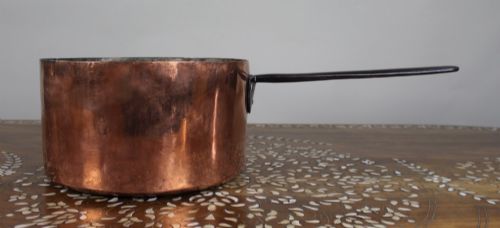
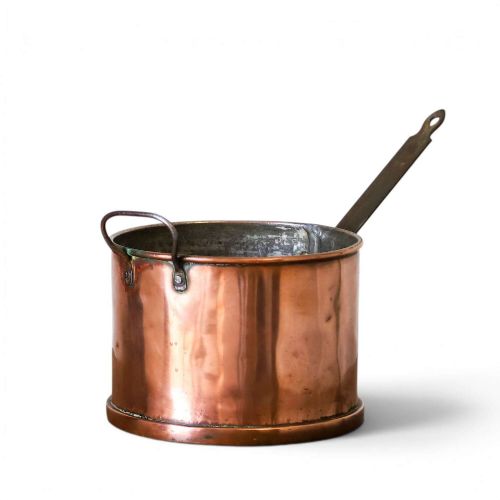
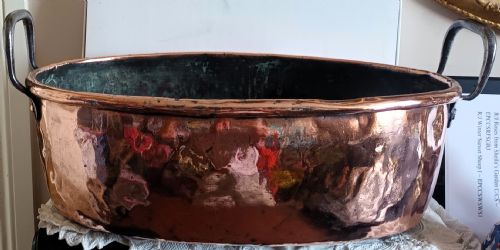
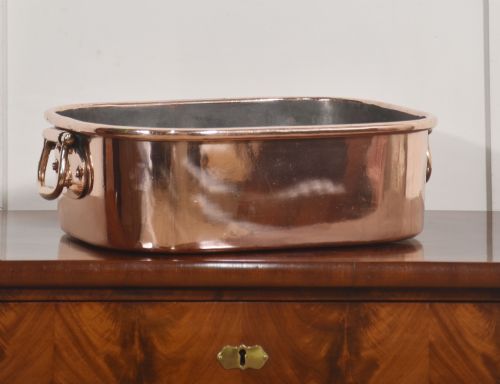
When searching for heavy copper cookware, buyers encounter robust kitchen vessels forged predominantly during the Georgian and Victorian eras. These items range from single saucepans and large preserving pans to fish kettles, duck roasting pans, and graduated sets of pans.
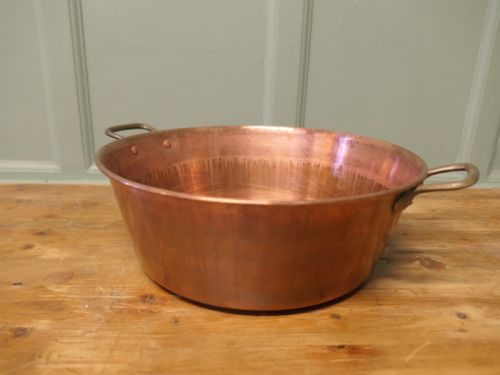
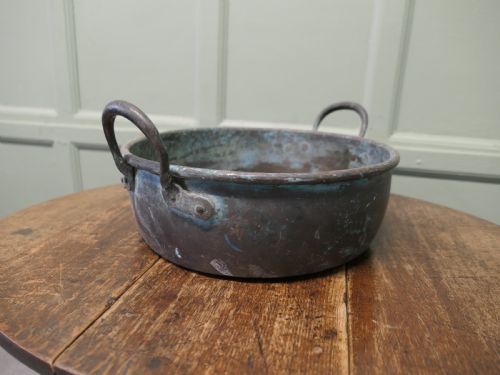
The pieces on this page are predominantly English and French in origin, spanning the eighteenth, nineteenth, and early twentieth centuries. Everyday forms include deep bowls, jam pans, and lidded saucepans designed for rigorous kitchen use rather than mere display.
How they were made
Maker's hands shaped these vessels from thick sheets of copper, frequently hand-beating the metal to achieve rigidity and strength across heavy gauge walls. Handles and attachments in brass, iron, bronze, or cast iron were securely riveted to the main body to withstand the weight of contents.
Vessels designed for culinary work required a protective interior lining, typically of tin, to prevent direct contact between food and copper. Exterior surfaces display the natural tool marks and warmth characteristic of nineteenth-century metalworking techniques.
A duck roasting pan from around eighteen hundred reminds us that historic kitchens tackled poultry with specialised heavy artillery.
What varies in quality
Wall thickness dictates the upper tier of quality, with heavier gauge metal retaining and distributing heat far more evenly than thinner alternatives. Superior examples maintain structural integrity around the rim and base despite centuries of use.
Maker marks and stamps, such as those from Hodges and Sons or Liptons, elevate a piece by confirming its provenance and standard of manufacture. Well-matched sets and large, uncompromised single saucepans demonstrate greater distinction than assembled groupings.
Hodges and Sons·Liptons
The Heavy Copper Cookware Glossary
- Gauge
- The thickness of the metal sheet used to form the body of the pan. Heavier gauges provide superior thermal conductivity and durability.
- Tinning
- The traditional process of coating the interior surface of a copper vessel with molten tin. This provides a safe, non-reactive barrier for cooking.
- Preserving Pan
- A wide, open vessel designed for boiling fruit and sugar. They typically feature smooth, rounded bases to facilitate stirring.
- Fish Kettle
- An elongated oval pan equipped with a removable internal draining rack. This allowed whole fish to be lifted out without breaking apart.
- Dovetail seam
- A method of joining copper plates at the base or side before hammering flat. It indicates traditional craftsmanship prior to modern industrial pressing.
Heavy Copper Cookware: Frequently Asked Questions
Can I still cook with antique copper pans?
Many period vessels remain entirely suitable for modern culinary use provided the interior tin lining is intact and sound.
Cooks should inspect the metal thickness and ensure the lining has no bare copper showing through before preparing food.
How do I clean heavy copper cookware?
Routine maintenance involves washing with warm soapy water and drying thoroughly to prevent water spots and oxidation.
Traditional copper cleaners or mild paste mixtures remove tarnish without scratching the hand-beaten surface texture.
What is a jam preserving pan used for?
Preserving pans feature wide, open tops that allow rapid evaporation of moisture when boiling fruits with sugar. Their generous volume accommodated large seasonal harvests in Georgian and Victorian households.
The curved bases helped cooks stir efficiently without food burning against angular corners.
How do I identify a Georgian copper pan?
Georgian pieces, dating around the late eighteenth and early nineteenth centuries, often display distinctive hand-beaten surfaces and heavy cast iron or brass handles fixed with robust rivets.
Form and construction methods mark them out from later mass-produced Victorian equivalents.