
Antique Kitchenware
Antique kitchenware brings domestic history to the hearth through copper pans, brass pots, and sturdy treen designed for daily use.
Antique Kitchenware
Antique kitchenware encompasses the utilitarian vessels, preparation tools, and serving implements used in domestic spaces across previous centuries. When searching for antique kitchenware, collectors encounter functional items forged, turned, or moulded from durable materials designed to withstand rigorous daily cooking and food preservation.
The pieces appearing on this page span from the seventeenth century through to the mid-twentieth century, with a strong representation of Georgian and Victorian items. Domestic forms range from heavy copper preserving pans and kettles to ceramic jelly moulds, treen mortars, and iron hardware.
Originating from English, French, and Dutch domestic settings, these pieces reflect the practical needs of past kitchens before mass production standardised culinary equipment. Buyers find items that bridge the gap between utilitarian workshop output and domestic interior decoration.
How they were made
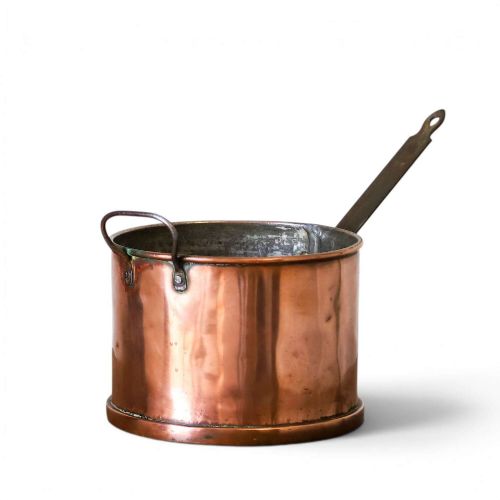
Metal vessels such as saucepans, kettles, and jelly moulds rely heavily on heavy-gauge copper and brass, often hand-beaten to shape the metal and strengthen the walls. Smiths joined seams with dovetailing or early brazing techniques, attaching handles with iron rivets.
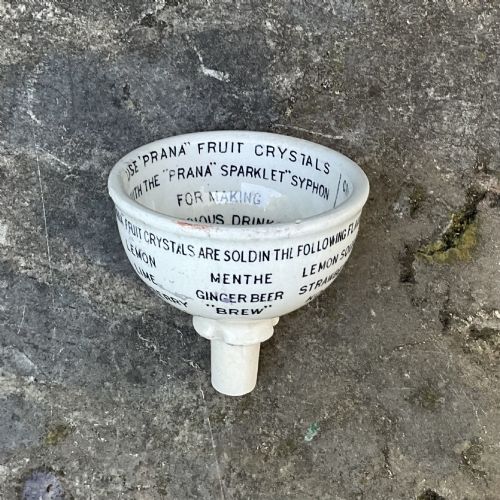
Wooden items including mortars, pestles, and spice towers utilise dense timbers like lignum vitae, boxwood, and oak, turned on lathes or hand-carved from single blocks. Ceramic pieces such as butter dishes and glazed jelly moulds combine local earthenware clays with distinctive coloured glazes before kiln firing.
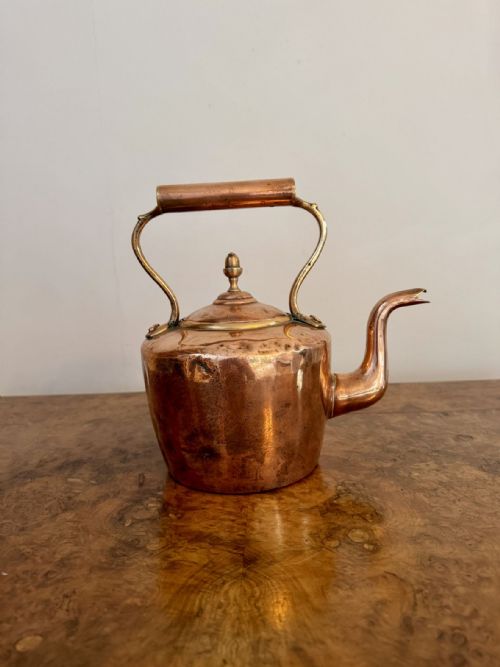
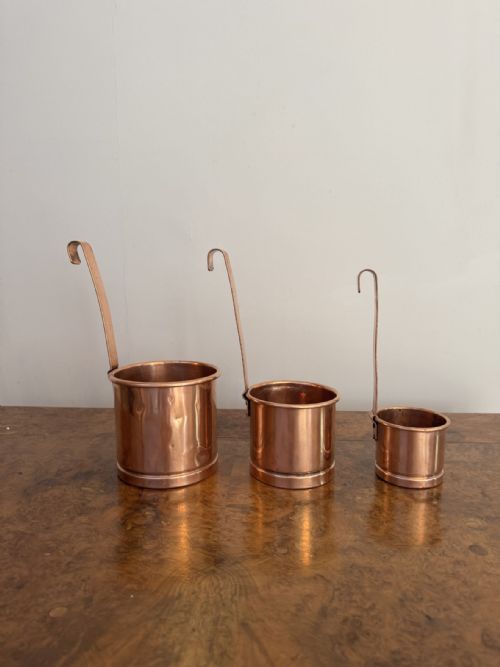
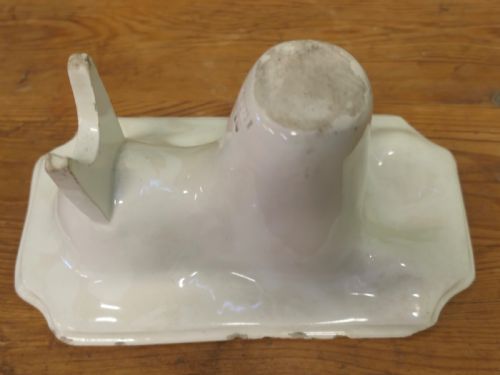
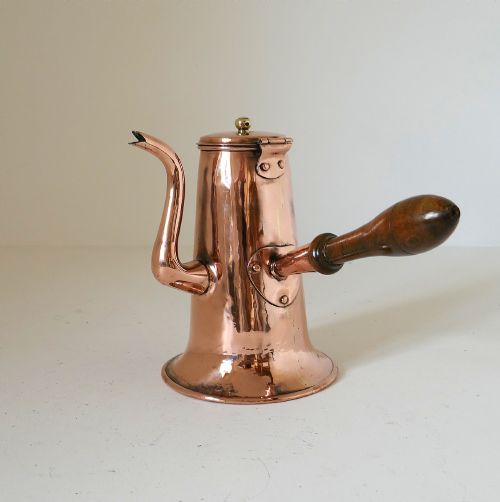
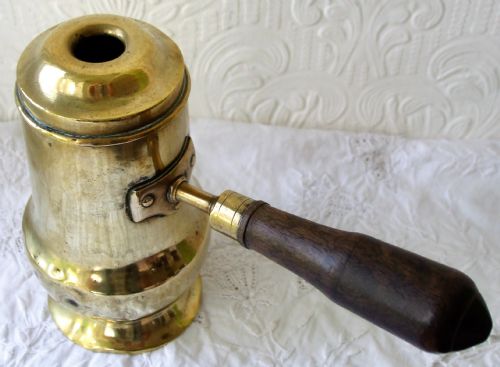
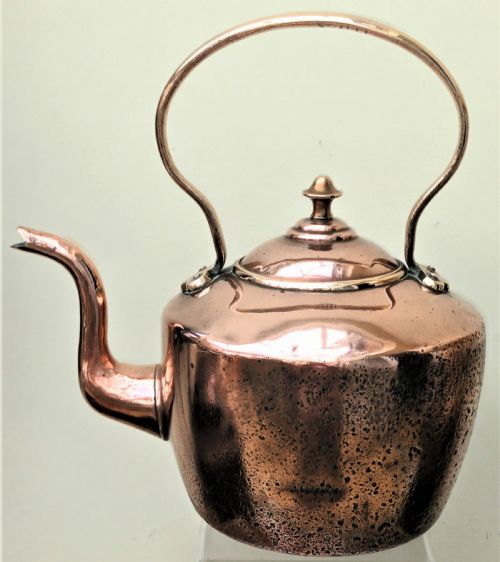
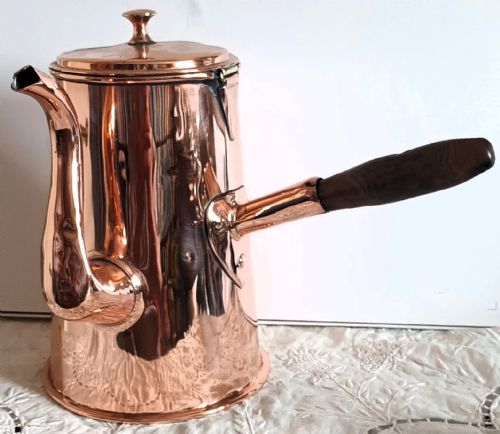
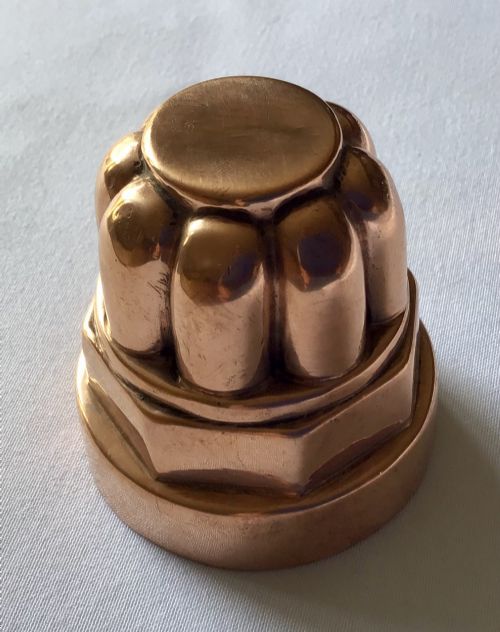
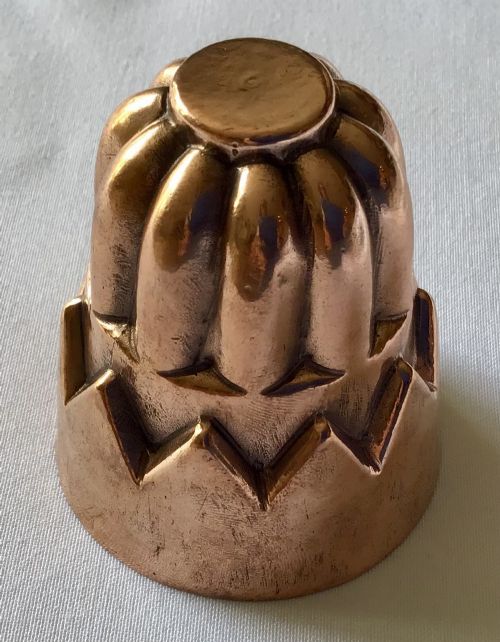
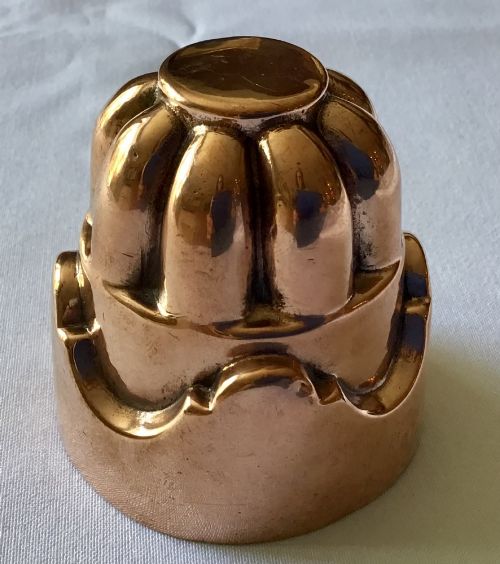
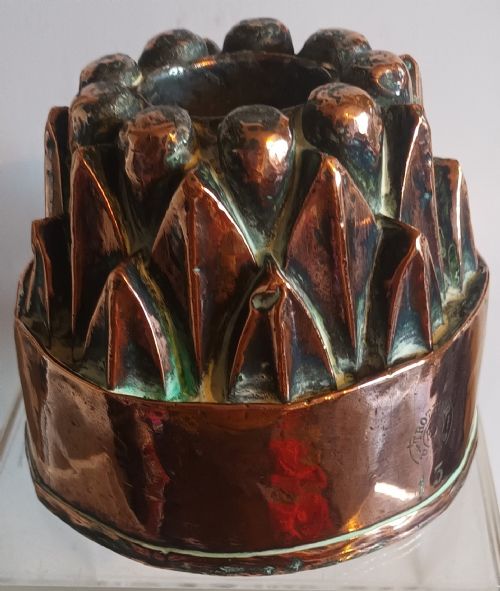
Object forms include kettles, saucepans, jelly moulds, coffee pots, mortar and pestles, and meat drainers.
What varies in quality
The thickness of the metal gauge separates utilitarian vessels from superior examples, as heavier copper and brass retained heat better and endured decades of scrubbing. Hand-beaten surfaces show the individual skill of the coppersmith through consistent hammer marks rather than uniform machine rolling.
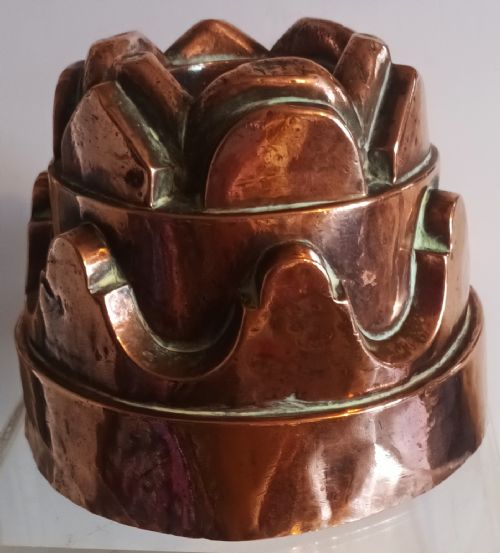
Form and ornamentation dictate distinction in decorative kitchenware, such as intricate architectural details on castle-top jelly moulds or the crispness of turned rings on treen spice towers. Original hardware, surface patination, and the retention of working lids or matching sets elevate the desirability of domestic items.
T G Green Pottery·Trottier
The Antique Kitchenware Glossary
- Treen
- Small handmade wooden household objects turned or carved from dense hardwoods. This term covers items like mortars, pestles, and spice towers.
- Jelly mould
- A kitchen vessel featuring an internal hollow design used to shape aspics, jellies, and blancmanges. They appear in copper, earthenware, and tin.
- Preserving pan
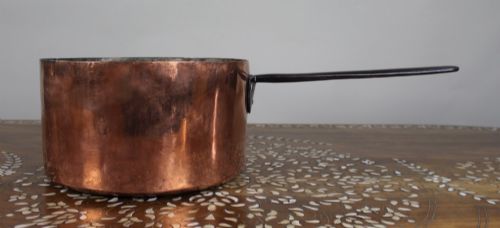
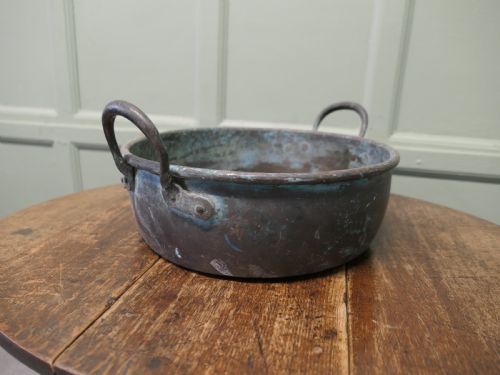
- A wide, open metal pan with a handle, designed for boiling fruit and sugar. These vessels require heavy gauge walls to prevent scorching during long preserving sessions.
- Mortar and pestle
- A paired set comprising a heavy bowl and a club-shaped tool for grinding spices, herbs, or resins. Early examples utilise dense woods, bronze, or stone.
- Toledware
- Japanned or painted metalware produced to imitate Asian lacquer finishes. Pieces include flour bins and storage containers decorated with coloured pigments.
Antique Kitchenware: Frequently Asked Questions
How do I clean antique copper cookware?
Copper items develop a natural dark oxidation over decades of exposure to air and handling. Many collectors prefer to leave this untouched patination as evidence of age.
If polishing is desired, use a mild non-abrasive cream designed specifically for copper. Avoid harsh scouring pads that strip the original hand-beaten texture from the metal.
Can I still cook with antique copper pans?
Most antique copper pans require a renewed tin lining before they come into contact with modern food ingredients. Unlined copper can react adversely with acidic foods during cooking.
Displaying these pieces in a kitchen setting is the most common approach for collectors. Those wishing to use them should consult a specialist tinning artisan.
How do I identify a Georgian jelly mould?
Georgian and early Victorian jelly moulds are typically forged from heavy gauge copper rather than thin pressed sheet metal. They often feature simple geometric shapes or plain fluted designs rather than complex architectural scenes.
Examining the underside reveals hand-beaten seams and dovetail joints. These construction methods distinguish eighteenth-century workshop production from later factory stampings.