
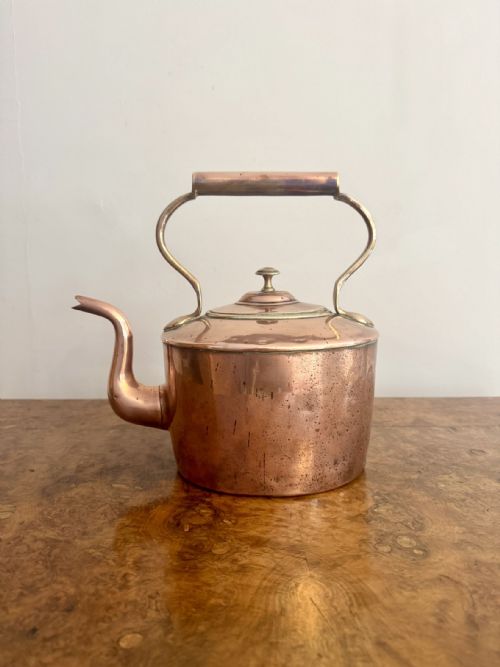


George III Cookware
George III cookware brings robust Georgian utility to the kitchen, offering heavy copper kettles, cooking pots, and pans that collectors treasure for their honest metalwork.
George III Cookware
When you search for george iii cookware, you encounter utilitarian kitchen pieces originating from the Georgian era around eighteen hundred. These survivals consist chiefly of heavy copper kettles, cooking pots, saucepans, and sets of pans designed for daily culinary service rather than mere display.
The objects appearing on this page reflect the domestic requirements of large households during the reign of George III. Kettles and pans form the core of the selection, reflecting the heavy reliance on copper vessels for heat conduction in period kitchens.
How george iii cookware was made
The makers of george iii cookware relied heavily on heavy-gauge sheet copper, shaping the metal by hand into practical domestic forms. Handles frequently incorporated wrought iron or wood to manage heat transfer during cooking.
Vessels show the physical evidence of construction through visible seams, handmade rivets, and hammered finishes. Some pieces carry maker stamps or marks directly into the metal surface.
Current listings for george iii cookware feature copper, brass, iron, wrought iron, wood, and tin across the Georgian period and the year 1800.
What varies in quality
The distinction between ordinary and superior george iii cookware rests upon the gauge of the copper sheet and the integrity of the original construction. Heavier metal gauge indicates a vessel intended for serious kitchen work rather than lighter domestic service.
Detailing such as robust handle attachment, clean hammering marks, and occasional maker attribution through stamps separate utilitarian survivals from workshop masterworks.
Liptons
The George III Cookware Glossary
- George III
- The period spanning the reign of King George the Third, associated with practical domestic copperware. Pieces from this era display robust proportions and hand-hammered construction.
- Copper
- A reddish-brown metallic element utilised for its superior thermal conductivity in kitchen vessels. Heavy sheets of this metal form the primary body of Georgian cookware.
- Wrought iron
- A tough, malleable iron alloy used traditionally for handles and mounts on heavy pots and kettles. It provides structural strength alongside hammered copper bodies.
- Saucepan
- A deep cooking vessel with a single handle, designed for boiling and simmering liquids. Georgian examples feature heavy copper walls and riveted joints.
George III Cookware: Frequently Asked Questions
What is george iii cookware?
These pieces comprise heavy copper kettles, cooking pots, and saucepans produced during the Georgian period. They served practical culinary functions in period kitchens.
Craftsmen shaped these items from sheet metal to withstand daily heat and heavy use. Collectors value them for their honest construction and surviving metal patination.
How were these pans used?
Kitchen staff utilised these copper vessels over open hearths or stove surfaces for boiling water, preparing sauces, and cooking large meals. The high thermal conductivity of copper made them essential for temperature control.
Most items show the physical marks of intense domestic labour. Their heavy build allowed them to endure decades of active kitchen service.
How do I clean copper?
Traditional maintenance involves gentle cleaning agents that remove tarnish without stripping the historic surface character. Many owners prefer to leave a warm, aged patina on display pieces.
Harsh abrasives can damage the hand-hammered texture built by the original metalsmiths. Careful washing preserves the physical evidence of the Georgian workshop.
Are these pots still usable?
While many copper vessels retain their structural integrity, historical pieces often require professional retinning of the interior before food preparation. Modern safety standards for kitchen use differ from Georgian practices.
Most buyers choose to display these items as decorative examples of metalwork. Their visual appeal centres on the rich warmth of aged copper.