
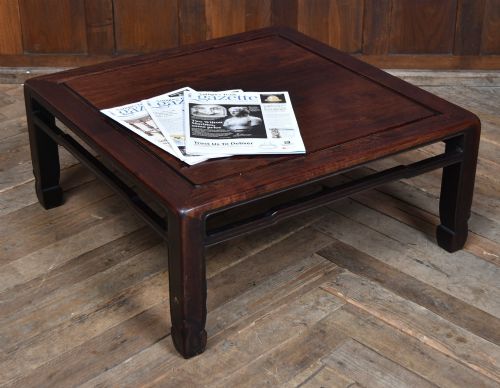
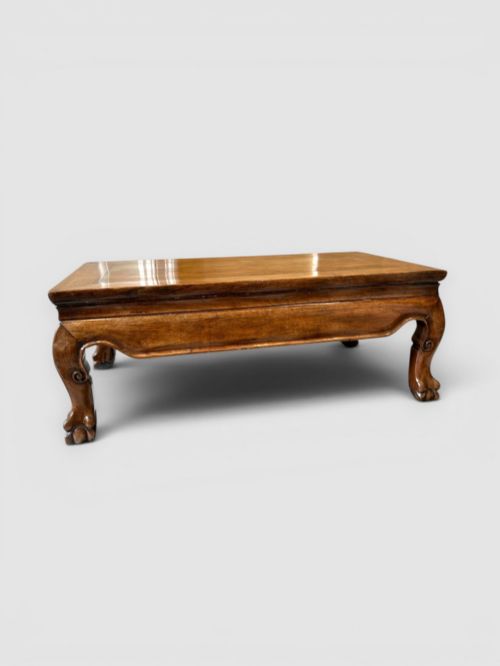


Hardwood Opium Table
A hardwood opium table brings a low, grounded profile and centuries of Chinese craftsmanship directly into a modern living space as a coffee table.
Hardwood Opium Table
A hardwood opium table is a low-standing piece designed for sitting or resting at floor level, originating from traditional Chinese interiors and now widely utilised as a low coffee table. These items appear across the nineteenth century and into the early twentieth century, spanning Qing Dynasty and Republic periods.
The most common formats on this page are rectangular low tables and scroll-end kang tables. They serve equally well as low coffee tables in contemporary sitting rooms.
Makers shaped these tables from dense timbers, incorporating traditional Chinese joinery without relying on metal nails.
How they were made
Craftsmen utilised dense Asian timbers including padouk, rosewood, huali wood, and elm. These heavy woods allowed for stable construction at a low height.
Carpenters employed traditional mortise and tenon joinery to build rigid frames that withstand daily use. Surfaces often received a dark ebonised finish or were left to display the natural grain and deep patina of the timber.
Listings feature timbers including padouk, rosewood, huali wood, and elm across nineteenth- and early twentieth-century periods.
What varies in quality
The standard of carving defines the distinction between simpler domestic items and finer pieces produced during the Qing period. Crisp relief work on scroll ends and apron panels demonstrates superior workshop capability.
Timber selection dictates overall weight and visual depth, with highly figured rosewood and dense padouk representing the upper tier of production. A rich, deep patina built up through decades of handling elevates the presence of any individual table.
The Hardwood Opium Table Glossary
- Kang
- A heated brick sleeping platform in traditional northern Chinese homes, upon which low tables were placed for dining, writing, or resting. These tables are often referred to interchangeably as kang tables.
- Scroll-end
- A structural feature where the ends of the table top curve outward and upward in a fluid scroll motif. This design is frequently seen on late nineteenth-century Qing Dynasty examples.
- Padouk
- A heavy, durable tropical hardwood with a reddish-brown hue that deepens with age. It provides exceptional stability for low furniture.
- Huali wood
- A traditional Chinese term for scented or figured hardwoods prized for dense grain patterns. Pieces constructed in huali wood sit among the more desirable regional productions.
- Patina
- The deep, lustrous surface sheen developed naturally over decades of use and handling. A rich patina indicates age and regular maintenance with soft cloths.
Hardwood Opium Table: Frequently Asked Questions
How do I use an opium table today?
These pieces function ideally as low coffee tables placed before low sofas or seating groups in modern rooms. Their modest height creates a grounded focal point while keeping sightlines open across the space.
They also provide a stable surface for books, ceramics, or decorative objects without overwhelming smaller living areas.
What is the difference between a kang table and an opium table?
Historically, kang tables were designed to sit upon a heated domestic platform in northern China for daily living and dining. The term opium table became common later to describe the same low format when adapted for Western markets.
Both terms describe low-set wooden tables sharing identical construction methods and proportions from the nineteenth and early twentieth centuries.
How do I date a Chinese hardwood low table?
Dating relies upon assessing the timber species, construction joinery, and the style of carving present on the aprons and legs. Nineteenth-century examples often display hand-cut joinery and dense padouk or rosewood timbers with deep natural patination.
Later pieces from the early twentieth century or Republic period can show simpler turnings or lighter elm constructions.
Are these tables sturdy enough for daily use?
Traditional joinery utilises interlocking wooden joints rather than metal fixings, allowing the frame to absorb normal weight without loosening. Dense hardwoods such as padouk and rosewood offer high structural resilience.
Routine placement of coffee table items poses no strain on these robust historical frames.