
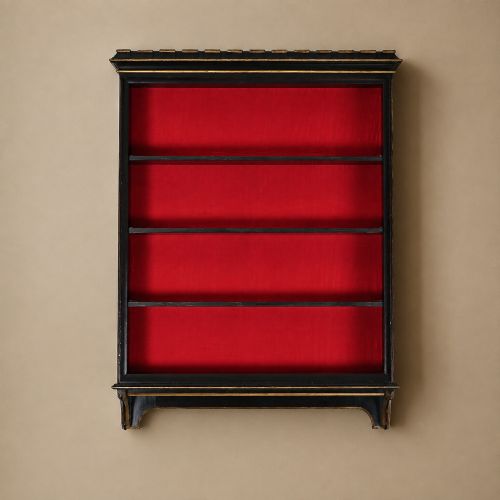

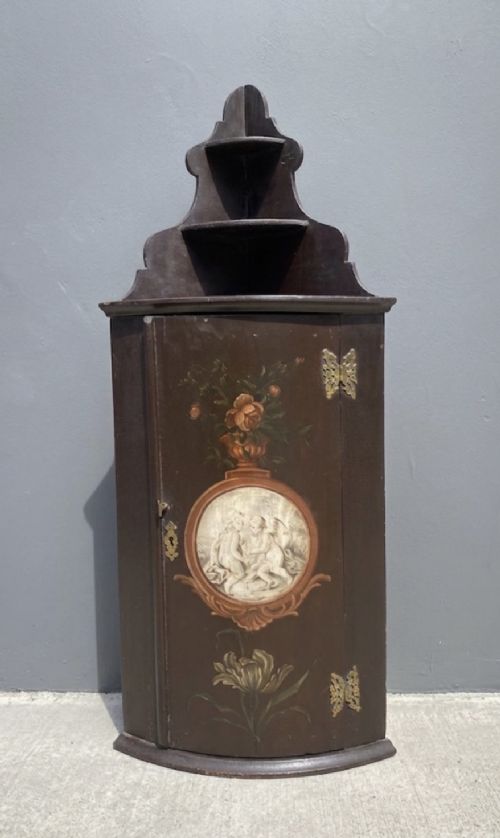


Hanging Display Cabinet
A hanging display cabinet brings treasured small objects off the table and onto the wall, combining timber storage with glazed visibility.
Hanging Display Cabinet
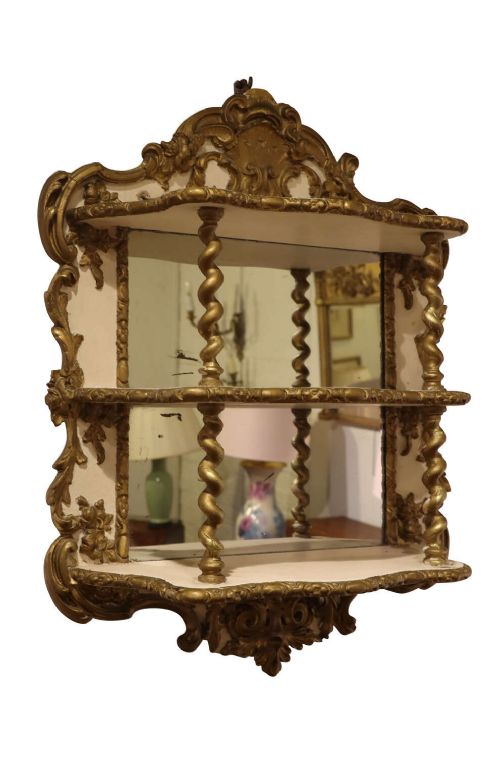
A hanging display cabinet serves to elevate ceramics, glass, and small curiosities securely upon domestic walls while preserving floor space. The form spans several centuries, adapting from utilitarian storage to refined interior ornamentation.
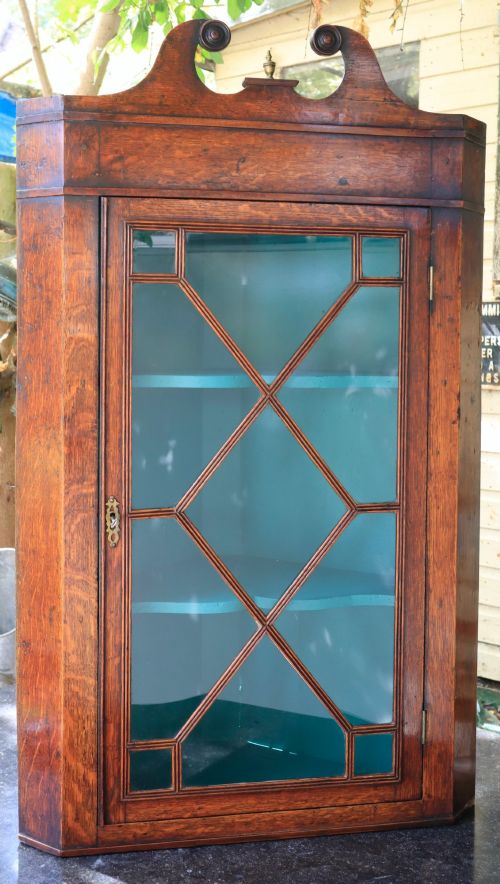
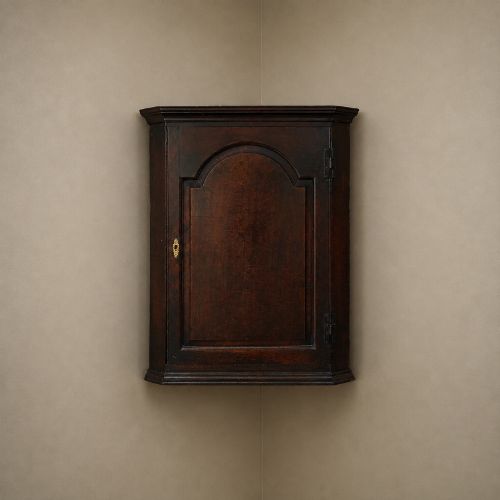
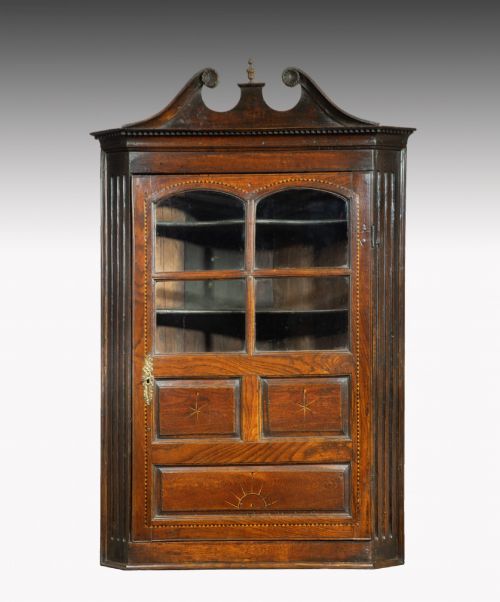
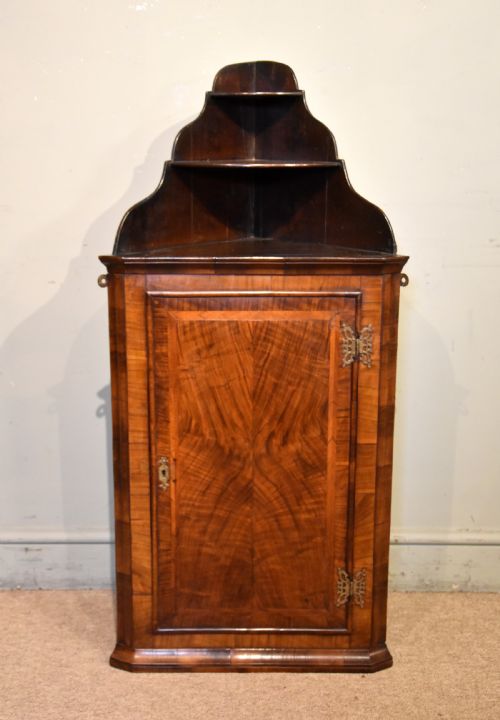
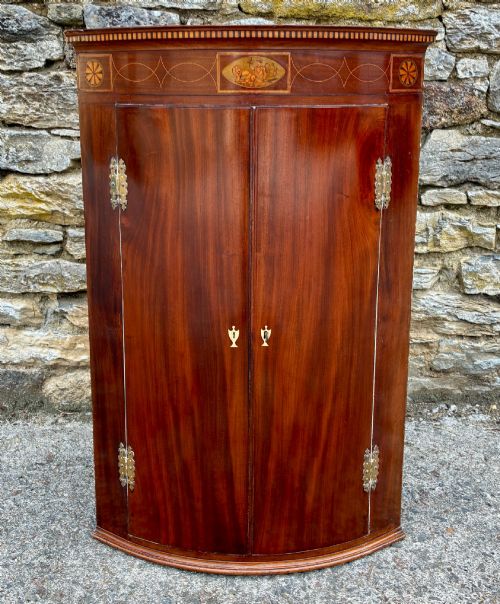
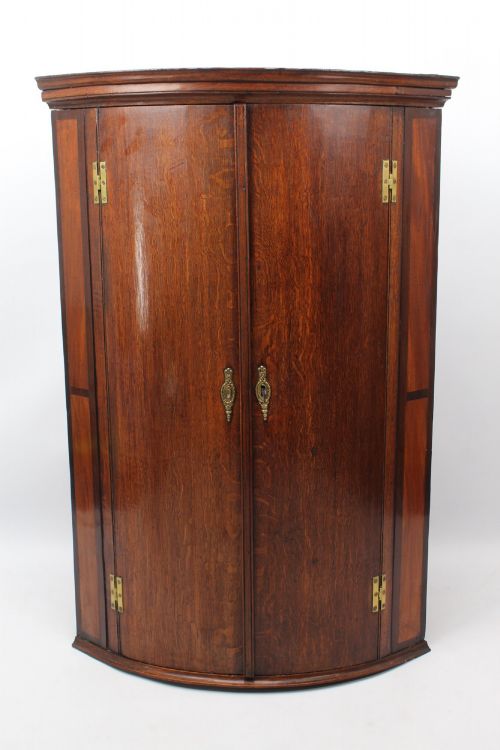
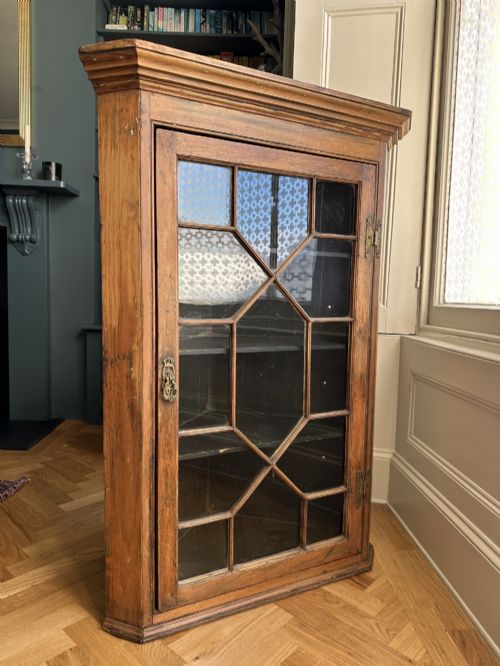
Corner variants emerge frequently among these pieces, designed to utilise awkward room angles efficiently through glazed doors and fitted interior shelving. Wall cabinets, hanging shelves, and bow front corner cupboards also appear across the selection.
Examples cross multiple eras from the eighteenth century through the Georgian, Victorian, and Edwardian periods up to the early twentieth century. Walnut, mahogany, oak, and pine constitute the primary structural timbers seen throughout the listings.
Materials and Joinery Techniques
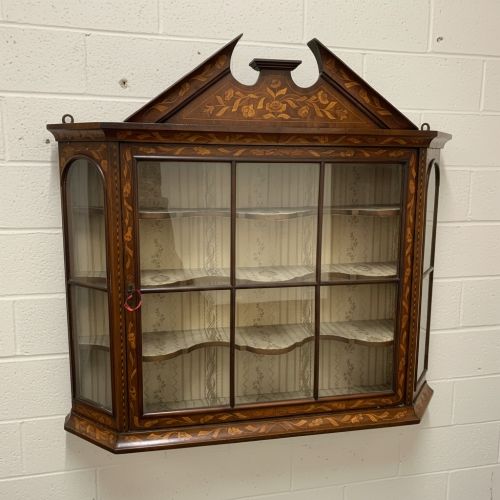
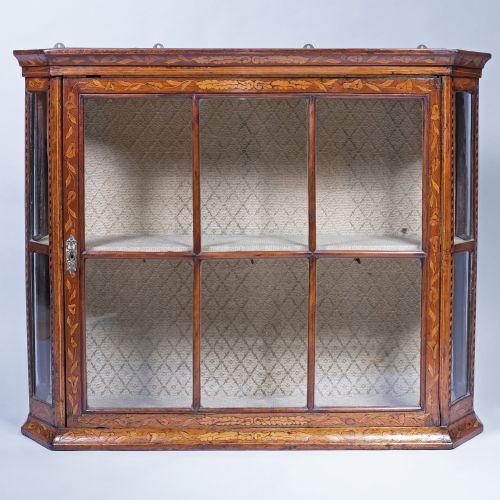
Cabinet makers utilised dense hardwoods such as mahogany, walnut, and oak to construct durable frames capable of supporting glass doors and wall fixings over long periods. Crossbanding, marquetry inlay, and satinwood detailing frequently decorate the primary surfaces of finer pieces.
Glazing techniques range from simple single-pane glass doors to intricate astragal bars that divide the viewing area into smaller geometric sections. Softwoods like pine and painted wood appear in simpler domestic contexts, often retaining original painted interiors or fabric linings.
Listings feature hanging display cabinets spanning from the eighteenth century through the Georgian, Victorian, and Edwardian eras, constructed in mahogany, oak, walnut, and pine.
Distinctions in Execution and Age
Quality rests upon the selection of timber figures, such as burr walnut or figured mahogany, and the precision of inlaid details like boxwood stringing or floral marquetry. Cabinets featuring hand-cut dovetail joints and original brass hardware stand apart from later interpretations.
The sophistication of the pediment, such as broken arch designs or carved cornices, elevates certain Georgian and Victorian examples above standard utility cupboards. Preservation of original glazed panels, interior paint, and structural hanging points heavily influences the integrity of the piece.
George Edmund Street·John Moyr Smith·William Yale
The Hanging Display Cabinet Glossary
- Astragal
- The wooden moulding strips that divide a glass door into smaller panes. They provide structural support while creating a decorative grid pattern across the display area.
- Marquetry
- The art of applying fitted pieces of wood veneer to a structure to form decorative patterns or pictures. This technique often employs contrasting timbers such as walnut, oak, and satinwood.
- Pediment
- The decorative structure crowning the top of a cabinet. Georgian examples frequently showcase broken arch or swan neck variations.
- Bow front
- A convex curved cabinet front that projects outward. This shape requires skilled timber bending or precise carving from solid stock.
- Crossbanding
- A border veneer applied around the edges of a panel where the grain runs perpendicular to the central wood. It frames the primary timber surface for added visual contrast.
Hanging Display Cabinet: Frequently Asked Questions
How do I hang a heavy antique cabinet safely?
Secure the piece directly into wall studs or masonry using appropriate brackets rather than relying on plaster alone. Distribute the weight evenly across the designated hanging points built into the back frame.
Ensure the wall fixings match the historical weight capacity of the timber structure. Professional installation is recommended for dense hardwood cupboards from the eighteenth and nineteenth centuries.
Were these cabinets originally meant for corners?
Many surviving examples are specifically shaped as corner cupboards to fit domestic room angles efficiently. These units maximised storage space in smaller period rooms without obstructing floor traffic.
Flat-backed wall cabinets and rectangular display cases were produced alongside corner formats for placement on standard wall expanses.
How can I tell a Georgian cabinet from a Victorian copy?
Georgian pieces typically display hand-sawn timber elements, traditional joinery methods like pegged mortise and tenon joints, and native woods such as oak and early mahogany. Secondary woods inside the carcass often include pine or oak.
Victorian revival pieces and later twentieth-century copies often utilise machine-cut elements, different interior lining fabrics, and standardised hardware screws. Examining the internal construction reveals the working methods of the period.
What is the best way to clean old glass and wood?
Wipe wooden surfaces gently with a soft, dry cloth to remove dust without disturbing historic finishes or wax. Avoid modern silicone sprays that can penetrate porous old timber.
Clean glazed panels with a mild glass cleaner applied to a cloth rather than sprayed directly onto the glass, preventing liquid from seeping into fragile wooden muntins or aged putty.