





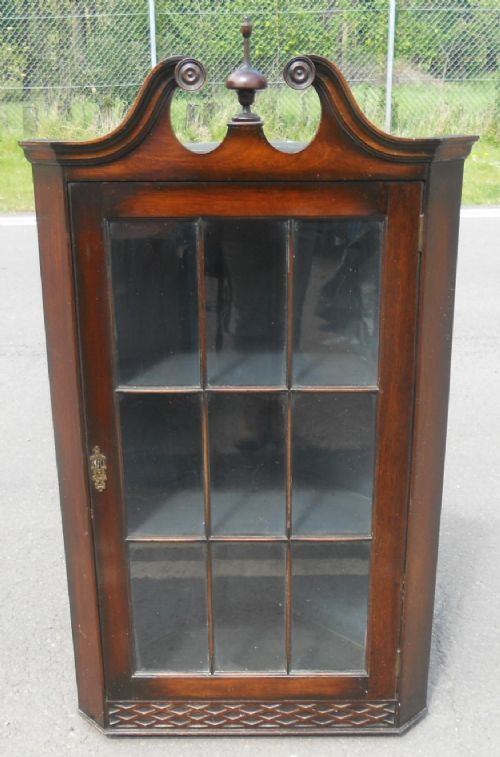


Small Mahogany Corner Cupboard
A small mahogany corner cupboard makes efficient use of awkward domestic space while adding warmth to a room.
Small Mahogany Corner Cupboard
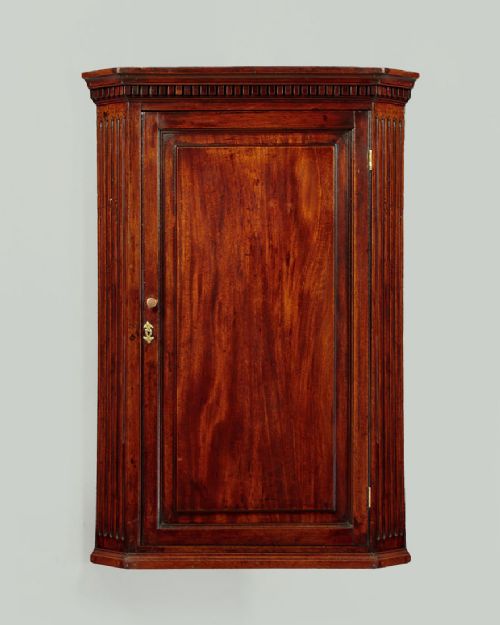
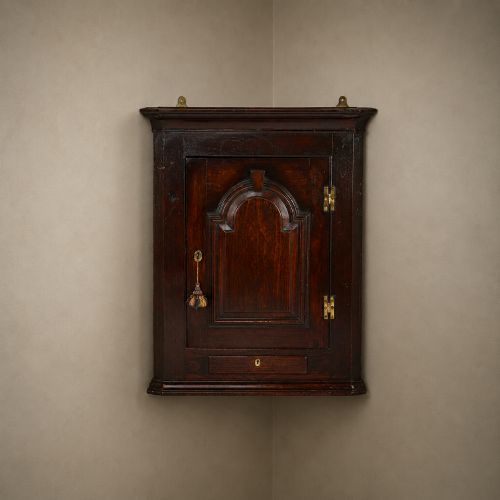
A small mahogany corner cupboard is designed to fit flush into the junction of two walls, making clever use of rooms where floor space is at a premium. The evidence shows these pieces appear most frequently from the Georgian and Edwardian periods, taking the form of hanging wall cabinets or compact floor-standing cupboards.
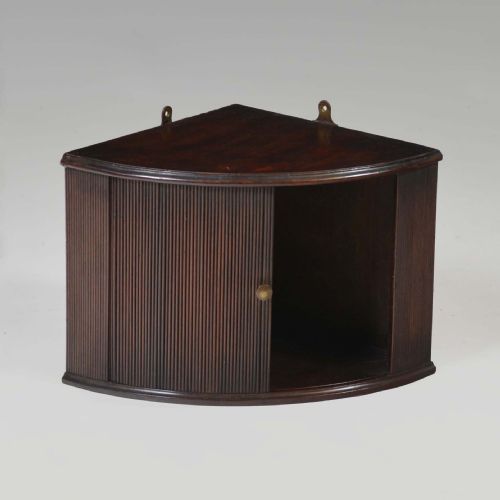
The dominant material recorded across the archive and current listings is mahogany, often shaped with a bow front or fitted with panelled doors. Buyers encounter straightforward timber doors alongside glazed display versions and examples featuring practical lower drawers.
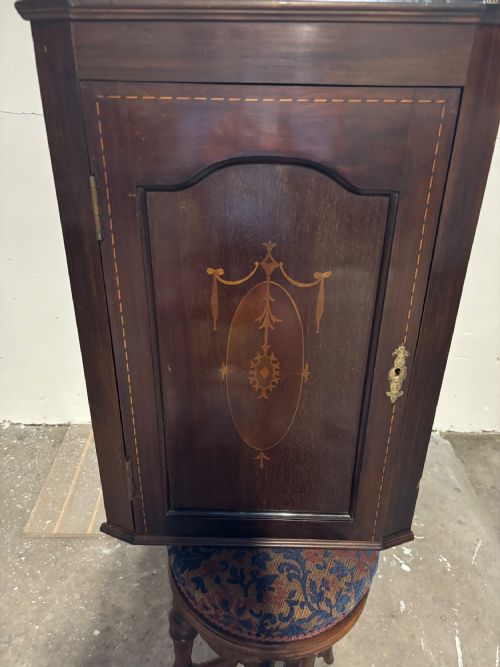
While the core form remains consistent, the scale ranges from tiny apprentice pieces to taller hanging cabinets intended for china or glassware. Georgian examples lean towards architectural cornices and fielded panels, whereas Edwardian pieces frequently incorporate delicate inlay work.
How they were made
Cabinet makers constructed these cupboards using solid timber and veneers of mahogany, frequently incorporating secondary woods for internal shelving and carcase backs. Construction methods relied on dovetail joints for drawers and robust hinged doors designed to bear the weight of heavy timber without sagging.
Surface decoration on the listings relies on contrasting elements like satinwood inlay, brass key escutcheons, and occasional tambour fronts. Glass is glazed into timber frames for display cabinets, while interior fabrics sometimes line the oldest hanging shelves.
Small Mahogany Corner Cupboard Retail Price Guide 2026
Typical asking prices for small mahogany corner cupboard among the pieces listed under this phrase on Sellingantiques today, from the lower quarter to the upper quarter. They describe what is for sale here now, not the wider market.
Listings span the Georgian, Victorian, and Edwardian eras, uniting mahogany timber with occasional brass hardware, glass panels, and satinwood inlay.
What varies in quality
Quality in a small mahogany corner cupboard rests on the selection of the timber grain and the crispness of any applied mouldings or stringing. Finer pieces demonstrate careful book-matching on door panels and tight, precise dovetailing in the drawer construction.
The integrity of the original brass hardware and the smoothness with which doors and tambour fronts operate distinguish superior examples from ordinary utility pieces. Proportion also dictates worth, as smaller bow-front variations and apprentice pieces command distinct interest for their diminutive scale.
The Small Mahogany Corner Cupboard Glossary
- Bow front
- A convex curved front facade that projects outward from the corners. This shape appears frequently on both Georgian and Edwardian examples.
- Tambour
- A flexible shutter door formed of narrow vertical strips of wood glued to a canvas backing. It slides in a track to enclose the cupboard interior.
- Escutcheon
- A protective plate surrounding a keyhole, usually made of brass. It prevents the timber around the lock from splitting through repeated use.
- Apprentice piece
- A miniature furniture item made by a trainee craftsman to demonstrate mastery of skills. These pieces display the same joinery techniques as full-scale furniture.
- Cornice
- The ornamental mouldings that crown the top of a cabinet. Georgian versions often follow classic architectural proportions.
Small Mahogany Corner Cupboard: Frequently Asked Questions
Where should I hang a corner cupboard?
These cabinets suit dining rooms, hallways, or living spaces where dead wall space meets at a right angle. They elevate awkward corners by introducing practical storage or display areas without protruding far into the room.
Ensure the wall construction can support the weight of timber and any glass contents before fixing hanging brackets securely to wall studs.
How do I date a mahogany corner cupboard?
Dating relies on examining construction methods, timber patination, and style markers. Georgian pieces often feature hand-cut dovetails and heavy cornices, while Edwardian versions frequently showcase lighter framing and inlaid decoration.
Secondary woods inside the carcase and the style of brass hinges also provide reliable clues to the period of manufacture.
What is the difference between Georgian and Edwardian models?
Georgian cupboards, generally dating around eighteen hundred, favour solid proportions, architectural details, and rich dark mahogany surfaces. Edwardian revivals and cabinets from nineteen ten often utilise lighter satinwood stringing and delicate hanging proportions.
Edwardian makers also produced more glazed variants intended specifically for the display of ceramics and glassware.
Can these cupboards hold heavy items?
Internal fixed shelving is typically strong enough for books or dinnerware, provided the cabinet carcase remains structurally sound. Wall-hanging versions depend entirely on the strength of their backboards and the fixings holding them to the wall.
Inspect the internal shelf supports and back joints to gauge the weight capacity of older timber cabinets.