



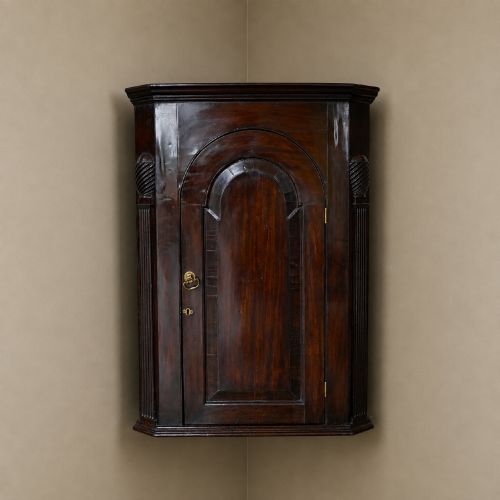
Antique Wood Corner Cabinet
An antique wood corner cabinet turns awkward room junctions into display space with mahogany, oak and walnut.
Antique Wood Corner Cabinet
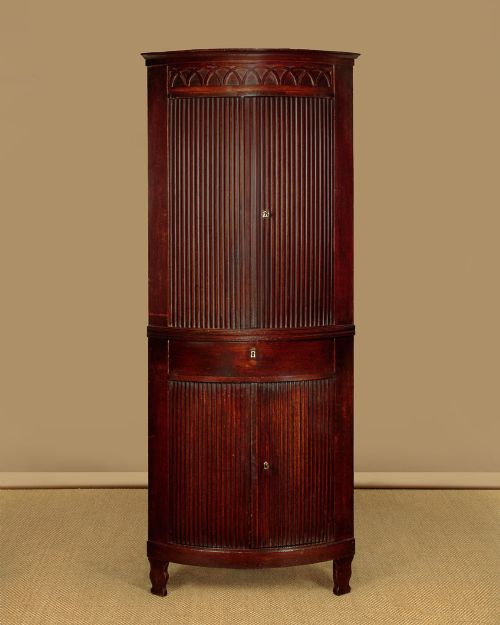
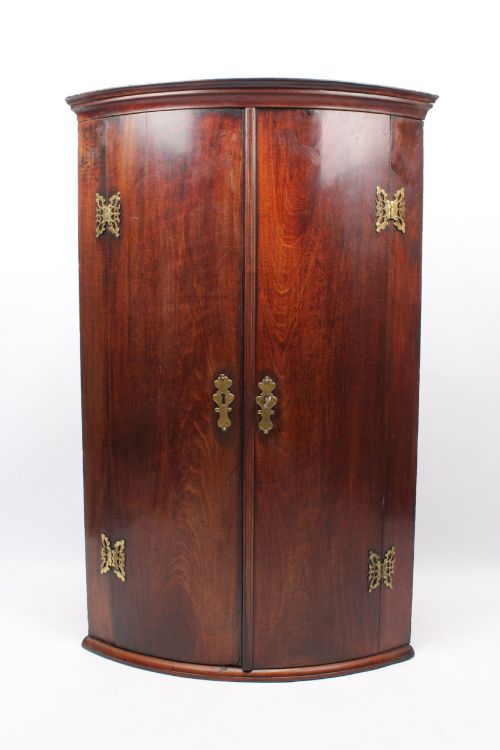
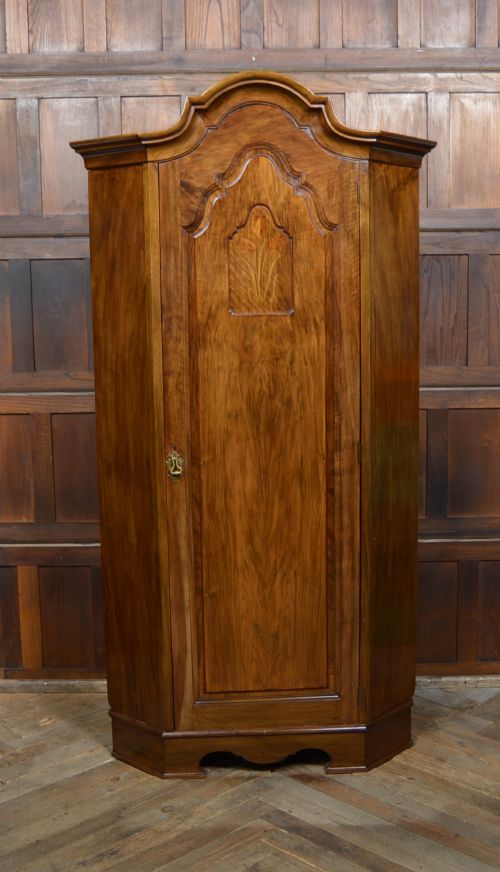
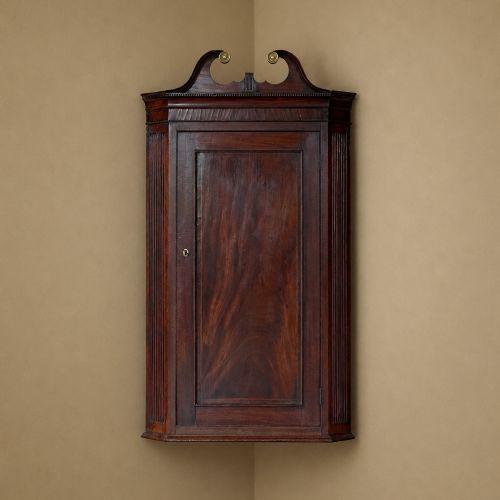
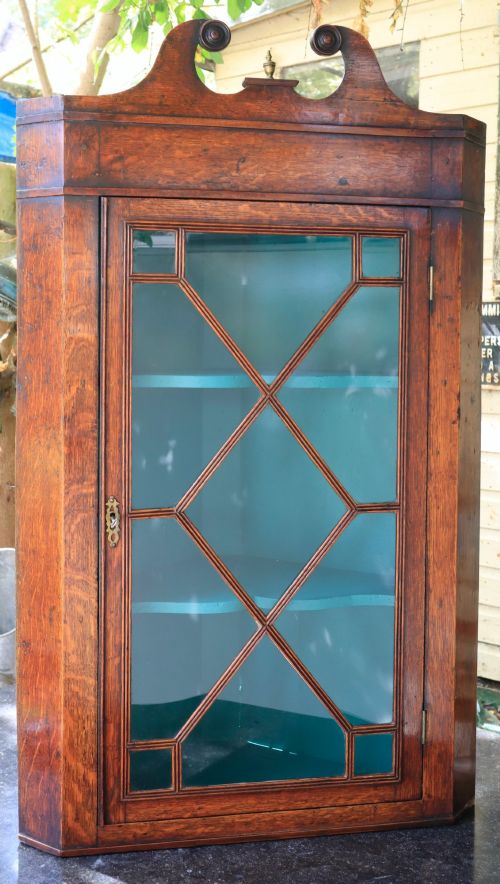
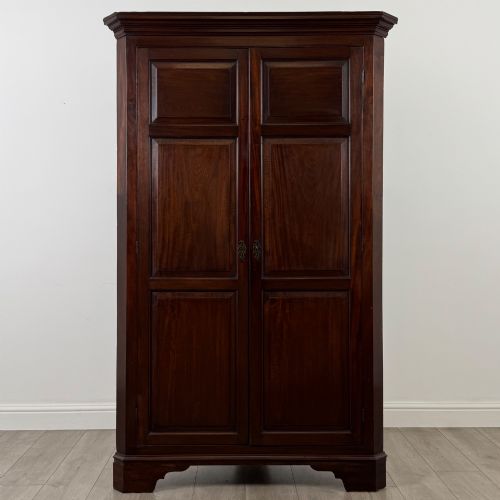
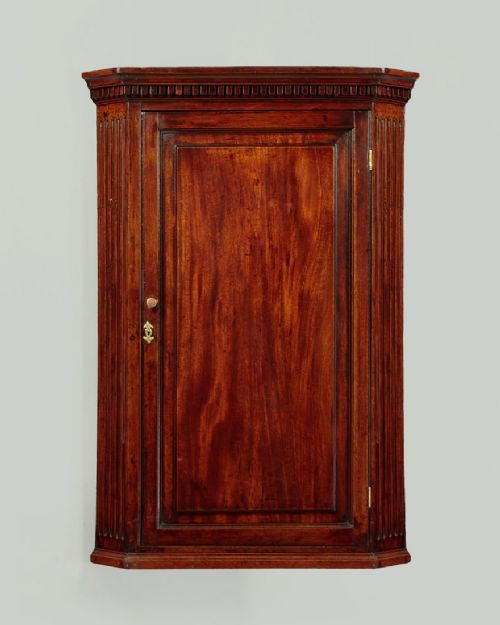
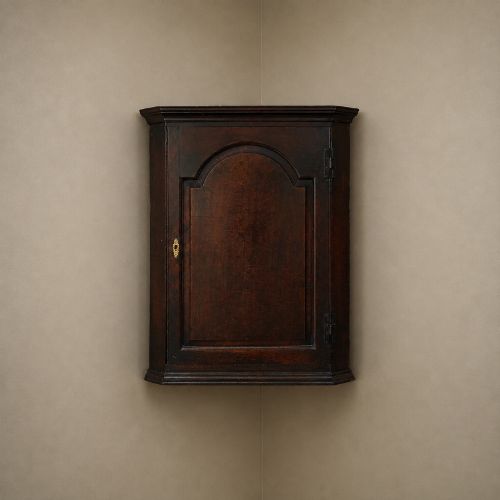
An antique wood corner cabinet appears in various guises across Georgian, Victorian and Edwardian eras, designed specifically to utilise dead angles in rooms. Buyers meet wall-hanging cupboards alongside tall floor-standing corner cabinets and double height pieces that command a whole room corner.
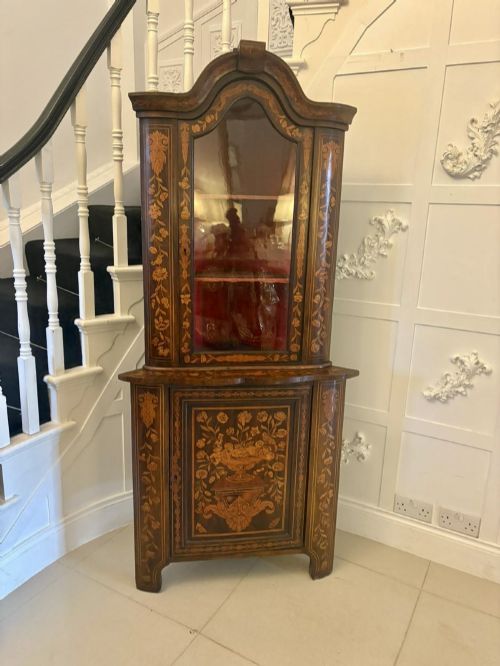
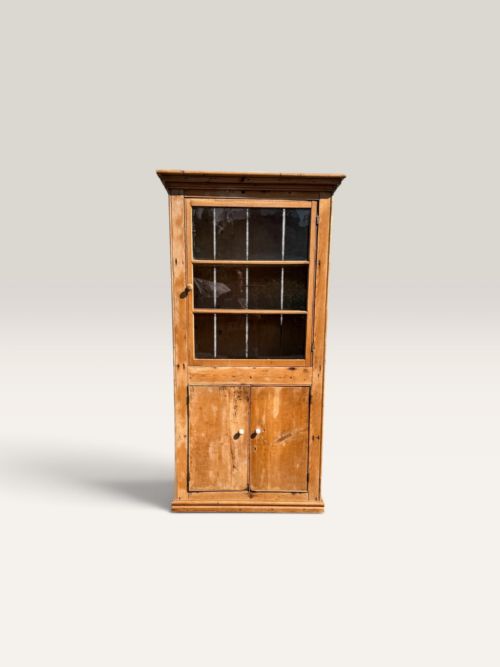
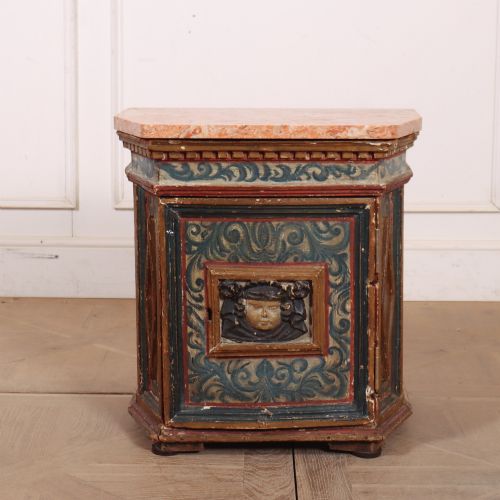
Makers shaped these storage forms with bow fronts, glazed display doors, and lower drawers, utilising timber species such as mahogany, oak, walnut and pine. Simpler country pieces in paint or plain wood sit alongside grander urban examples featuring marquetry and inlaid details.
Materials and construction
Cabinet makers built these pieces using solid timbers like mahogany, oak and walnut for structural stability, often applying finer veneers of satinwood or kingwood to decorative surfaces. Glass panels were fitted into wooden frames for display variations, while brass hinges, handles and key escutcheons secured the doors.
Construction methods combined dovetail joints in drawers with pegged or screwed framing for carcases designed to fit precisely at ninety degrees. Painted finishes and marquetry work added surface ornamentation to both urban workshops and regional country pieces.
Some corner cabinets hide secret drawers tucked behind shaped shelves.
Distinctions in quality
Quality rests upon the selection of timber figures, the precision of inlaid marquetry work, and the integrity of original brass mounts. Finer pieces demonstrate careful grain matching across panel doors and sophisticated handling of curved bow fronts.
The sophistication of internal shelving, original glazing bars, and the presence of working keys with functioning locks elevate certain examples above simpler utility pieces.
Edwards & Roberts·Maple & Co.
The Antique Wood Corner Cabinet Glossary
- Bow front
- A convex, outwardly curved front facade that softens the sharp angles of a piece. This curvature requires skilled timber bending or solid wood shaping.
- Marquetry
- Decorative patterns created by fitting thin pieces of wood veneer onto a structural carcase. Makers used contrasting timbers like satinwood and mahogany to form floral or geometric designs.
- Glazed door
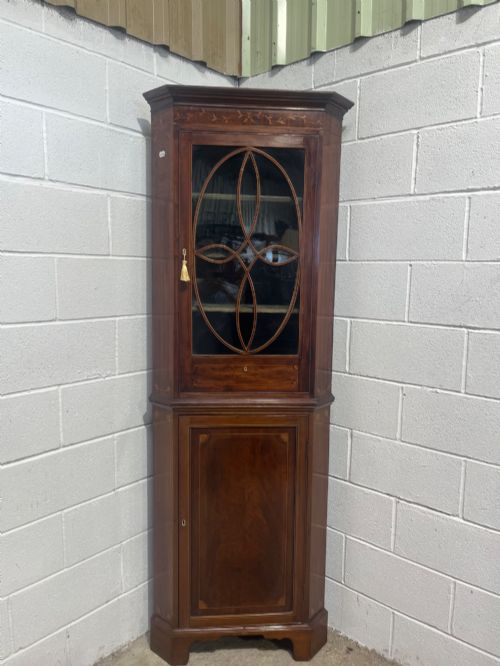
- A frame fitted with glass panes to display contents within the cabinet. These often feature wooden glazing bars dividing the glass into geometric sections.
- Escutcheon
- A protective plate surrounding a keyhole, frequently fashioned from brass. It guards the surrounding wood from wear caused by the insertion of keys.
- Encoignure
- A French term for a corner cupboard or cabinet. The archive records French examples featuring kingwood and ormolu mounts.
Antique Wood Corner Cabinet: Frequently Asked Questions
Where should I place a corner cabinet?
These pieces fit directly into the ninety-degree junction of two walls, making use of space that standard rectangular furniture cannot occupy.
Wall-hanging versions mount securely at eye level, while floor-standing variants anchor themselves into the room corner to provide substantial storage.
How do I tell Georgian from Victorian pieces?
Georgian examples often feature simpler mahogany or oak construction with astragal glazing bars and understated bracket feet. Victorian pieces frequently introduce richer rosewood veneers, marquetry inlay, and bolder proportions.
Examining the internal construction timber and hardware helps confirm the period of manufacture.
Can I use a corner cabinet for display?
Many examples feature glass doors and internal wooden or glass shelves specifically designed to showcase porcelain, glassware or collections.
Solid-door variants conceal interior storage, functioning primarily as cupboards rather than display units.
What is a floor-standing corner cabinet?
Unlike wall-mounted cupboards that require structural fixing, floor-standing units rest directly on the ground and often span from base to cornice.
These taller pieces sometimes feature double-height storage with upper display sections above lower solid doors.