


Wall Hanging Display Case
A wall hanging display case organises precious objects at eye level, saving floor space while framing miniature collections and curiosities.
Wall Hanging Display Case
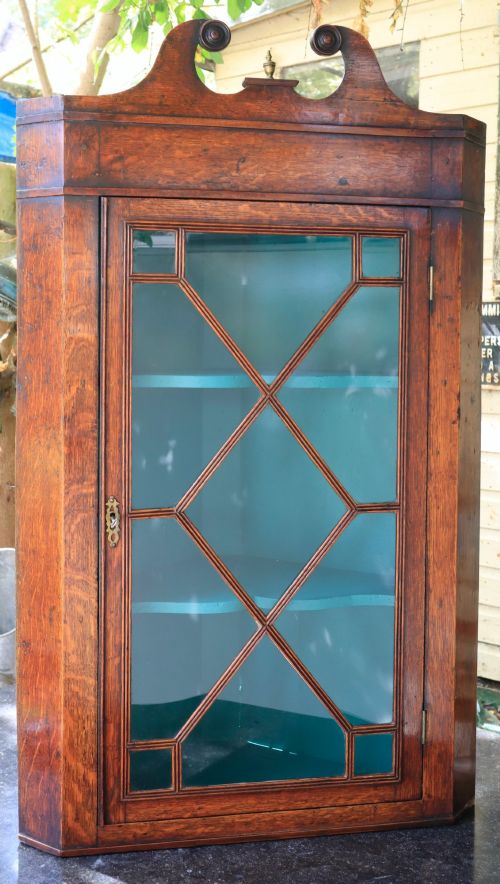
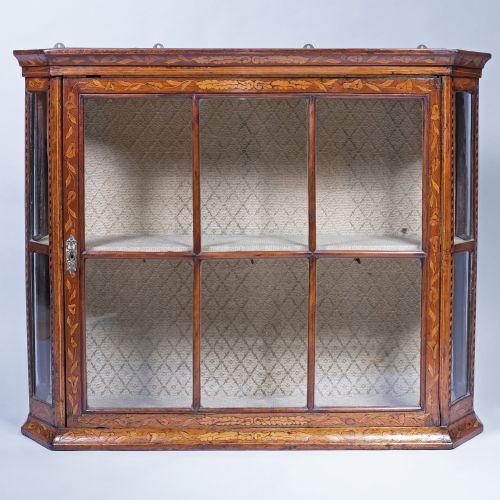
A wall hanging display case encompasses a variety of timber enclosures designed to mount securely upon a room's vertical surfaces. The selection spans compact corner cabinets, flat wall cupboards, and glazed hanging display units originating from the eighteenth, nineteenth, and early twentieth centuries.
Buyers most frequently encounter Georgian and Victorian mahogany or oak corner cupboards alongside Edwardian glazed display cabinets. These pieces often feature glass doors or open shelves to exhibit small ceramics, glassware, and personal mementoes within domestic interiors.
The diverse inventory incorporates specialised regional items such as Welsh oak cupboards, French barley twist enclosures, and maritime dioramas. Such wall hanging display case examples reflect the varied utility and craftsmanship of their respective eras.
Materials and Construction
Cabinet makers utilised dense hardwoods including mahogany, oak, walnut, and yew wood, often pairing structural timbers with brass hinges, locks, and keys. Glazed doors incorporate fitted glass panes to protect contents while maintaining visibility.
Construction techniques range from traditional dovetail joints and fielded panels to decorative inlays of satinwood, fine carvings, and gilded finishes. Selected examples integrate fabric linings or mirror glass backs to enhance the internal display of objects.
Surface treatments rely on traditional polishing methods that highlight the natural grain and rich colour of the timber. Structural integrity is achieved through sturdy framing designed to support the weight of the cabinet and its contents when wall-mounted.
Observed forms range from compact corner cupboards to large shop display barometers and maritime dioramas.
Gradations of Quality
The excellence of a wall hanging display case rests upon the selection of timber and the precision of the cabinet work. Superior examples demonstrate finely figured veneers, well-matched wood grains, and meticulously fitted doors that close true upon original brass hardware.
Refinement in decorative detail separates standard utility cupboards from distinguished pieces. Carved mouldings, inlaid banding in satinwood, gilt highlights, and intact period glass or mirrored backs indicate higher workshop standards and greater original cost.
Structural preservation and originality dictate the standing of surviving pieces. Cabinets retaining their original mounting points, functional locks with keys, and uncompromised timber surfaces command greater appreciation among discerning buyers.
W.F. Homer London·Town and Emanuel·Aitchison for Zambrene
The Wall Hanging Display Case Glossary
- Corner cabinet
- A storage unit built with a triangular cross-section specifically to fit into the internal corner of a room, thereby utilising space efficiently. These often feature glazed upper doors and panelled lower doors.
- Bow front
- A convex, outwardly curved front profile seen on selected cabinets and cupboards, which softens room angles and expands internal storage capacity. This shape requires advanced timber bending or carving skill.
- Barley twist
- A decorative turning technique resembling the spirals of a barley stalk, applied to vertical column supports on furniture. This style gained particular popularity during the nineteenth century.
- Diorama
- A three-dimensional miniature scene enclosed within a glazed case, frequently depicting maritime subjects such as sailing vessels racing at sea. These provide a detailed snapshot of historical events or pastimes.
- Veneer
- A thin layer of finely figured wood applied over a secondary timber base to create decorative exterior surfaces without prohibitive material costs. This method permits complex geometric patterns.
Wall Hanging Display Case: Frequently Asked Questions
Were these cabinets originally meant for corners?
Many surviving examples are specifically engineered with angled backs to slot neatly into room corners. This traditional configuration made efficient use of domestic space in period properties.
Flat-backed wall cabinets were also common, designed to hang on straight walls in reception rooms or hallways. The room layout usually dictated whether a corner or flat format was chosen.
How can I tell a Georgian cabinet from a Victorian one?
Georgian pieces generally exhibit simpler, elegant proportions with mahogany or oak timbers and understated classical lines. Eighteenth-century examples often feature fine glazing bars and traditional hand-cut joinery.
Victorian cabinets tend to be heavier in construction, sometimes incorporating revival styles like Gothic arches or darker walnut finishes. Inlaid details and varied decorative hardware also point towards nineteenth-century manufacturing methods.
What items look best inside a glazed wall cabinet?
Miniature collections, antique ceramics, glassware, and small curiosities complement the enclosed shelving best. The glass protection keeps delicate objects free from dust while keeping them visible.
Items should be scaled appropriately to the cabinet depth and shelf spacing to avoid overcrowding. Mirrored backs inside some units help reflect light through the displayed pieces.