




Regency Hanging Cabinets
Regency hanging cabinets are compact wall-mounted storage pieces from the early nineteenth century that bring warmth and clean architectural lines to modern rooms.
Regency Hanging Cabinets
When you search for regency hanging cabinets, you encounter wall-mounted storage pieces designed to maximise floor space while offering secure display or concealment. The examples available here span the Georgian, Regency, and nineteenth-century periods, capturing the architectural taste of the era.
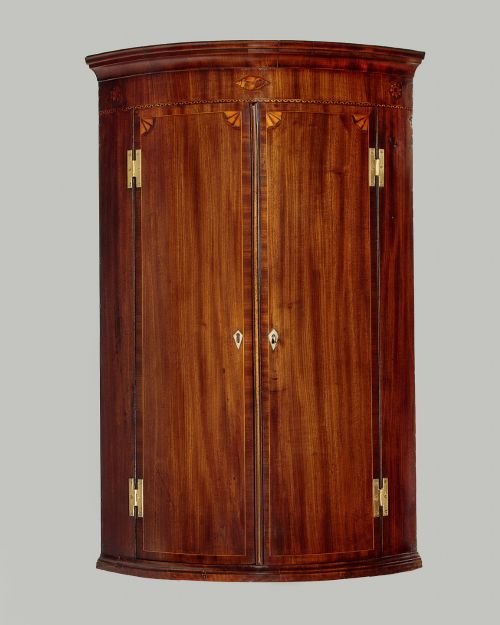
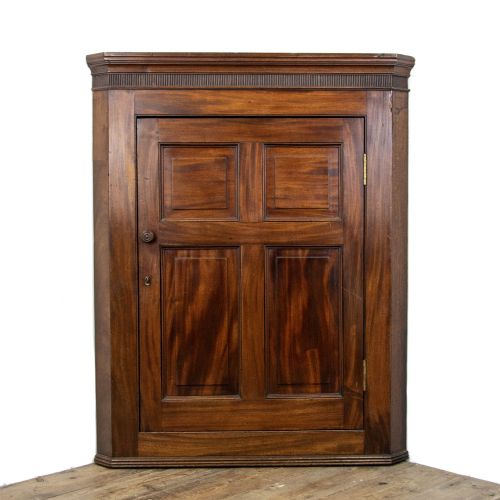
The most common form you meet on this page is the corner cabinet or corner cupboard, often featuring a bow front that softens the angles of a room. These pieces appear in both glazed and solid wooden door variations, serving as functional furniture for small spaces.
Makers of the period utilised rich timber grains to create visual interest on surfaces that were otherwise plain. Alongside traditional wall cupboards, the selection includes related forms such as a gentleman's hanging wardrobe and broader wall cabinets influenced by continental styles.
How they were made
Cabinet makers of the period relied heavily on solid mahogany and flame mahogany veneers, selecting timber for its striking grain patterns. These wooden structures were frequently accented with contrasting inlays of satinwood and tulipwood to define borders and panels.
Metal fittings played both a structural and decorative role, with brass hinges and escutcheons securing doors and drawers. Bone was occasionally employed for subtle details like keyhole escutcheons, while glass panes permitted the display of prized objects within glazed compartments.
Listings feature mahogany, flame mahogany, and satinwood, spanning the Georgian, Regency, and Edwardian periods.
What varies in quality
The choice of timber underpins the hierarchy of these cabinets, moving from standard mahogany boards up to highly figured flame mahogany and precise satinwood stringing. Superior examples display careful book-matching of veneers across curved bow fronts, ensuring the grain flows symmetrically.
Construction methods and hardware also mark the distinction between everyday utility items and finer workshop production. Refined pieces incorporate hand-cut joinery and heavy brass fitments that reflect the skill of the original cabinet maker.
Town and Emanuel
The Regency Hanging Cabinets Glossary
- Bow front
- A convex curved cabinet front that projects outward from the corners. This shape softens room geometry and provides additional interior depth.
- Flame mahogany
- A highly figured wood veneer displaying characteristic flame-like patterns. Cabinet makers prized this timber for central door panels.
- Stringing
- A narrow inlay of contrasting wood, such as satinwood or tulipwood, set into the primary timber. It creates delicate geometric borders around panels.
- Escutcheon
- A protective plate surrounding a keyhole, frequently fashioned from brass or bone. It prevents the surrounding wood from wearing down through daily use.
Regency Hanging Cabinets: Frequently Asked Questions
Where were these cabinets placed?
These cabinets were typically hung in corners to utilise dead space in Georgian and Regency interiors. Their compact wall-mounted design kept surfaces clear below while keeping everyday items close at hand.
In domestic settings, they served as useful storage for glassware, china, or documents. Their elevated position protected contents from damp floors and busy household traffic.
How do I hang an antique cabinet?
Hanging an antique cabinet requires locating solid wall studs or masonry to bear the considerable weight of hardwood timber and glass. Modern heavy-duty brackets hidden inside the carcass provide secure support without altering the exterior.
Because these pieces were built before standardised wall fixings, professional installation ensures the historical structure is not strained. Distributing the weight evenly prevents the door frames from dropping out of square over time.
Are these cabinets all from the Regency period?
While the search term highlights Regency pieces, the selection includes items from the broader Georgian era, the wider nineteenth century, and Edwardian revivals. Cabinet styles evolved gradually, carrying design motifs across overlapping reigns and decades.
Identifying the exact period relies on examining construction techniques, timber choices, and secondary woods rather than relying on a single stylistic feature. Makers often continued producing traditional forms long after a monarch's reign had ended.