


Hand Painted Wooden Table
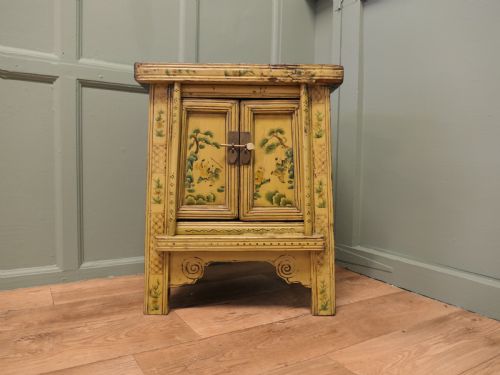
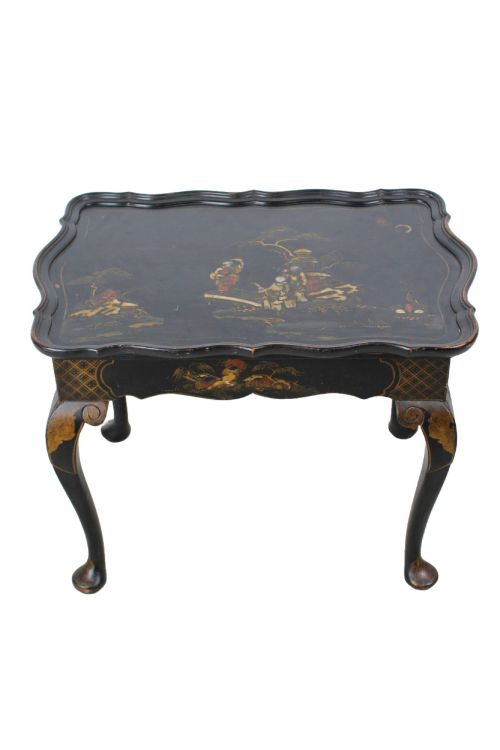
A hand painted wooden table brings colour and character to a room, ranging from Georgian card tables to Edwardian occasional pieces.
Hand Painted Wooden Table
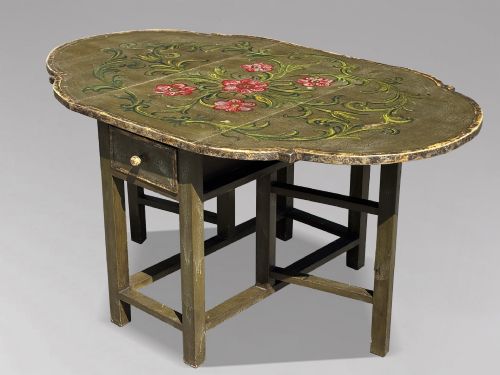
When you search for a hand painted wooden table, you encounter a varied selection of surfaces that combine timber construction with decorative brushed or lacquered finishes. The inventory spans several periods, incorporating Georgian card tables, Victorian occasional furniture, and Edwardian designs.
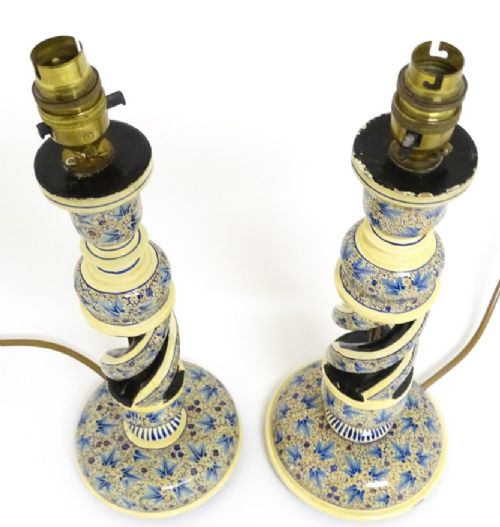
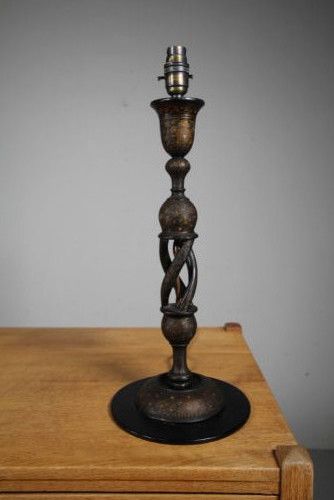
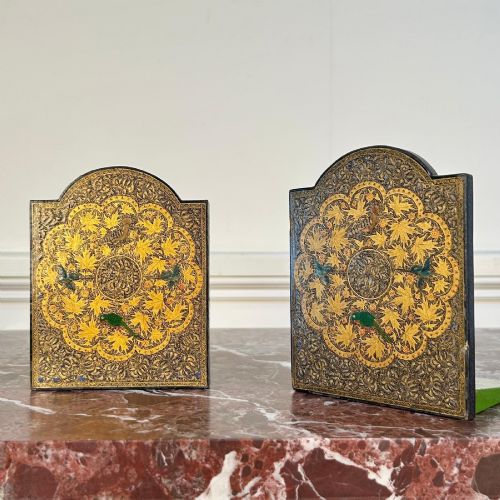
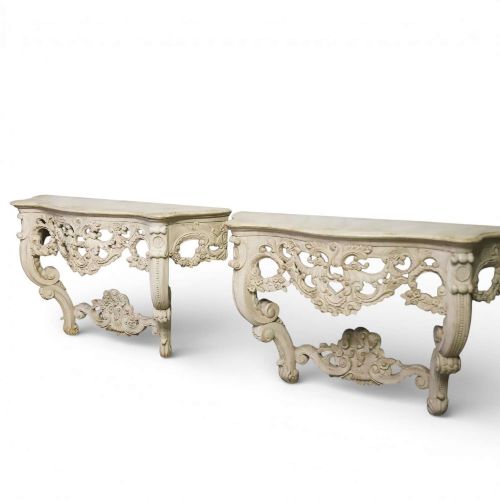
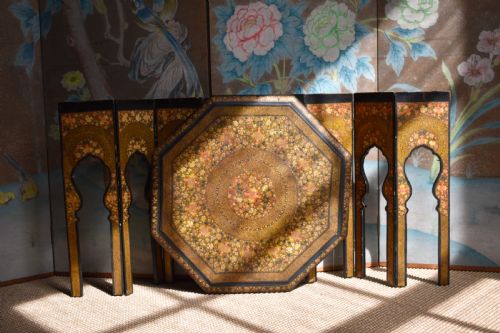
You are most likely to meet side tables, coffee tables, and console tables on this page. Many examples originate from regional traditions such as Kashmiri production, Italian folk art, and French provincial workshops, alongside Sheraton Revival pieces.
The forms extend beyond standard tables to include drop-leaf variations, pembroke tables, and tray top coffee tables. Each piece displays a distinct painted surface applied to a wooden carcase, utilising materials like mahogany, satinwood, and oak.
How they were made
The construction relies on solid and veneered timbers including mahogany, satinwood, oak, and general carved wood. Joinery techniques vary by period, supporting both formal card tables and rustic farmhouse surfaces.
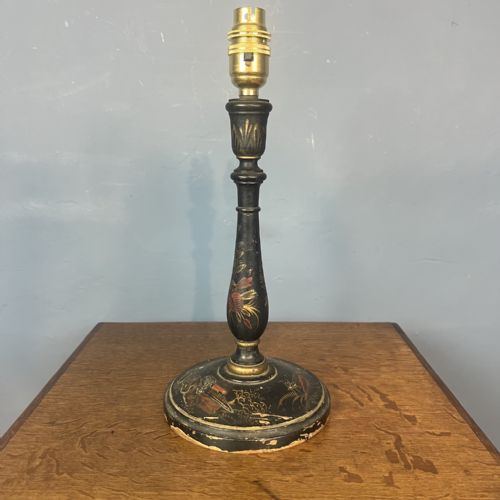
The decorative surfaces combine traditional paint, lacquer, and brass fittings. Artisans applied pigments directly to wood or over a prepared lacquer base, frequently employing Chinoiserie motifs or geometric patterns.
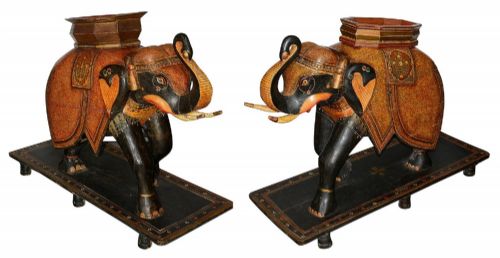
Among the wooden tables, you might spot lacquered elephants and folk art sailors standing ready to keep watch.
What varies in quality
Quality rests in the execution of the painted decoration and the selection of the underlying timber. Finer pieces demonstrate precision in brushwork and inlay, whilst simpler examples rely on charming folk art execution.
The integration of the painted surface with the wooden structure determines the distinction across the range. Superior items maintain cohesive proportion between the turned or carved wooden support and the decorated top.
The Hand Painted Wooden Table Glossary
- Chinoiserie
- European interpretation of Chinese and East Asian artistic styles, frequently seen on lacquered and painted furniture.
- Pembroke table
- A small form of table with hinged leaves on either side, often featuring a single drawer.
- Occasional table
- A small table designed for intermittent use within a reception room or parlour.
- Drop-leaf table
- A table with a fixed central section and hinged flaps that fold down at the sides.
- Satinwood
- A durable, yellowish timber native to India and Ceylon, frequently utilised in fine 19th-century cabinet making.
Hand Painted Wooden Table: Frequently Asked Questions
How do I clean a painted wooden table?
Dust gently with a soft, dry cloth to protect the painted or lacquered surface from abrasion. Avoid chemical sprays and excessive moisture which can damage historic finishes.
Keep the timber away from direct heat sources and strong sunlight to prevent the paint from cracking or fading over time.
Are these tables suitable for daily use?
Many occasional and side tables function well for everyday placement of lamps and decorative objects. Use coasters and placemats to protect delicate painted tops from moisture rings.
Heavier items like card tables and console tables handle routine domestic placement while retaining their decorative appeal.
How can I tell a Georgian table from a Victorian one?
Georgian examples often display restrained classical lines and precise inlay, reflecting the prevailing taste of the 18th and early 19th centuries. Later 19th-century and Victorian pieces tend to incorporate bolder revival styles and varied lacquer work.
Construction methods and secondary timbers inside drawers also provide clues to the approximate date of manufacture.
What is Chinoiserie decoration?
Chinoiserie is a decorative style that European artisans used to depict Asian landscapes, figures, and motifs. It typically appears in gold or coloured paint over a dark or cream lacquered wooden ground.
This aesthetic experienced notable revivals during both the Georgian period and the Edwardian era.