



Country House Coffee Table
A country house coffee table brings sturdy proportion and lived-in charm to a sitting room, grounding the space with centuries of practical domestic history.
Country House Coffee Table
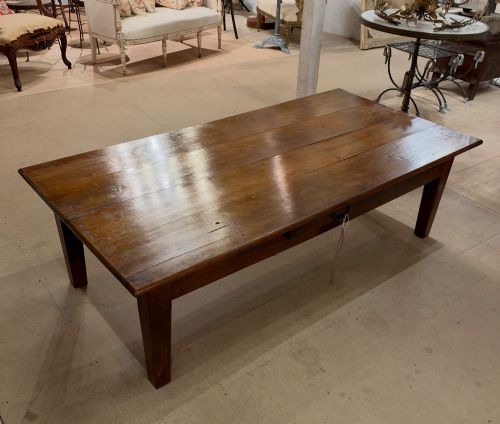
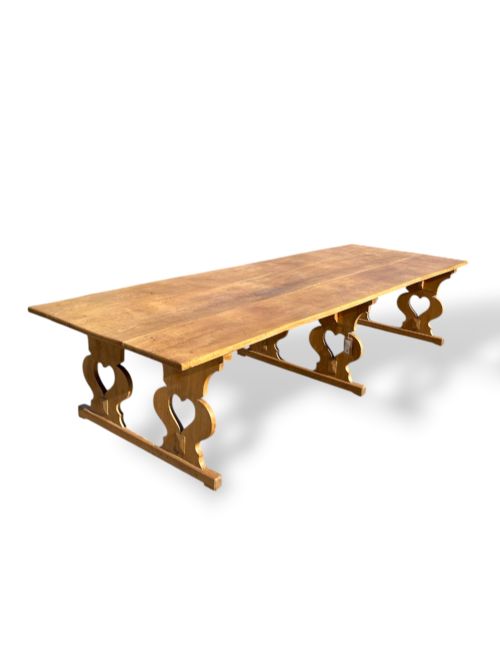
A country house coffee table encompasses substantial low tables adapted from earlier household furniture, including converted benches and press tables alongside purpose-built low designs. These pieces typically display robust construction and generous proportions suitable for substantial reception rooms.
The versions most frequently encountered on this page span the eighteenth and nineteenth centuries into the early twentieth century, drawing on rustic farmhouse, Georgian, and French provincial traditions. Makers often repurposed utilitarian items like pig benches and cheese presses to create low surfaces for domestic use.
Materials range from native English oak and walnut to painted hardwoods, pine, and elm, often retaining the marks of long daily service. The aesthetic prioritises utility and weathered character over pristine formality, fitting comfortably into relaxed interiors.
Construction and materials
Carpenters built these tables from solid timbers such as oak, walnut, mahogany, elm, and pine, frequently utilising thick planks for tops and sturdy frames for support. Structural elements often rely on traditional joinery techniques designed to withstand heavy daily demands.
Surface treatments vary from polished wood showing natural grain and patination to painted finishes and specialist elements like brass hardware or inset leather. Some examples incorporate clever mechanical roots, such as cheese press mechanisms or scalloped Benares trays resting on carved hardwood stands.
Country House Coffee Table Retail Price Guide 2026
Typical asking prices for country house coffee table among the pieces listed under this phrase on Sellingantiques today, from the lower quarter to the upper quarter. They describe what is for sale here now, not the wider market.
A good cheese press table brings heavy dairy history straight to your living room rug.
Judging quality and character
Quality in a country house coffee table rests in the integrity of the timber and the honesty of its conversion from earlier functional objects. Superior examples display balanced proportions and substantial scale without appearing clumsy.
The depth of patination on the wood and the subtlety of original paint finishes distinguish finer specimens from ordinary ones. Well-integrated alterations, where a bench or press finds a second life as a low table, succeed through careful proportion and respect for the original material.
The Country House Coffee Table Glossary
- Pig bench
- A low wooden bench traditionally used in rural farmhouses, frequently adapted in later years to serve as a coffee table. These pieces retain the sturdy legs and thick tops of their working origins.
- Cheese press table
- A heavy utilitarian table incorporating parts of a press once used in dairy production. They provide exceptionally solid foundations for low coffee tables.
- Patina
- The deep surface sheen and colour developed by wood over decades or centuries of handling, exposure, and polishing. It marks the true age of a piece.
- Hardwood
- Timber derived from broad-leaved deciduous trees, including oak, walnut, and elm. These dense woods supplied the durable structure for traditional country furniture.
Country House Coffee Table: Frequently Asked Questions
What is a country house coffee table?
A country house coffee table is a sturdy, characterful low table often adapted from earlier utilitarian furniture such as benches or press tables. They reflect domestic rural traditions and bring substantial presence to a room.
These pieces use solid timbers like oak, walnut, pine, and elm, sometimes with painted finishes or decorative brass details. Their designs range from Georgian elegance to rustic farmhouse simplicity.
How were old benches turned into tables?
Cabinet makers and later restorers frequently lowered the legs of long benches, pig benches, or work tables to a comfortable height for sitting rooms. This practice preserved robust historical frames while giving them a new domestic purpose.
Such conversions keep the original surface wear and sturdy joinery intact, making each table a singular artefact with visible history.
How do I date an antique coffee table?
Dating relies on examining the timber species, tool marks left during construction, joinery methods, and the natural patination of the surface. Eighteenth-century pieces often show hand-sawn board marks and pegged joints.
Later pieces from the nineteenth and early twentieth centuries may feature machine-cut elements or painted finishes characteristic of specific periods like the 1910s or 1930s.
Where do painted finishes come from?
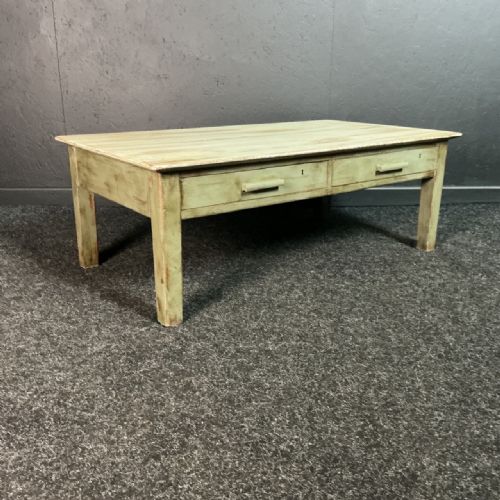
Many country tables received coats of paint over the generations to refresh worn timber or match changing interior decoration schemes. These layers often weather and wear down organically over time.
Original or early painted surfaces add significant visual charm and tell a richer story about how the furniture lived in past homes.