
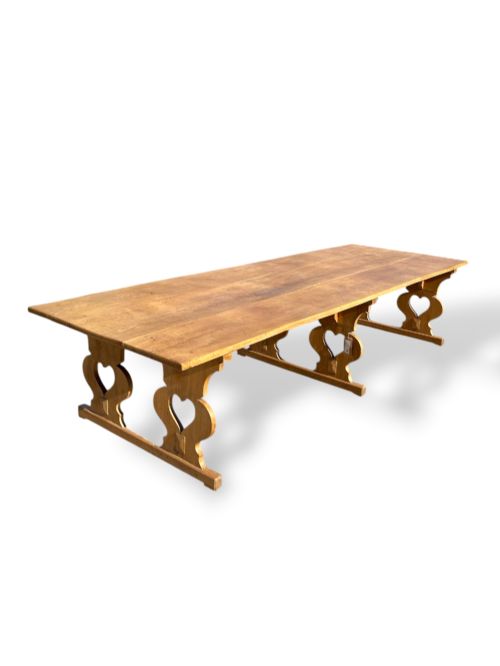
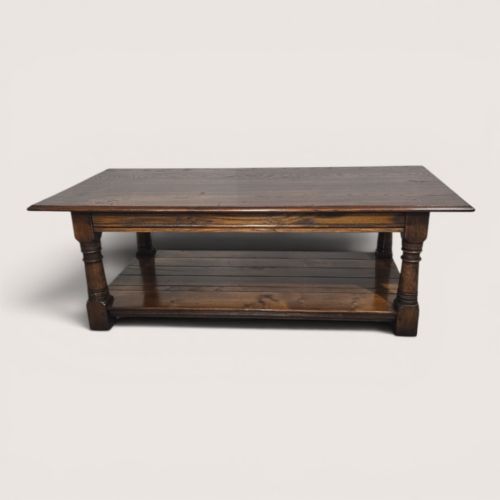
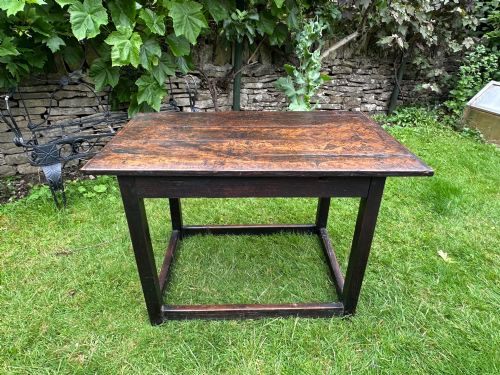


Plank Top Coffee Table
These plank top coffee table pieces bring heavy timber and rustic warmth to a room, offering sturdy surfaces built for daily use.
Plank Top Coffee Table
A plank top coffee table centres a room with a solid wooden surface constructed from joined boards rather than a single sheet. These items draw on forms from the eighteenth and nineteenth centuries, spanning Georgian, French provincial and rustic farmhouse traditions.
Most examples found here utilise sturdy woods like oak, pine and fruitwood, often converted from older dining tables or side tables to sit at a lower height. Buyers encounter rectangular proportions, occasionally featuring side drawers or scrubbed surfaces that show the grain of the timber.
The style leans heavily into country oak and rustic country aesthetics, where utility dictates the form. Such tables suit interiors that favour honest construction and visible signs of age over formal polish.
How they were made
Joiners constructed these tops by joining several boards of oak, pine or fruitwood edge to edge, sometimes securing them with understated wooden cleats underneath to manage the natural movement of the timber. Iron fixings occasionally appear in structural joints, particularly in pieces adapted from working tables.
Makers relied on hand tools to plane and level the boards, leaving subtle tool marks that reveal the manual labour behind each surface. Finish was typically minimal, allowing the natural grain of the timber to take on wear and patination through decades of use.
The listings span the eighteenth and nineteenth centuries, featuring oak, pine, fruitwood and iron materials configured into rustic farmhouse and Georgian styles.
What varies in quality
Quality rests primarily in the integrity of the timber and the honesty of the conversion. Pieces fashioned from dense eighteenth century oak or figured fruitwood display a richer depth of colour and tighter grain structure than lighter nineteenth century pine variants.
The proportion and balance dictate visual success, especially since many lower tables began life as taller dining or kitchen pieces. A successful reduction retains proper leg clearance and harmonious scale without looking awkward or overly modified.
The Plank Top Coffee Table Glossary
- Plank top
- A table surface constructed from multiple parallel boards joined together rather than a single sheet of timber. This method accommodates the natural expansion and contraction of solid wood.
- Fruitwood
- Timber sourced from fruit-bearing trees such as pear, apple or cherry, utilised for its fine grain and warm tone. It appears frequently in provincial furniture.
- Scrubbed finish
- A surface repeatedly washed with water and stiff brushes to remove old finishes and dirt, leaving pale, clean raw timber. This treatment highlights the natural texture of the grain.
- Cleat
- A piece of wood fastened transversely across the underside of a tabletop to prevent warping and keep the planks flat. Traditional examples often allow the top to move slightly with changes in humidity.
Plank Top Coffee Table: Frequently Asked Questions
Are these tables original low tables?
Many coffee tables from earlier periods were adapted from taller dining tables, side tables or kitchen tables by shortening the legs.
This conversion process is a standard part of their history and makes them suitable for modern seating heights.
How do I care for a scrubbed wood surface?
Scrubbed timber lacks a heavy varnish seal, meaning it responds best to dry dusting and immediate wiping of spills to prevent staining.
Occasional light cleaning with mild soap and water maintains the pale, natural appearance of the wood.
What woods were used for these tables?
Makers relied on accessible regional timbers, predominantly oak, pine and various fruitwoods, depending on the local tradition and period.
Oak and fruitwood offer greater density and darker tones, while pine provides a lighter, softer surface.
How do I spot an eighteenth century piece?
Earlier pieces from the eighteenth century typically display deeper patination, hand-cut joinery and denser oak boards with distinct historical wear.
Later nineteenth century examples often feature softer pine or modified proportions reflecting changing domestic habits.