

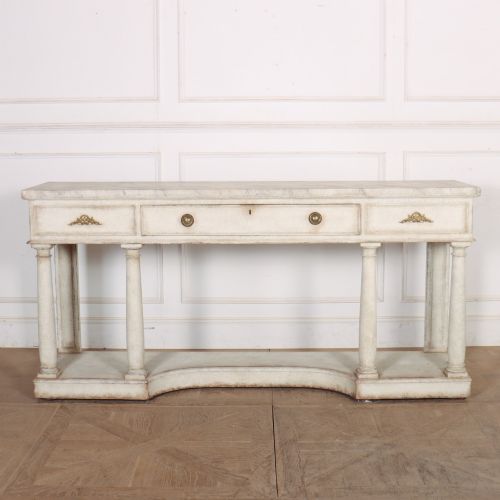


Regency Painted Hall Table
A regency painted hall table brings neoclassical grace and striking surface decoration to an interior, making it a sought-after piece for an entranceway.
Regency Painted Hall Table
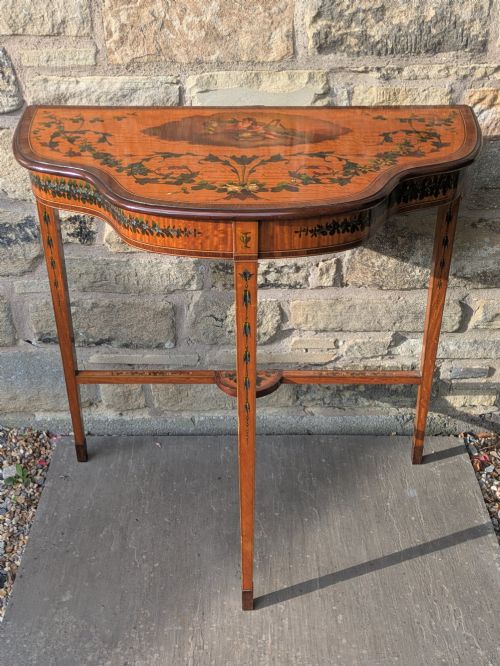
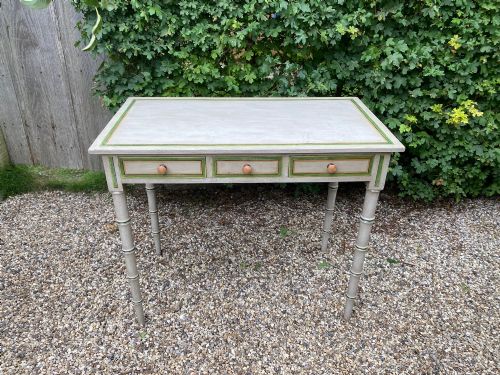
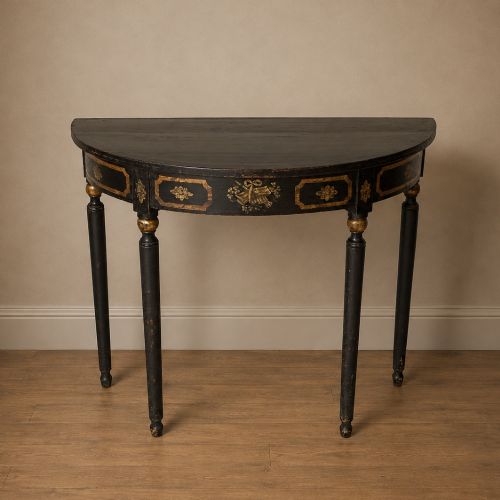
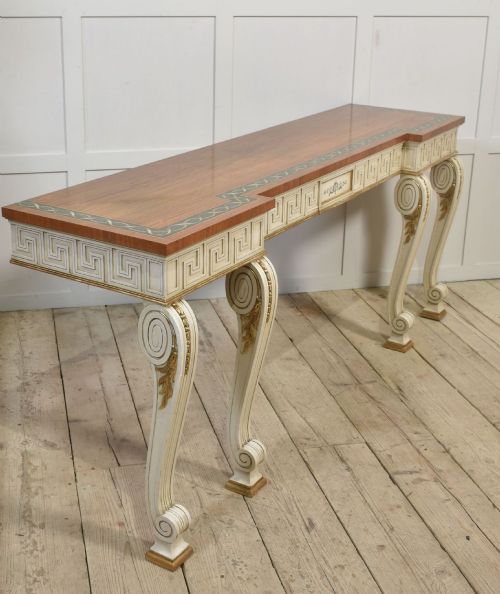
A regency painted hall table combines architectural form with decorative surface work, spanning console, side, writing, serving, and centre table formats. When exploring a regency painted hall table, buyers encounter forms ranging from demi-lune consoles to rectangular side tables with painted geometric tops or polychrome finishes.
The evidence shows these pieces emerging primarily from the Regency, Georgian, and Victorian periods, alongside later nineteenth-century interpretations and specific stylistic revivals. Examples often display neoclassical lines, Chinoiserie motifs, or Brighton Pavilion style elements, frequently incorporating painted faux bamboo or parcel gilt details.
Originating largely from English workshops alongside Swedish and Italian makers, these tables serve practical functions in hallways and reception rooms while displaying distinct painted decoration. Whether searching for a compact side table or a large serving table, collectors find considerable variety in scale and ornamentation.
How they were made
Makers utilised primary structural woods such as mahogany, satinwood, and softwood, constructing surfaces designed specifically to receive decorative paint layers. The application of paint, gold leaf, and polychrome pigments transformed basic timber foundations into elaborate architectural statements.
Surface ornamentation relied on meticulous hand-painting, incorporating faux bamboo turnings, geometric motifs, and parcel gilding to catch the light. Secondary materials like brass hardware and marble tops appear alongside original ochre and French grey paint layers, reflecting period design preferences.
Listings feature mahogany, satinwood, and softwood structures decorated with paint, gold leaf, and marble.
What varies in quality
Quality in a regency painted hall table rests upon the preservation of its original surface and the crispness of its decorative execution. Tables retaining untouched early paint schemes, such as original ochre or polychrome details, stand apart from pieces with later overpainting.
Structural integrity and the refinement of the carved or turned elements, such as faux bamboo legs or gilt mouldings, dictate the standing of an individual piece. The integration of the painted decoration with the underlying cabinetmaking separates standard domestic furniture from high-style Regency examples.
The Regency Painted Hall Table Glossary
- Demi-lune
- A half-moon shaped furniture form designed to sit flat against a wall. This profile is frequently seen in console tables and side tables from the Regency period.
- Parcel Gilt
- A decorative technique where specific carved details, mouldings, or motifs are highlighted with gold leaf over a painted or polished ground.
- Faux Bamboo
- Wood turned and carved to imitate the segmented stalks of natural bamboo. This motif was particularly popular during the Regency period and the Brighton Pavilion style revival.
- Polychrome
- Decoration executed in multiple colours. It defines painted surfaces featuring varied pictorial or geometric hues rather than a single monochrome coat.
- Console Table
- A table supported by wall brackets or console legs, designed to stand against a wall. These pieces frequently form part of matched pier mirror and table sets.
Regency Painted Hall Table: Frequently Asked Questions
Where should I place a regency painted hall table?
These tables suit narrow entranceways, hallways, and reception rooms where their decorative surfaces can be appreciated without obstructing movement. Console and side table formats fit neatly against walls beneath mirrors or artwork.
Larger serving and centre table variants require more open floor space to display their painted geometric tops and faux bamboo details properly.
How do I care for antique painted surfaces?
Maintain painted and gilded surfaces by dusting gently with a soft, dry cloth rather than applying liquid cleaners or household polishes. Protecting the wood from direct sunlight prevents the pigments and gold leaf from fading over time.
Keep tables away from direct heat sources to avoid timber movement that can cause paint to crack or flake.
Are these tables suitable for daily use?
While structurally sound for holding everyday items like correspondence or decorative objects, antique painted surfaces require care to avoid scratching. Using coasters or protective mats helps preserve delicate hand-painted tops during daily use.
Writing tables and side tables with drawers offer practical storage for small items while maintaining their decorative function.
How do I distinguish Regency pieces from later revivals?
Examine the construction methods, timber selection, and characteristics of the paint layers to understand the period of manufacture. Regency and Georgian examples exhibit period-specific joinery and genuine age-related wear beneath the decorative finish.
Later nineteenth-century pieces and twentieth-century interpretations often reveal different material handling and surface patination compared to early nineteenth-century work.