
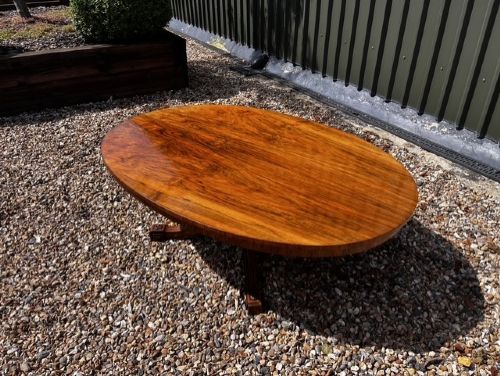
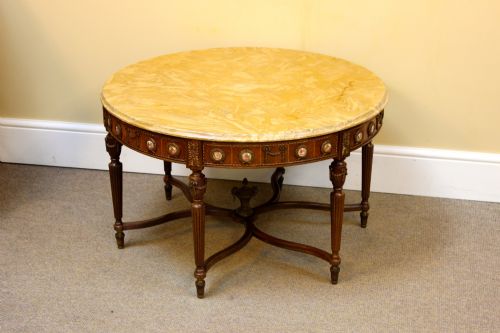
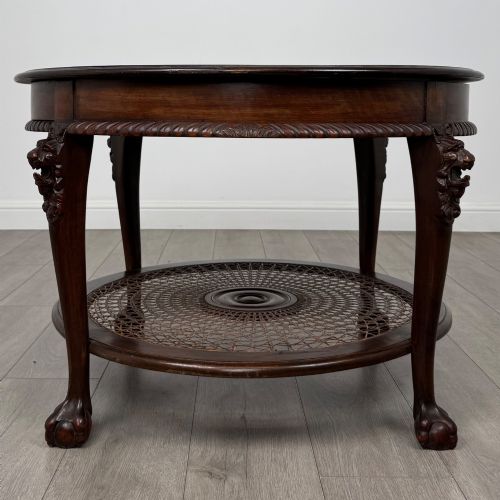
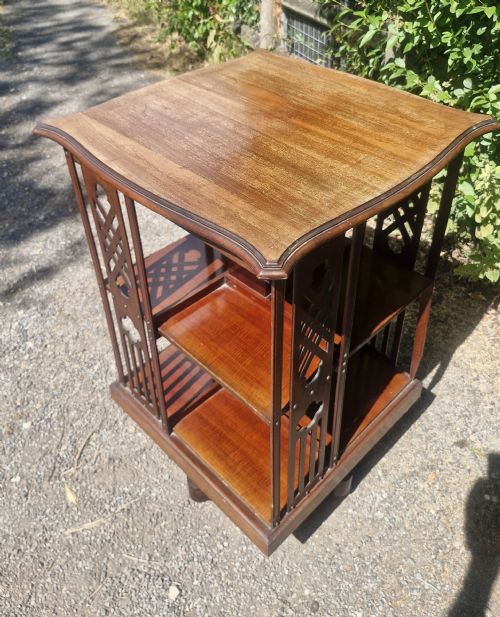

Edwardian Low Table
An Edwardian low table brings compact grace to a room, offering a functional surface rooted in early twentieth-century design.
Edwardian Low Table
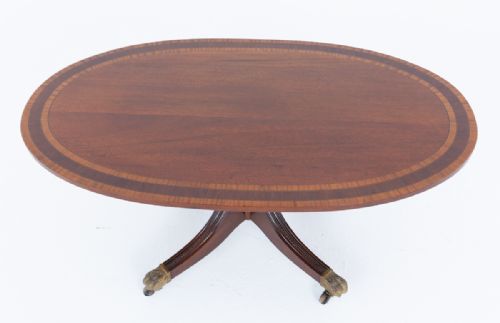
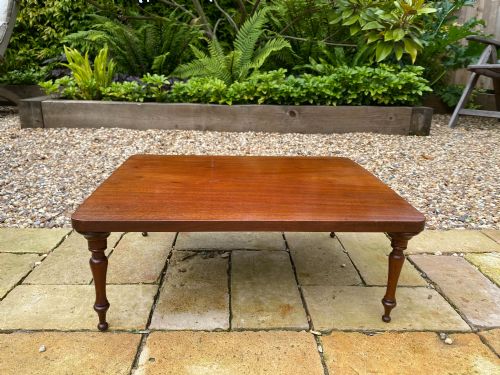
An edwardian low table encompasses various low-slung occasional pieces, tray tables, and coffee tables originating from the late nineteenth and early twentieth centuries. These forms reflect a shift towards domestic comfort and versatile living spaces.
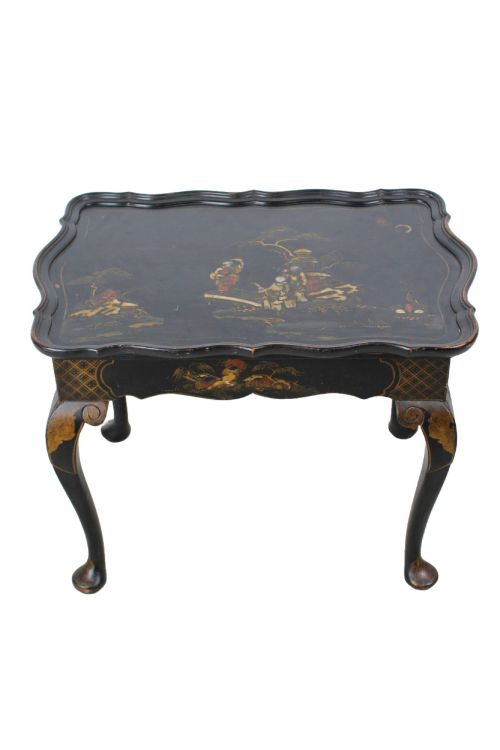
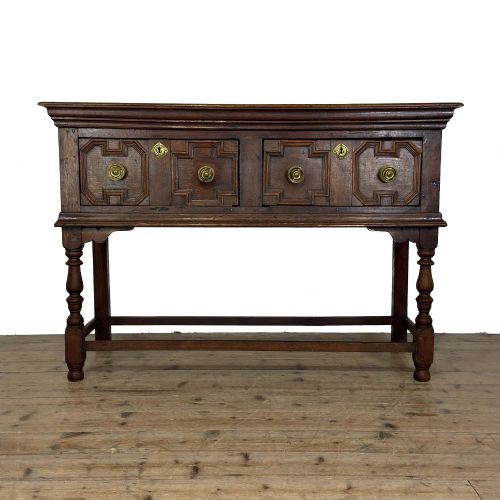
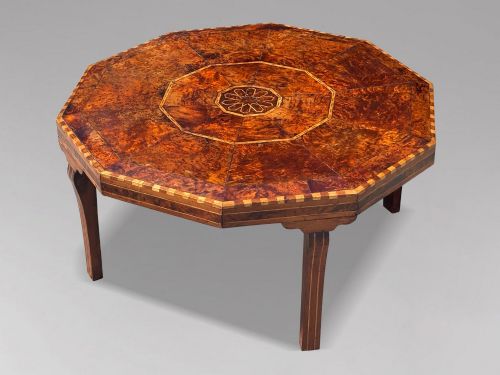
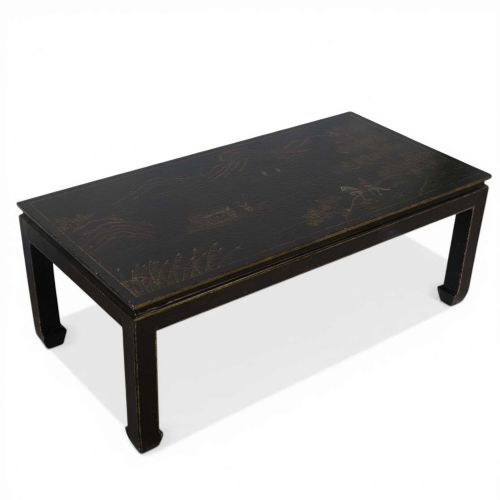
The selection frequently includes mahogany and walnut occasional tables, along with distinctive Chinoiserie lacquered surfaces and oak iterations. Many pieces draw on Sheraton and Chippendale revivals, blending historical motifs with proportioned low frames.
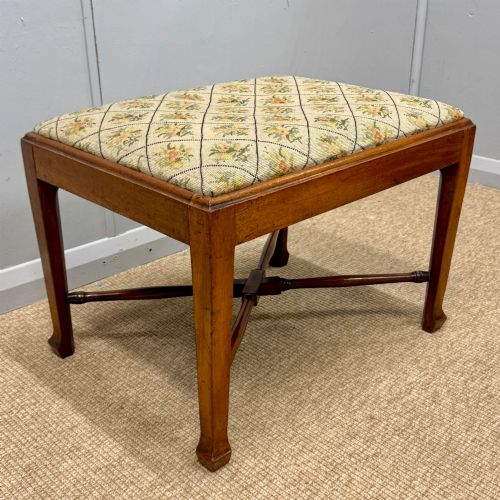
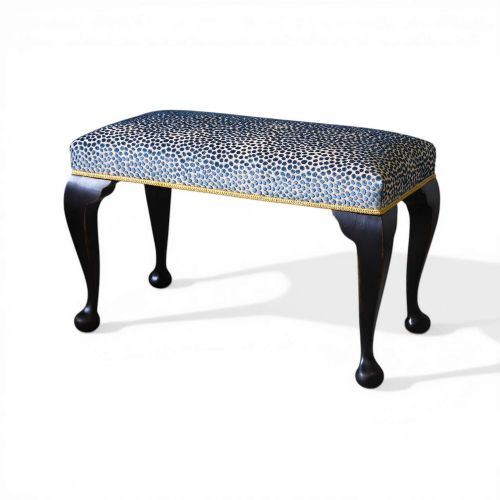
Buyers also encounter related low forms such as dressing table stools, footstools, and low boys that serve similar surface or seating functions in contemporary interiors.
How They Were Made
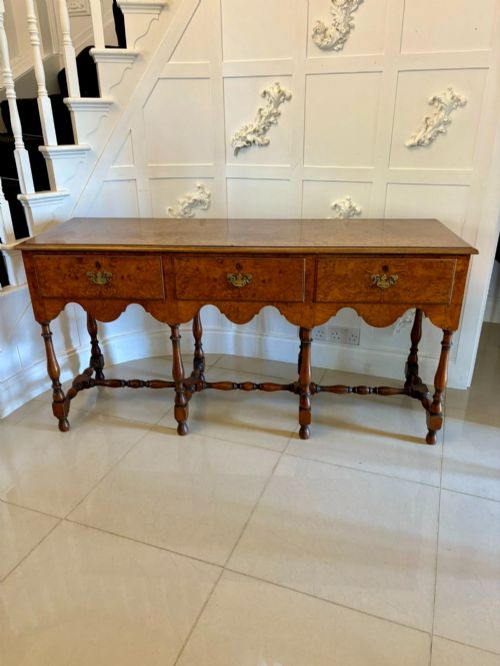
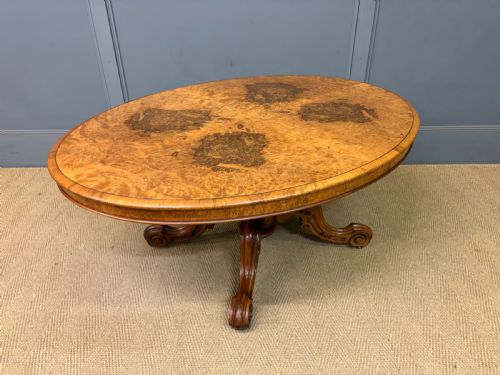
Cabinet makers utilised dense hardwoods like mahogany, walnut, and oak, frequently applying figured veneers to tabletops to create striking grain patterns. Joinery relied on traditional methods suited to supporting weight without heavy bracing.
Decorative techniques varied from subtle boxwood string inlay and marquetry to hand-painted Chinoiserie lacquer scenes depicting oriental landscapes. Brass hardware, such as carrying handles on tray tables, added both utility and visual contrast to the dark wood.
Marble inserts appeared on select pieces to provide durable, heat-resistant surfaces, while turned legs and cabriole supports grounded the lower frames securely.
Current listings feature mahogany, walnut, oak, and burr walnut alongside decorative lacquer finishes.
What Varies in Quality
The standard of timber selection and veneer matching defines the upper tier of these pieces, where cabinet makers aligned grain patterns symmetrically across wide surfaces. Lesser examples relied on plain, unfigured boards with minimal attention to visual cohesion.
Hand-applied decoration, particularly the detail in painted Chinoiserie lacquer scenes or precision in inlaid stringing, separates workshop production from mass-market output. Crisp carving on cabriole legs or moulded edges indicates superior craftsmanship compared to soft, rounded profiling.
Structural integrity reveals itself in the tightness of joints and the stability of the frame under daily use, distinguishing resilient constructions from those prone to wobble.
Waring and Gillow·Holland and Sons·Hughes Bolcklow
The Edwardian Low Table Glossary
- Chinoiserie
- European decorative art imitating Chinese artistic styles, often featuring hand-painted lacquer scenes of figures, pagodas, and landscapes in gold and black. This style gained popularity on tables and cabinets during the Edwardian era.
- Tray top
- A tabletop finished with a raised moulded rim or fitted handles, originally designed for serving and lifted directly off the base. These surfaces prevent items from sliding off.
- Burr walnut
- Timber harvested from walnut tree growths, producing swirling, intricate grain patterns prized for decorative veneer work. Cabinet makers utilised it on prominent surfaces to create depth and texture.
- Marquetry
- The art of applying pieces of veneer to a structure to form decorative patterns and pictures. Craftsmen used various tinted woods to achieve tonal contrast.
- Low boy
- A small eighteenth-century style table featuring drawers, adapted in later periods for use as a dressing or side table. Its diminutive height makes it suited for lower seating arrangements.
Edwardian Low Table: Frequently Asked Questions
What distinguishes an edwardian low table from a standard coffee table?
Edwardian low tables were often adapted from earlier occasional forms, tray tables, or low boys rather than manufactured specifically as modern coffee tables. Their proportions remain slightly lighter and more decorative than heavy mid-century equivalents.
Many feature folding stands, removable trays, or slender cabriole legs designed for drawing rooms and ladies' writing chambers. This heritage gives them a distinct aesthetic that suits formal and eclectic interiors alike.
How do I care for a lacquered edwardian low table?
Lacquered surfaces require gentle maintenance to preserve the painted decoration and protective finish. Dust them regularly with a soft, dry cloth and keep them away from direct sunlight and heat sources.
Avoid using abrasive cleaning products or chemical sprays that might damage the delicate varnish. Placing coasters under cups will protect the finish from moisture rings.
Were these tables originally made as coffee tables?
Most pieces sold under this category began life as occasional tables, lamp tables, or tea tray tables. The lower height matched the shift towards relaxed entertaining in the early twentieth century.
Over time, many of these versatile surfaces found a permanent role beside low seating arrangements. Their compact dimensions suit modern living rooms perfectly.
How can I identify original Edwardian craftsmanship?
Examine the construction methods underneath the piece, looking for traditional joinery like dovetails on drawer boxes and hand-cut screws. Timber selection offers another clue, with solid secondary woods used inside frames beneath decorative veneers.
Wear patterns should look natural and consistent with age rather than artificially distressed. Maker stamps or labels, when present, provide definitive proof of origin.