

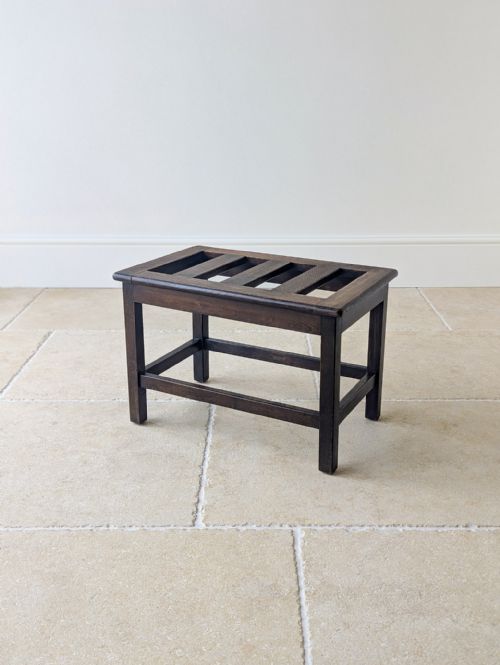
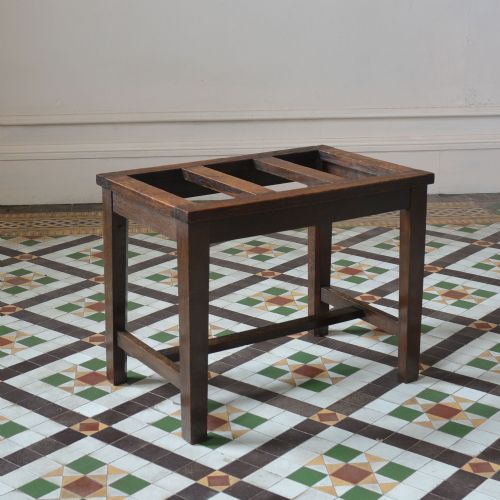


Edwardian Oak Trunk Bench
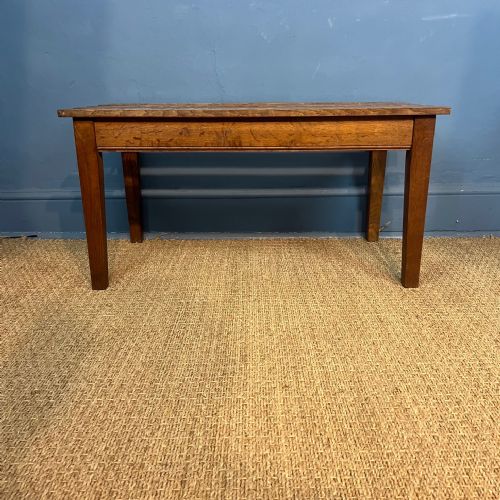
These edwardian oak trunk bench pieces are sturdy English country house seating and storage designed to hold luggage in bedrooms and halls.
Edwardian Oak Trunk Bench
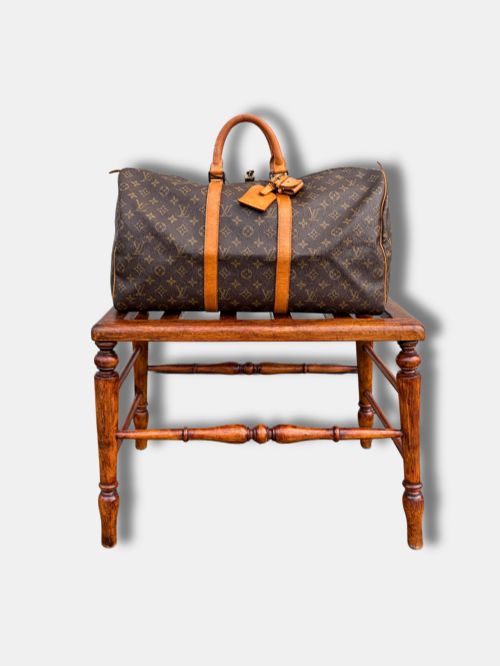
When you search for an edwardian oak trunk bench, you are looking at practical furniture designed for domestic storage and luggage placement. These items appear primarily as luggage stands, racks, and blanket boxes originating from the Edwardian era and the late nineteenth century.
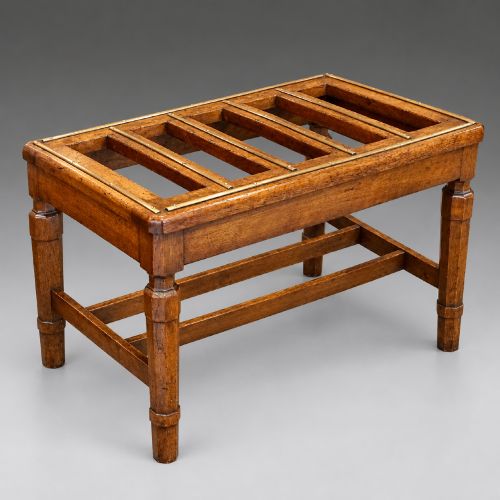
The most common form on this page is the oak luggage stand, often featuring slatted tops and robust timber frames. Pieces span from about eighteen ninety through the nineteen twenties, embracing Victorian, Edwardian, and English country house styles.
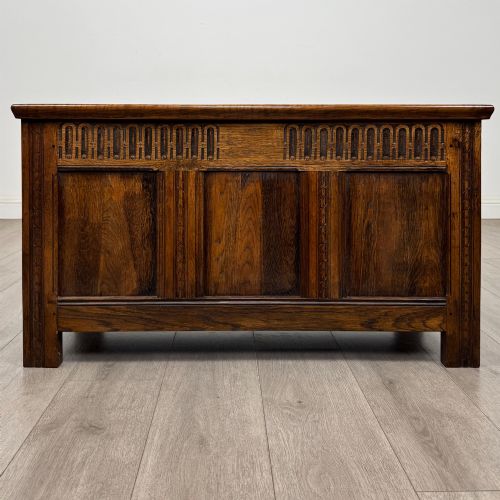
Makers such as Waring and Gillow occasionally produced these functional items for domestic settings and hotels. The inventory includes variants with carved fronts and sides alongside polished hotel luggage stands.
How they were made
Construction relies heavily on solid oak, selected for durability and finished with simple polish or left in its natural state. Brass hardware frequently appears on these pieces to secure folding mechanisms or accentuate box construction.
Carpenters utilised traditional jointing methods alongside surface carving to decorate panels and frames. Workshop techniques prioritized utility, resulting in sturdy stands and blanket boxes built to withstand heavy daily use.
Edwardian Oak Trunk Bench Retail Price Guide 2026
Typical asking prices for edwardian oak trunk bench among the pieces listed under this phrase on Sellingantiques today, from the lower quarter to the upper quarter. They describe what is for sale here now, not the wider market.
One polished oak stand proudly carries its former life in a West End hotel.
What varies in quality
Quality in an edwardian oak trunk bench rests on the crispness of the timber carving and the integrity of the oak construction. Plain utility pieces from former hotel use contrast with finely carved domestic examples carrying maker attributions.
Proportion and timber selection dictate the standing of a piece within the range. Heavy brass fittings and well-figured grain elevate the overall presence of the furniture above standard utilitarian workshop output.
Waring and Gillow
The Edwardian Oak Trunk Bench Glossary
- Edwardian
- Pertaining to the reign of King Edward VII, spanning from nineteen hundred to nineteen ten, characterised by lighter furniture forms. This period follows the Victorian era and precedes the First World War.
- Luggage Stand
- A low wooden bench or rack designed to hold suitcases and trunks off the floor in guest bedrooms. These often incorporate folding legs or slatted tops.
- Blanket Box
- A deep wooden chest used for storing linens and woollens, sometimes featuring carved decoration on the front and sides. They form a sturdy storage base within traditional interiors.
- English Country House
- A traditional decorative style reflecting the relaxed, eclectic furnishing of large British residences. It values practical timber furniture over formal display pieces.
- Waring and Gillow
- A notable British furniture manufacturing firm known for high-quality cabinet making and interior fitouts. Their pieces often bear maker stamps or labels.
Edwardian Oak Trunk Bench: Frequently Asked Questions
What is an edwardian oak trunk bench used for?
These items serve primarily as bedroom furniture designed to support luggage, trunks, or heavy blankets. In modern settings, they function effectively as low benches or display surfaces in hallways.
The sturdy oak construction allows them to bear significant weight while maintaining a traditional aesthetic.
How do I date an oak luggage stand?
Dating relies on stylistic clues, hardware types, and timber finishing typical of the nineteenth and early twentieth centuries. Pieces marked as Edwardian usually date between nineteen hundred and nineteen ten.
Later examples extend into the nineteen twenties, often bearing hotel provenance or simpler commercial finishes.
Are these pieces made of solid oak?
Yes, the inventory consists of solid oak timber structures paired with brass hardware. The wood ranges from plain utility grain to polished surfaces found in former hotel environments.
Carved decorative elements appear on specific blanket boxes and custom domestic luggage stands.
Where were these stands originally placed?
They originated in domestic bedrooms, guest quarters, and grand hotels such as West End establishments. Their primary function was to keep luggage elevated and easily accessible for travellers.
Today, collectors place them in entrance halls and bedrooms for both utility and period charm.