

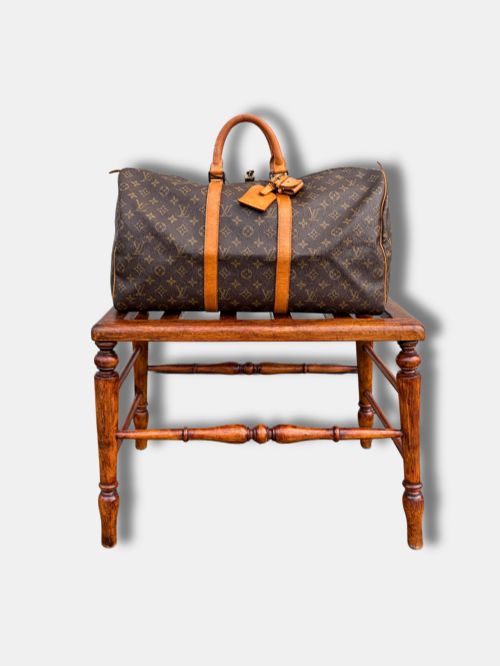
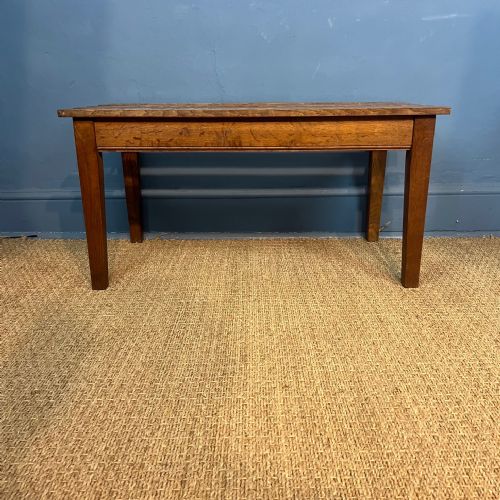
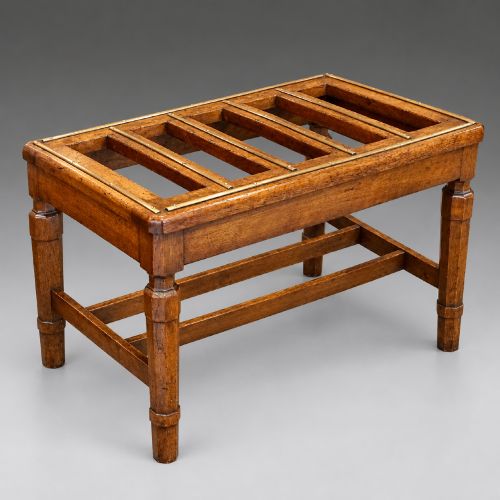
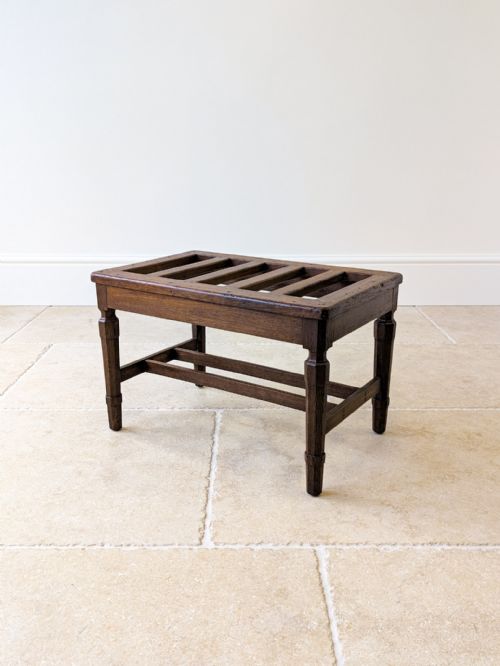
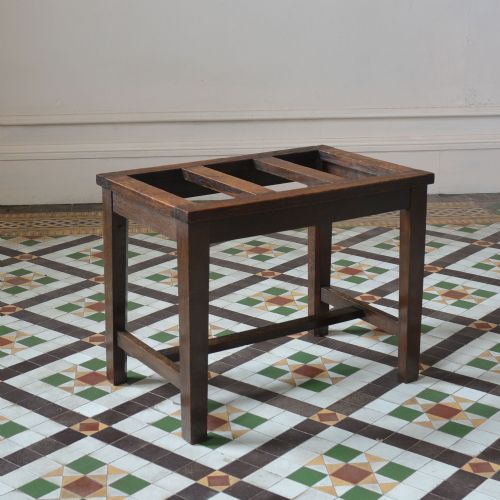

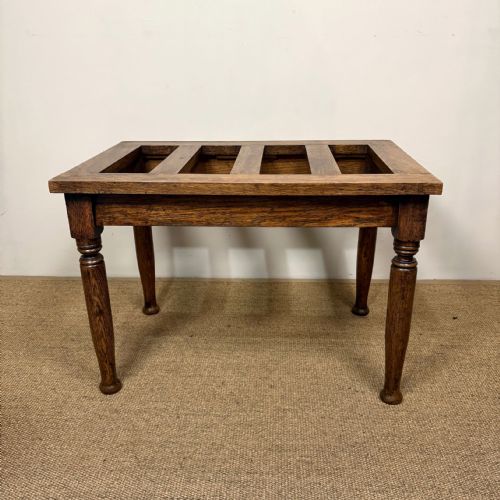


Oak Luggage Rack
These oak luggage rack examples offer sturdy hospitality for guest rooms and hallways.
Oak Luggage Rack
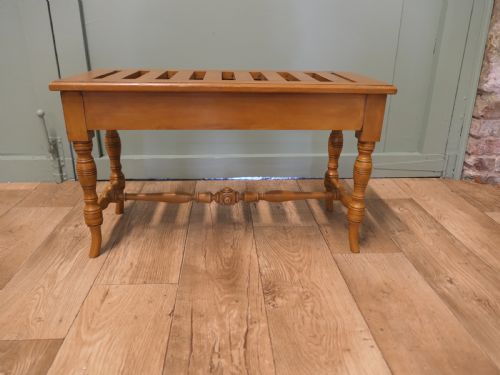
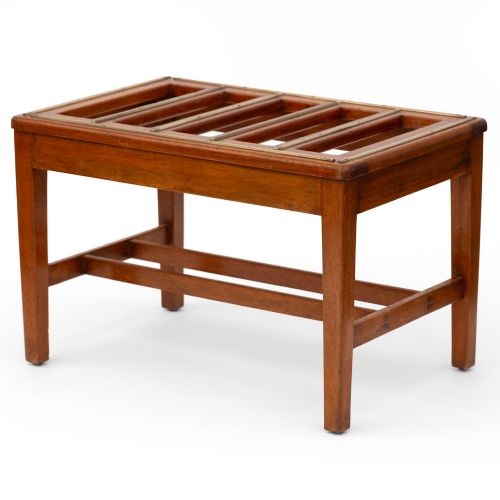
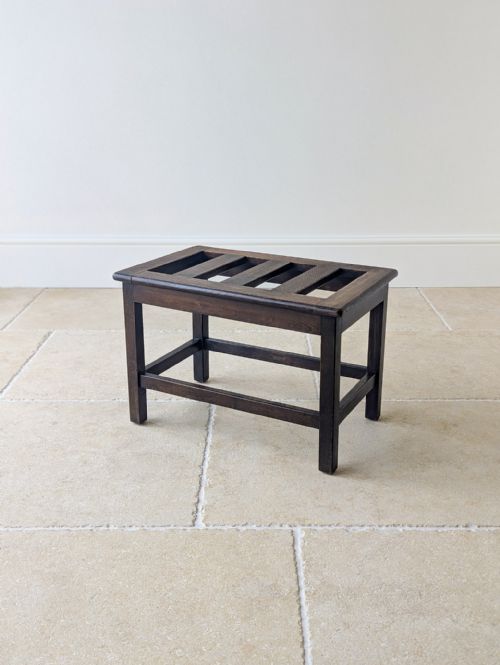
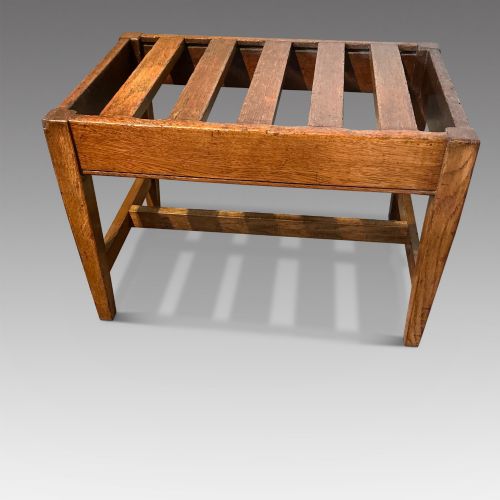
An oak luggage rack provides a raised, folding or static platform traditionally placed in bedrooms or hallways for trunks and suitcases. The pieces seen span the nineteenth century, the Edwardian era, and the early decades of the twentieth century.
Edwardian examples appear most frequently, often featuring slatted tops and lower shelves supported by folding or X-frame legs. Victorian and nineteenth century variants demonstrate similar functional designs executed in solid timber.
Origin points range from English country houses to London hotels, alongside Canadian workshop output. Individual pieces also turn up as matched pairs rather than isolated items.
Materials and construction
Makers utilised solid oak, light oak, limed oak, and golden oak as the primary timber. Brass and iron fittings provide structural reinforcement and hinge mechanisms across many surviving examples.
Construction relies on sturdy joinery designed to bear the weight of heavy travel trunks and suitcases. Selected pieces incorporate carved detailing or metal hardware alongside the wooden slats.
Oak Luggage Rack Retail Price Guide 2026
Typical asking prices for oak luggage rack among the pieces listed under this phrase on Sellingantiques today, from the lower quarter to the upper quarter. They describe what is for sale here now, not the wider market.
West End hotel guests once trusted their heavy leather trunks to the exact polished oak stands that now furnish modern bedrooms.
Distinguishing build and finish
Quality rests in the selection of the timber and the robustness of the folding frame. Golden oak and polished finishes demonstrate careful workshop attention compared to utilitarian hotel stock.
Maker attribution elevates certain pieces, particularly those bearing stamps from known firms. The presence of integrated lower shelves and intact brass or iron hardware distinguishes better examples.
Beatty Bros Fergus Canada·Waring and Gillow·Wadham and Sons·James Shoolbred
The Oak Luggage Rack Glossary
- Edwardian
- Pertaining to the reign of King Edward VII, spanning from 1901 to 1910. Pieces from this era often display lighter timbers and refined proportions compared to earlier Victorian furniture.
- Limed oak
- A wood treatment that fills the grain with a whitish compound to create a pale finish. This technique appeared on bedroom furniture during the early twentieth century.
- X-frame
- A structural support formed by two members crossing in the shape of the letter X. This design allows luggage stands to fold flat when not in use.
- Golden oak
- A bright, warm shade of oak finish popular in domestic interiors around the turn of the twentieth century. It highlights the natural grain pattern of the timber.
- Suitcase stand
- An alternative descriptor for a luggage rack used in guest accommodation. These items support bags at a convenient height for packing and unpacking.
Oak Luggage Rack: Frequently Asked Questions
What is an oak luggage rack used for?
These stands provide a dedicated surface for resting suitcases, trunks, and travel bags off the floor. They function primarily in guest bedrooms and hallways for convenient packing.
Historically, hotels and large country houses utilised them to assist guests with their luggage. Today, they serve a similar practical purpose in domestic settings.
How do I date an oak luggage rack?
Dating relies on stylistic markers and construction methods associated with the nineteenth and early twentieth centuries. Victorian pieces tend to show heavier proportions, whereas Edwardian examples favour lighter oak tones.
Archive records indicate that the majority of surviving pieces date from between 1880 and 1920. Maker stamps or hardware details occasionally provide more precise chronological clues.
Are these racks foldable?
Many examples incorporate folding X-frame mechanisms designed for easy storage when not in use. Other versions feature rigid, solid construction intended for permanent placement.
Both folding and static variants appear frequently across the historical record and current listings. The folding designs require robust brass or iron hinges to support heavy loads.
What woods and metals were used?
Solid oak forms the primary structure of every piece, appearing in finishes ranging from polished dark wood to golden and limed oak variants. Secondary materials include brass and iron.
Metal components typically comprise folding hinges, corner brackets, and decorative screws. These hardware elements reinforce the timber frame against heavy suitcase weights.