


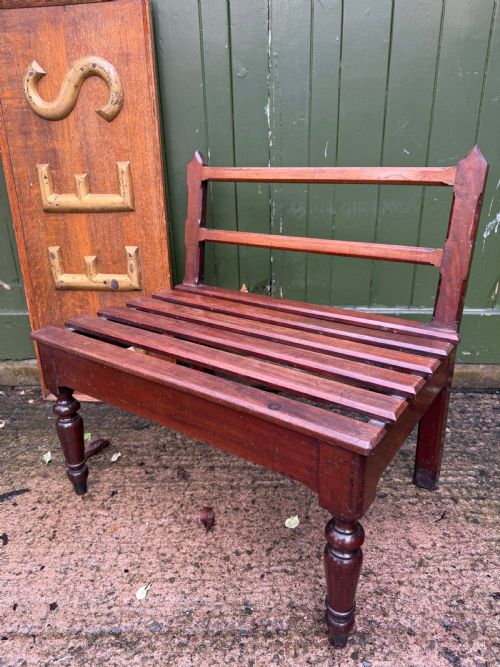


Victorian Luggage Stand
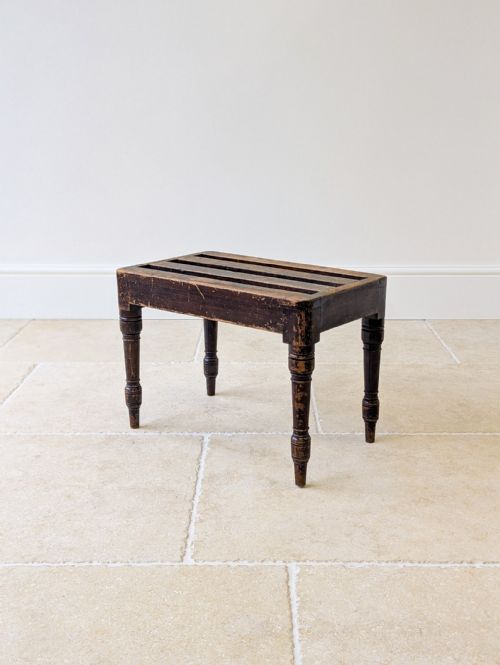
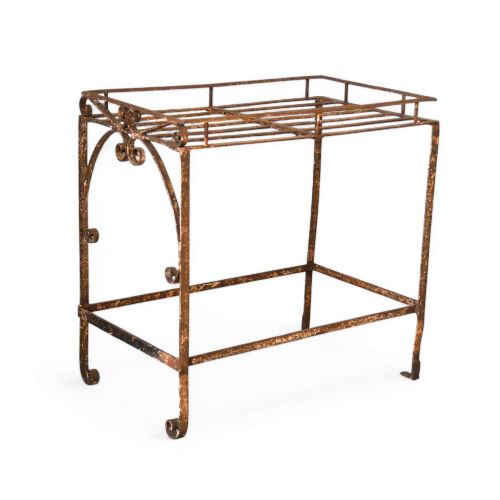
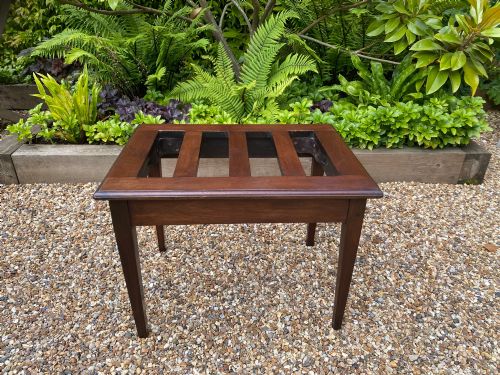
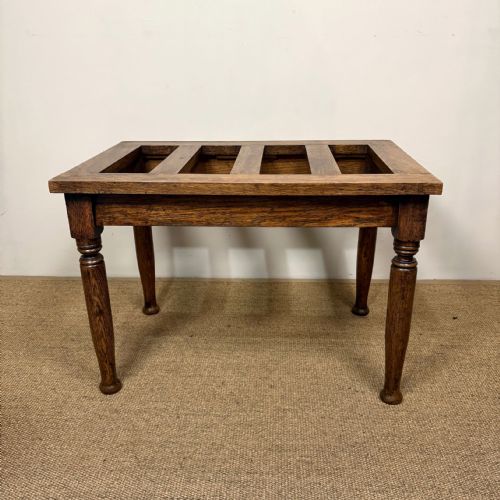
These robust victorian luggage stand examples offer folding or rigid frames designed to hold guest baggage neatly at bedside height.
Victorian Luggage Stand
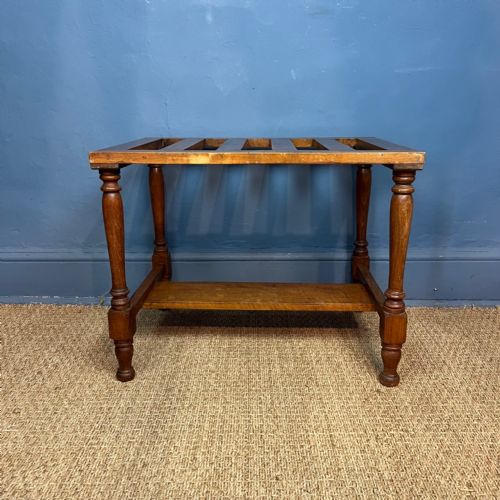
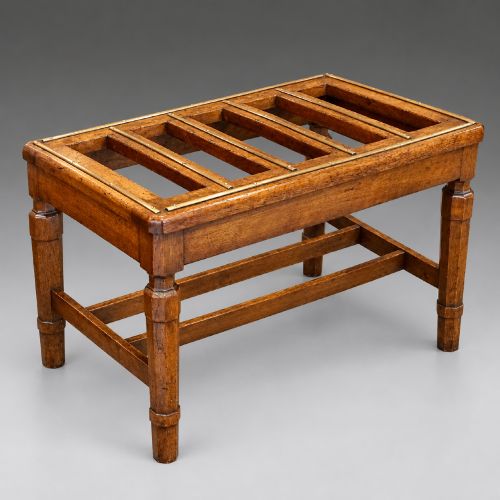
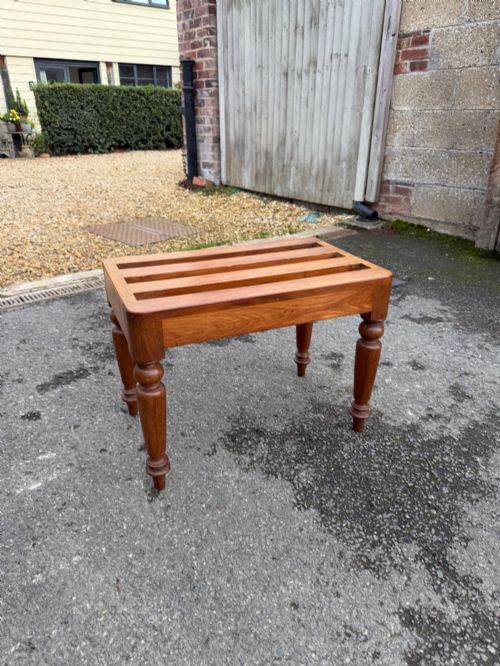
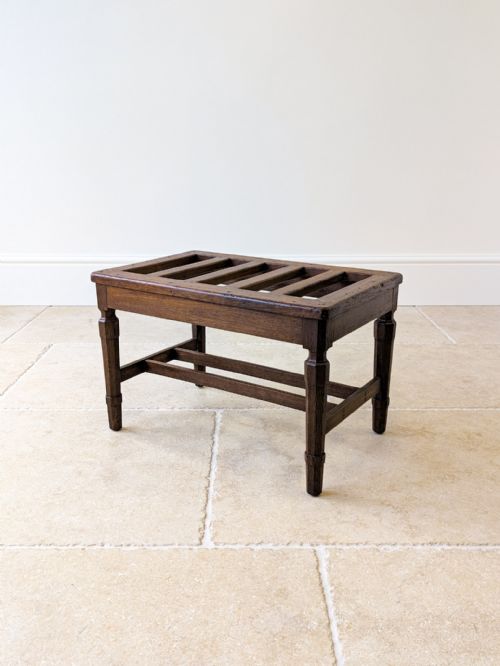
A victorian luggage stand serves as a traditional bedroom accessory built to support guest suitcases at a comfortable height. These pieces appear primarily in mahogany, oak, ash, walnut, and pine, reflecting the domestic utility of the nineteenth century.
Most examples date across the nineteenth century, including pieces marked by turned legs, lower rails, and raised rear upstands. They function equally well today as bedside tables or plant stands in traditional interiors.
Materials and construction
Cabinetmakers utilised hardwoods such as mahogany, oak, walnut, ash, yew wood, and beech, alongside softer painted pine. Frames incorporate sturdy pegged joints, turned rails, and occasionally brass fittings or ebonised finishes.
Structural variations include folding mechanisms and fixed frames with deep proportions, built to withstand heavy leather and canvas travel chests.
Victorian Luggage Stand Retail Price Guide 2026
Typical asking prices for victorian luggage stand among the pieces listed under this phrase on Sellingantiques today, from the lower quarter to the upper quarter. They describe what is for sale here now, not the wider market.
Listings show nineteenth-century luggage stands executed in mahogany, oak, ash, yew wood, walnut, satin walnut, beech, and painted pine.
Evaluating the pieces
Quality rests in timber selection and structural stability, distinguishing dense mahogany and figured walnut from utility pine. Well-turned legs and crisp architectural mouldings indicate superior workshop production.
Desirable variations include raised rear upstands, brass detailing, and documented cabinetmaker marks from firms such as James Shoolbred or Wylie and Lochhead.
James Shoolbred·Wylie and Lochhead
The Victorian Luggage Stand Glossary
- Upstand
- A raised barrier at the rear of the stand designed to protect bedroom walls from suitcase scuffs.
- Turned rail
- A cylindrical wooden stretcher shaped on a lathe to add rigidity and decorative detail to the frame.
- Country house style
- A robust aesthetic prioritising practical utility and honest timber construction over ornate carving.
- Valet
- An alternative term for a luggage stand fitted to hold clothing alongside luggage.
Victorian Luggage Stand: Frequently Asked Questions
What is a victorian luggage stand used for today?
These practical stands make ideal bedside tables, holding books and reading lamps while retaining their historic character. Alternatively, they function well in hallways or guest rooms as low display surfaces.
Their compact footprints allow them to fit easily into smaller spaces without dominating a room.
How do I date a luggage stand?
Dating relies on timber choices, leg turnings, and construction methods typical of the nineteenth century. Earlier pieces often feature deep proportions and mahogany, while later examples incorporate satin walnut or oak.
Maker stamps or stamps from historic retailers provide the most precise indication of origin.
Are these stands sturdy enough for modern luggage?
Most stands are built from solid hardwoods like mahogany and oak, making them remarkably robust. They were originally engineered to support heavy canvas and leather travel trunks.
Checking the joints and rails ensures the frame remains stable for daily domestic use.
What timbers were commonly used?
Mahogany appears frequently in formal pieces, alongside walnut, oak, ash, and yew wood. Painted pine and beech represent more utilitarian or country house productions.
Each timber brings a distinct grain and weight to the finished piece.