



Dark Wood Luggage Rack
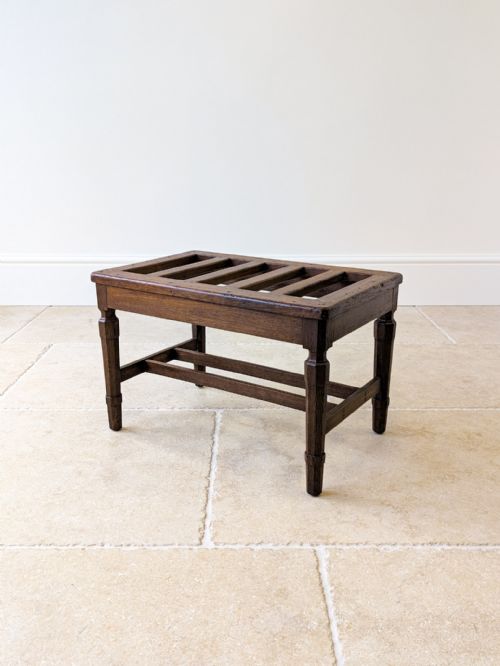
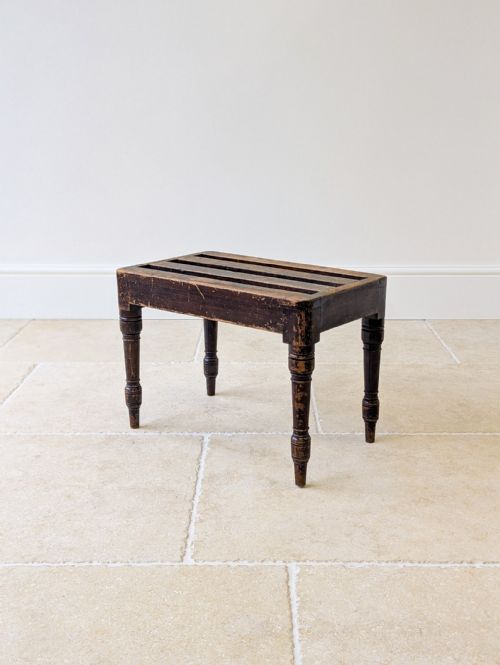
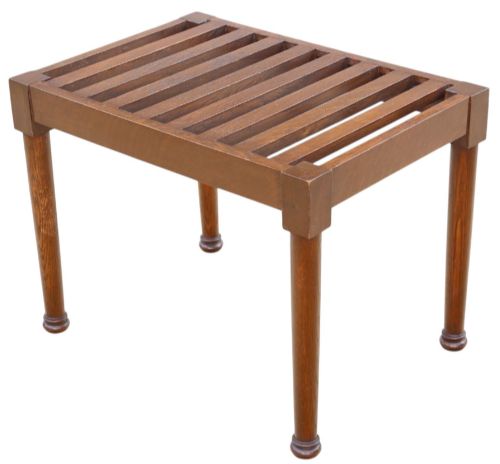
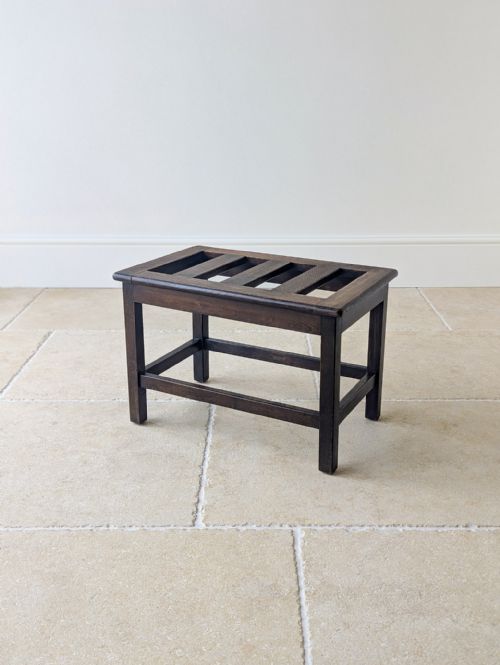
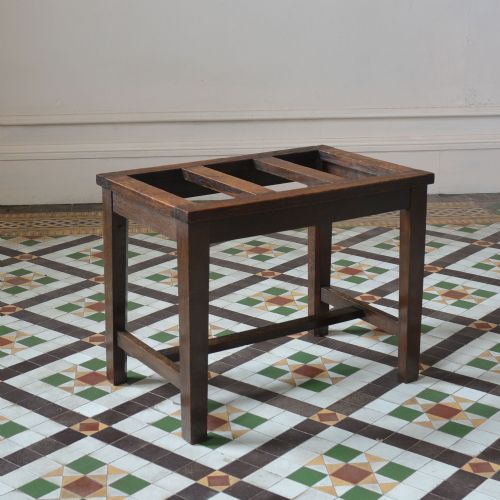
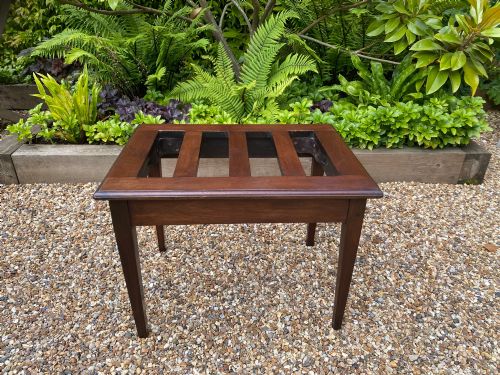
Dark wood luggage rack pieces are folding stands and wall-mounted carriers designed to hold bags, built from mahogany, oak, and elm across the nineteenth and early twentieth centuries.
Dark Wood Luggage Rack
When you search for a dark wood luggage rack, you encounter practical folding stands and wall-mounted portmanteau fixtures originating from the Victorian, Edwardian, and early twentieth-century periods. These items served travellers in railway settings and domestic chambers, offering a sturdy platform for heavy bags without taking up permanent floor space.
The most common versions on this page are folding luggage stands constructed from mahogany, oak, and elm, often featuring cross-frame legs that collapse flat when not in use. Alongside these stands, railway collectables and wall-mounted brass and wood brackets appear, showing how utilitarian hotel and travel furniture adapted to private homes.
How they were made
Makers utilised dense timbers such as mahogany, oak, and elm to withstand the heavy weight of travel trunks and leather cases. These woods were turned, shaped, and joined to form rigid folding frames or wall-mounted brackets capable of enduring daily commercial and domestic use.
Metal hardware played a crucial structural role, incorporating brass hinges, brackets, and scalloped hooks to secure the folding mechanisms and hanging points. Additional tension was often provided by integrated textile or tapestry straps stretched across the wooden frames to support luggage safely.
Dark Wood Luggage Rack Retail Price Guide 2026
Typical asking prices for dark wood luggage rack among the pieces listed under this phrase on Sellingantiques today, from the lower quarter to the upper quarter. They describe what is for sale here now, not the wider market.
One robust elm carrier bears the marks of the Great Northern Railway, having once hauled passengers' belongings across busy station platforms.
What varies in quality
The standard of timber selection and joinery defines the upper tier of these pieces, distinguishing robust cabinetry from simpler utility items. Superior examples display carefully chosen mahogany or oak with tight grain, precise joints, and well-fitted folding pivots that operate smoothly without looseness.
Hardware and secondary materials further separate ordinary items from finer specimens, particularly the weight of the brass components and the durability of any textile or tapestry webbing. Pieces associated with railway lines or specific transport companies often exhibit superior structural integrity due to the rigorous demands of transit environments.
The Dark Wood Luggage Rack Glossary
- Luggage stand
- A folding wooden support designed to hold travel bags at a convenient height off the floor. These items typically feature cross-folding legs and webbing straps.
- Portmanteau
- A large leather travelling bag or suitcase, which influenced the design of wall-mounted racks and brackets used for hanging luggage and garments.
- Ebonised wood
- Timber treated with a dark stain or finish to imitate ebony. This treatment was frequently used on nineteenth-century furniture to achieve a formal, uniform appearance.
- Railway collectable
- An artefact originating from train travel and station infrastructure. Examples include wooden luggage carriers utilised by railway companies such as the Great Northern Railway.
Dark Wood Luggage Rack: Frequently Asked Questions
What are dark wood luggage racks used for?
These pieces function as convenient stands for holding suitcases, overnight bags, and guest luggage in bedrooms. They keep bags elevated off the floor for easy packing and unpacking.
In modern interiors, people also utilise them as occasional folding tables or display stands. Their compact folding design allows them to be stored away easily when guests depart.
How do I date an antique luggage stand?
Dating relies on examining the timber species, construction methods, and hardware style. Pieces from the Victorian and Edwardian periods often feature hand-turned wooden legs and heavy brass hinges.
Makers active around nineteen hundred and the early decades of the twentieth century favoured solid oak and mahogany. Railway-issued items sometimes carry specific company markings that help establish their era.
Are these racks sturdy enough for heavy bags?
Most pieces were originally built to support heavy leather trunks and railway luggage. Their cross-frame wooden construction distributes weight evenly across the structure.
Well-maintained examples with intact textile webbing and tight joints remain fully functional for modern travel bags. Regular checking of the folding pivots ensures safe daily use.
What is the difference between a stand and a wall-mounted rack?
Stands are freestanding, folding furniture pieces designed to sit on the floor and collapse flat when not in use. They provide temporary horizontal support for luggage.
Wall-mounted variants feature wooden brackets and brass hooks intended to be fixed permanently to a wall. These units serve primarily for hanging coats, hats, and portmanteaus.