

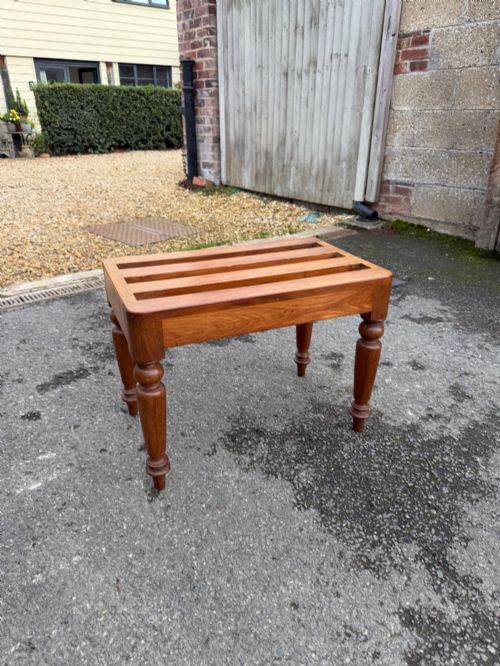
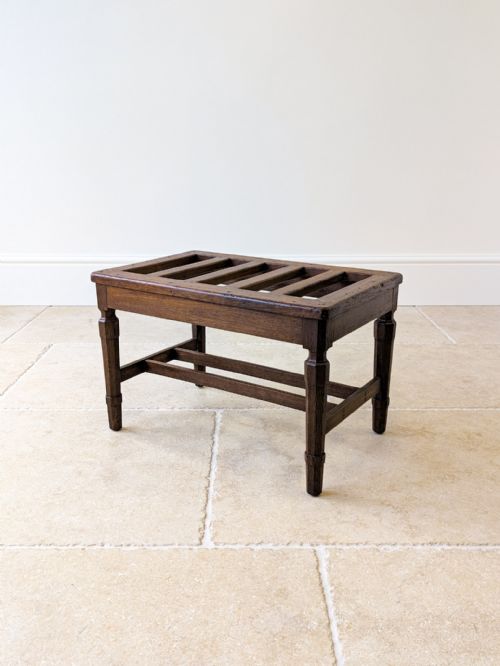
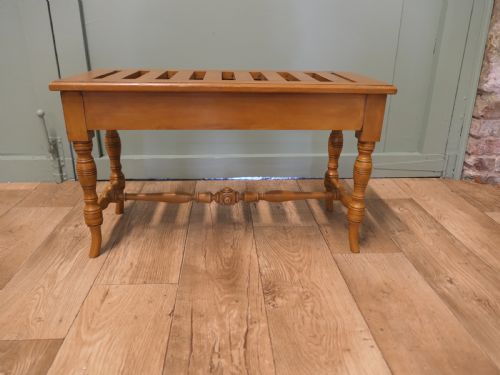
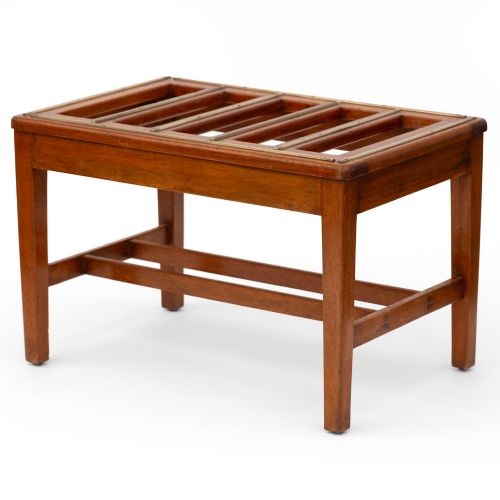


Antique Suitcase Stand
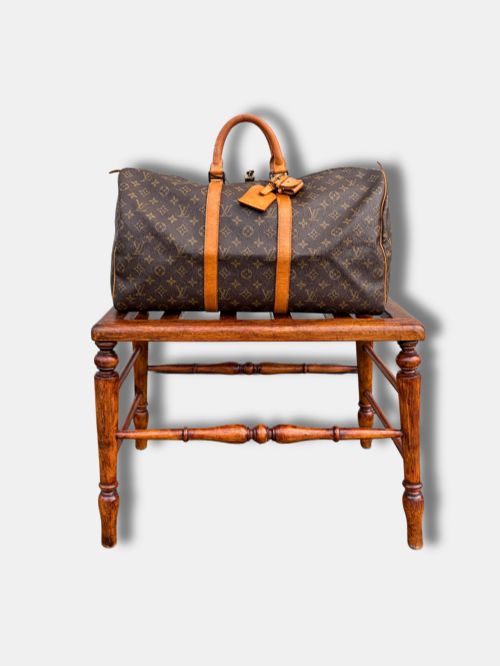
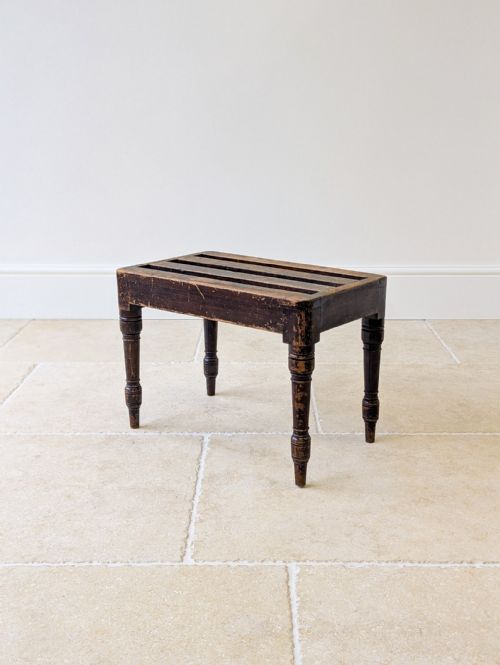
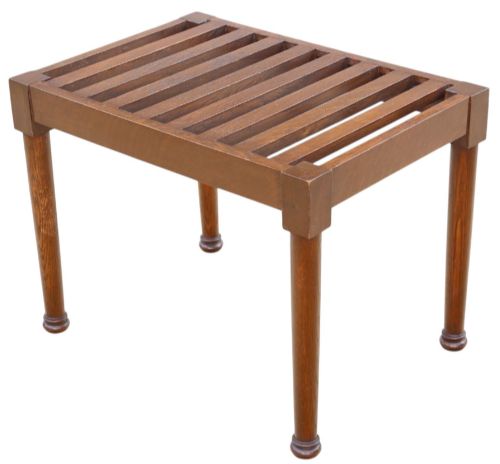
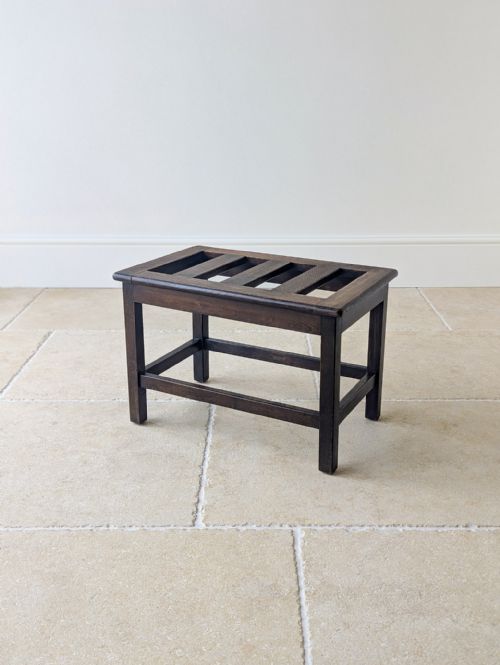
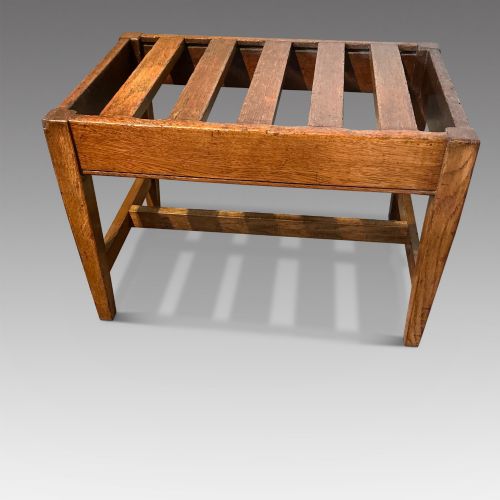
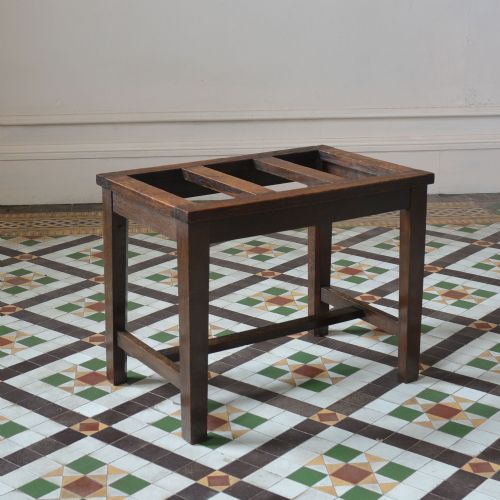
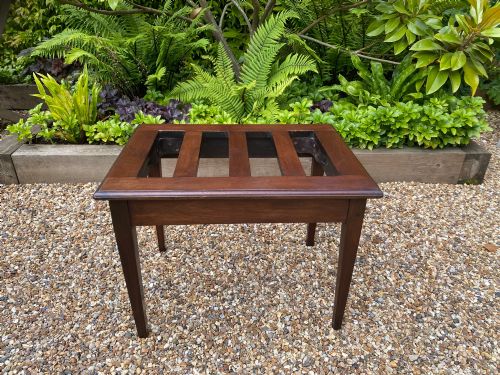
These antique suitcase stand examples, built to hold guests' luggage above the floor in grand homes and hotels, combine utility with solid timber construction.
Antique Suitcase Stand
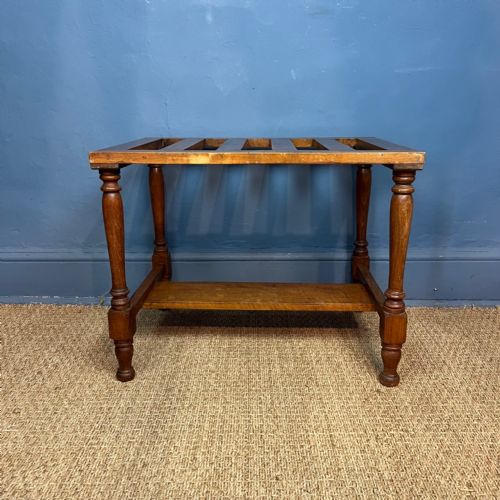
An antique suitcase stand provides a sturdy surface for holding trunks and travel bags at a convenient height. These pieces appear in forms such as luggage stands and luggage racks across this selection.
Most pieces seen here belong to the Victorian and Edwardian periods, alongside nineteenth-century examples. Makers constructed them in timber varieties like oak, mahogany, walnut, and ash, often with slatted tops.
The assortment includes country-house pieces with raised rear upstands, hotel items, and folding frames. Their primary purpose remains the support of travel luggage without marking bedroom floors.
Materials and construction
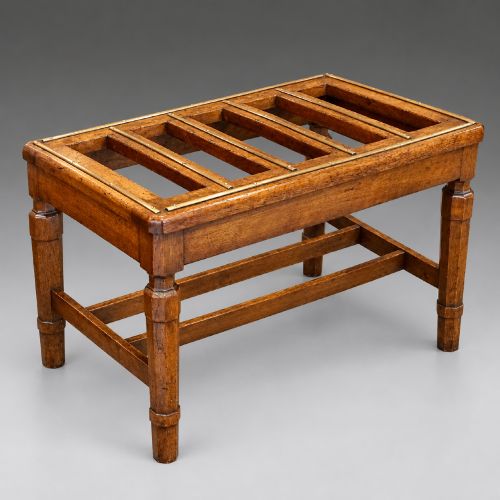
Cabinetmakers utilised hardwoods such as oak, mahogany, walnut, beech, and ash for the frames, ensuring the structure could bear the weight of heavy leather and canvas trunks. Some pieces incorporate brass fittings or iron elements for added stability.
The tops typically consist of parallel wooden slats or webbing designed to support suitcases securely. Certain Victorian and Edwardian examples feature carved details or raised rear upstands to keep luggage in place.
Antique Suitcase Stand Retail Price Guide 2026
Typical asking prices for suitcase stand among the pieces listed under this phrase on Sellingantiques today, from the lower quarter to the upper quarter. They describe what is for sale here now, not the wider market.
At least one surviving piece bears the marks of its former life in a West End hotel.
Distinctions in quality
Quality rests in the choice of timber and the robustness of the joints. Denser hardwoods like mahogany and figured walnut command attention through their grain and polished finishes, whilst simpler pine examples serve a utilitarian function.
Makers' marks or hotel provenance elevate certain pieces, distinguishing standard domestic luggage racks from hotel-grade or branded workshop furniture. The presence of functional folding mechanisms and crisp joinery further separates better examples.
Beatty Bros Fergus Canada·Brown & Lamont·Waring & Gillow·Wadham and Sons
The Antique Suitcase Stand Glossary
- Upstand
- A raised barrier at the rear of the luggage stand. This feature prevents luggage from sliding backward against a bedroom wall.
- Luggage rack
- An alternative term for a suitcase stand. These pieces usually feature a slatted horizontal surface held on four legs.
- Edwardian
- A period spanning the reign of King Edward VII until the First World War. Pieces from this era often display lighter oak construction and simpler lines than their Victorian predecessors.
- Victorian
- The period covering the nineteenth-century reign of Queen Victoria. Furniture from this time typically employs heavier timbers like mahogany and robust proportions.
- Slats
- Parallel strips of wood forming the surface of the rack. They allow straps or the suitcase base to rest evenly across the frame.
Antique Suitcase Stand: Frequently Asked Questions
How were suitcase stands used?
Servants placed these stands in guest bedrooms so travellers could unpack their trunks without bending down to the floor.
They also served to keep heavy leather luggage away from damp or dusty floorboards in large country houses and hotels.
Can I use these for modern luggage?
Most antique luggage stands easily support contemporary suitcases, weekend bags, and heavy travel trunks.
Their sturdy timber frames and slatted tops are engineered to bear significant weight.
How do I date an antique luggage stand?
Examination of the timber, construction methods, and stylistic cues helps determine the period.
Victorian pieces often use dense mahogany or ash with heavier proportions, whilst Edwardian examples tend to feature lighter oak.
Where should I place a luggage rack at home?
These stands fit well in guest bedrooms as a practical surface for visitors to unpack their bags.
They also function as towel racks in bathrooms or as display surfaces in hallways.