



Victorian Luggage Rack
A victorian luggage rack brings functional engineering and rich timber into the bedroom or hallway.
Victorian Luggage Rack
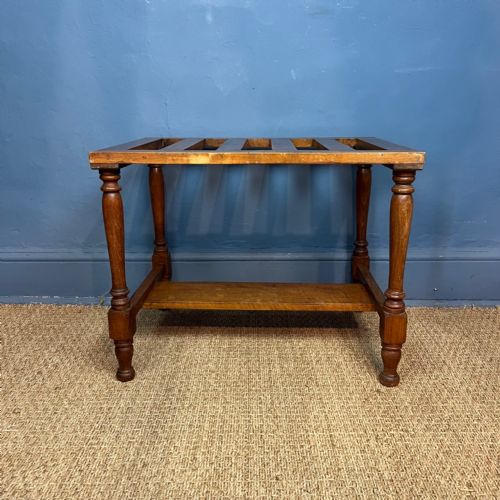
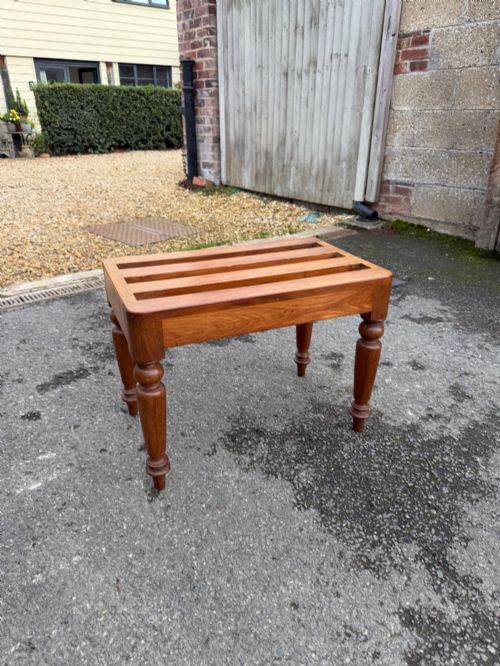
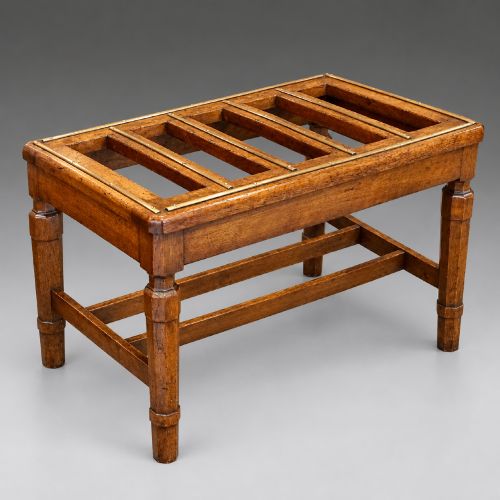
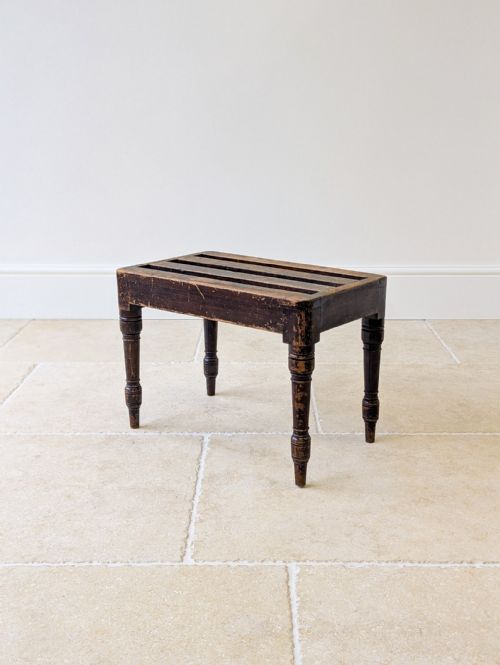
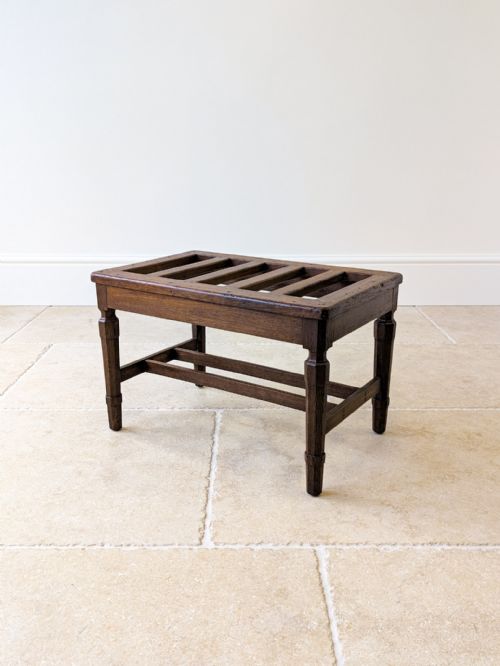
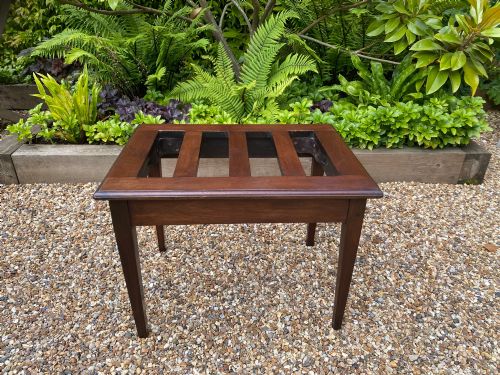
A victorian luggage rack serves as a sturdy, elevated surface designed to hold heavy trunks and suitcases in domestic bedrooms and grand hotels. These practical pieces appear chiefly as folding stands with slatted tops, alongside wall-mounted brass portmanteaus and railway carriers.
The materials span native and imported timbers alongside metals, reflecting both utilitarian function and domestic refinement. Oak, mahogany, beech, walnut and satin birch predominate, often paired with brass or wrought iron details.
Most examples hail from the nineteenth century, with distinctive regional variants including French brass portmanteaus, English country house stands, and railway company pieces. Collectors encounter floor-standing luggage stands and wall-mounted coat and hat racks alike.
How they were made
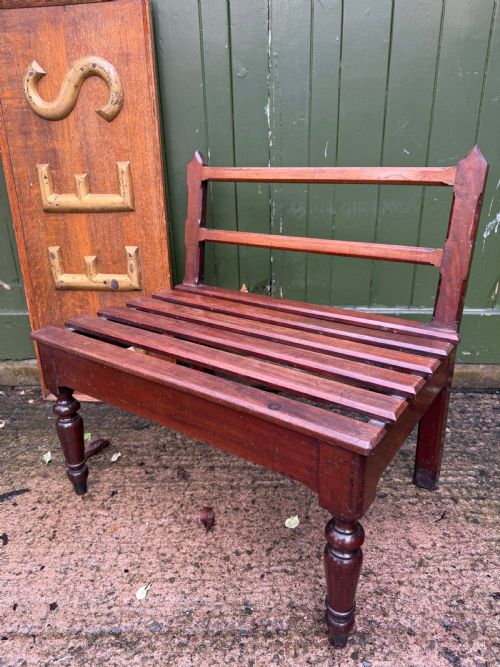
Cabinet makers utilised dense hardwoods such as mahogany, oak and walnut, constructing frames with turned legs, mortise and tenon joints, and raised rear upstands. Beech and ash provided sturdy alternatives for folding and static domestic luggage stands.
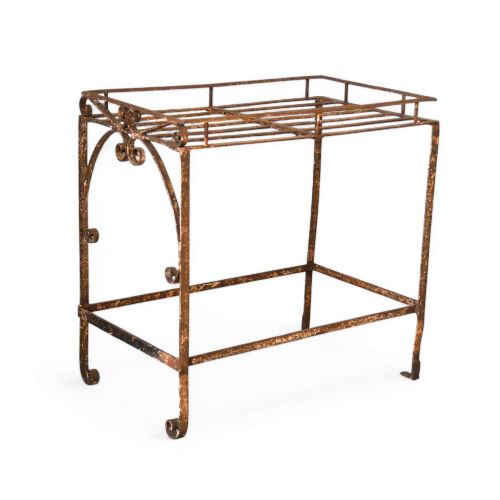
Metal elements relied on cast brass and wrought iron, forming robust brackets, portmanteau hooks, and mounting plates. Carpenters used pine and satin birch for secondary framework, finishing surfaces with polish or paint.
Victorian Luggage Rack Retail Price Guide 2026
Typical asking prices for victorian luggage rack among the pieces listed under this phrase on Sellingantiques today, from the lower quarter to the upper quarter. They describe what is for sale here now, not the wider market.
One railway-marked piece carried passengers' luggage on the Great North Railway before retiring to the domestic interior.
What varies in quality
The distinction between standard utility items and finer examples lies in timber selection and secondary details. Richly figured grains like satin birch or polished mahogany elevate a piece above utilitarian painted pine or plain beech.
Hardware and construction depth dictate overall calibre. Substantial framing, well-cast brass mounting plates, and integrated rear upstands distinguish superior workshops from basic commercial output.
Brown and Lamont·Trollope and Co London
The Victorian Luggage Rack Glossary
- Portmanteau
- A wall-mounted rack or trunk stand designed to hold travel bags and garments, often rendered in brass with decorative hooks.
- Upstand
- A raised barrier at the rear of a luggage stand that prevents luggage from sliding backward against a wall.
- Aesthetic movement
- A late nineteenth-century design style focusing on visual beauty rather than narrative meaning, seen in specific beech and walnut racks.
- Turned leg
- A wooden support shaped on a lathe into cylindrical or decorative profiles.
- Estate made
- An item produced directly on a landed estate for domestic utility rather than commercial retail.
Victorian Luggage Rack: Frequently Asked Questions
What is a victorian luggage rack used for?
These stands originally held heavy travel trunks and leather suitcases off cold bedroom floors in country houses and hotels.
Today, homeowners utilise them as bedroom luggage benches or functional guest room furniture.
How do I date a luggage rack?
Dating relies on timber choice, construction methods, and stylistic cues such as turned legs or aesthetic movement details.
Nineteenth-century examples frequently employ solid mahogany, oak, or walnut with hand-turned supports.
What is the difference between a stand and a portmanteau?
Stands are floor-standing folding or static furniture pieces with slatted tops designed to support suitcases.
Portmanteaus are typically wall-mounted brass brackets with hooks intended for hanging coats and hats.
Are wall-mounted racks sturdy?
Wall-mounted brass and iron portmanteaus feature robust cast mounting plates designed to bear significant garment weight.
Proper installation into solid wall studs ensures secure everyday use in hallways and bedrooms.