

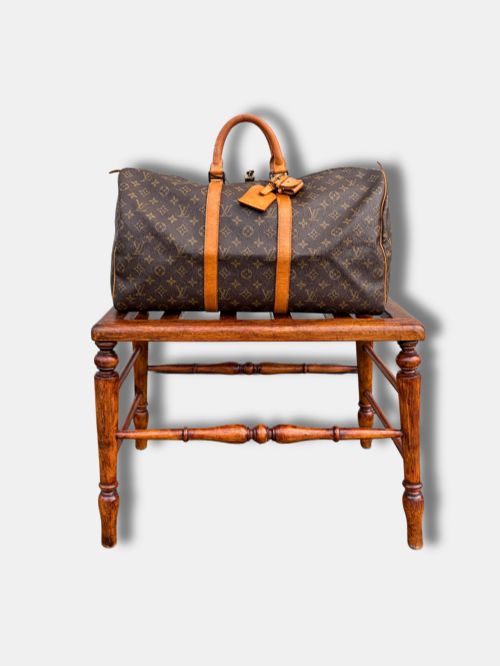
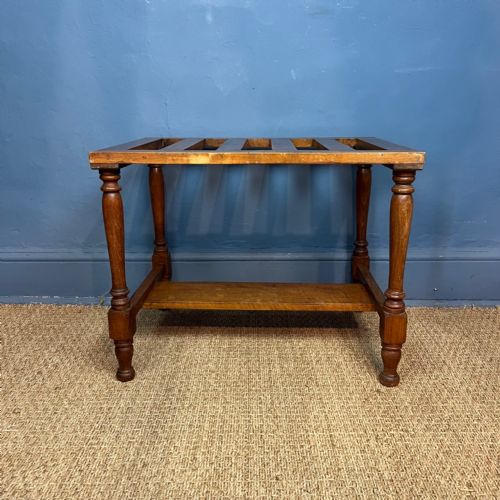
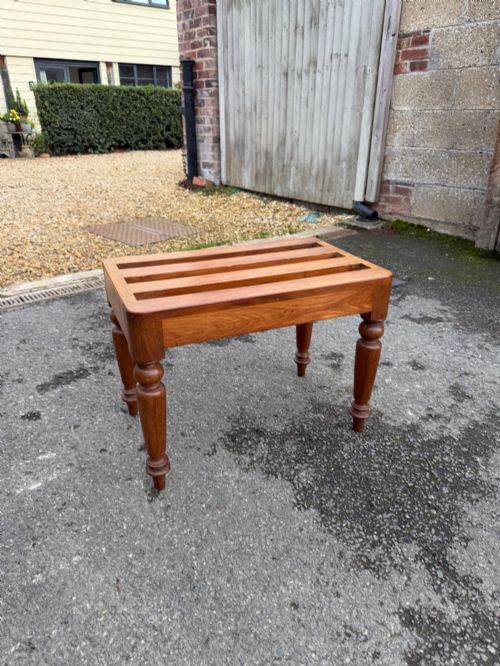
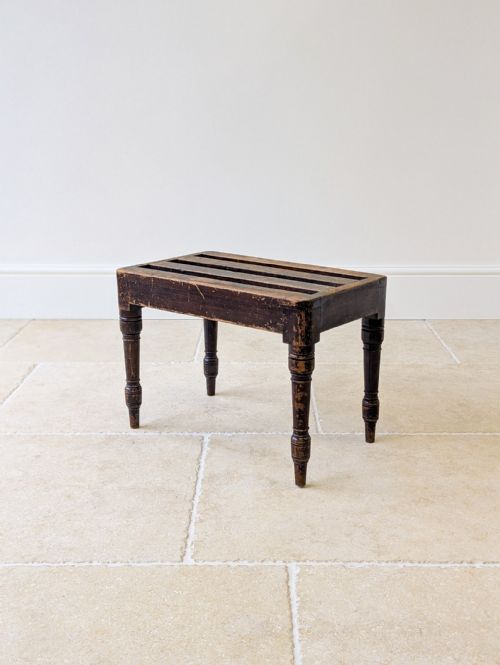
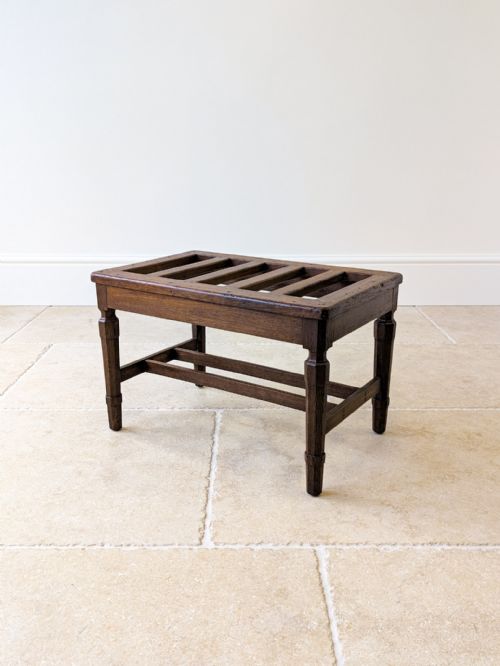
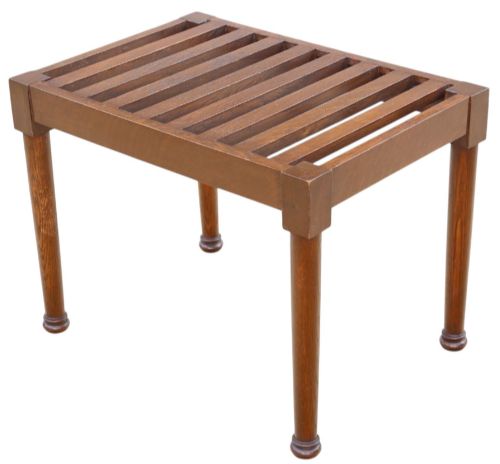
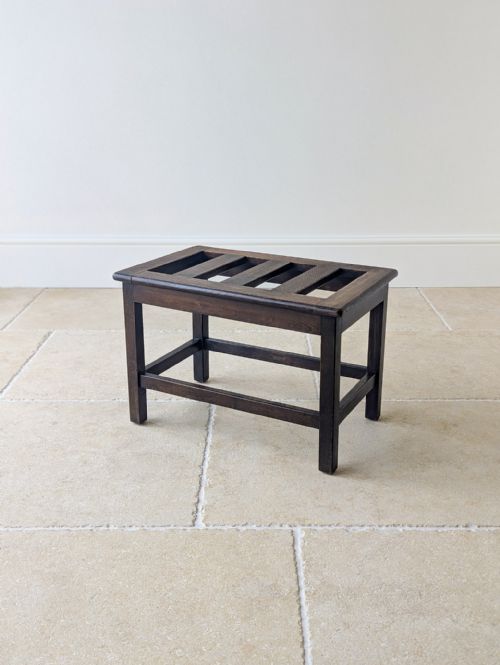
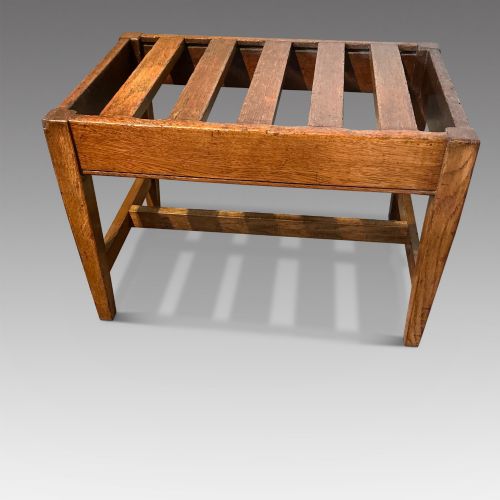
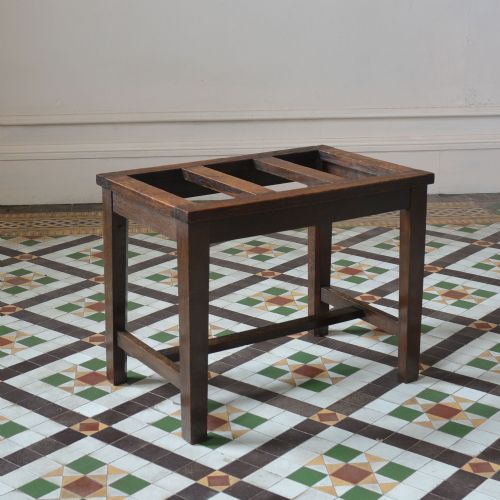

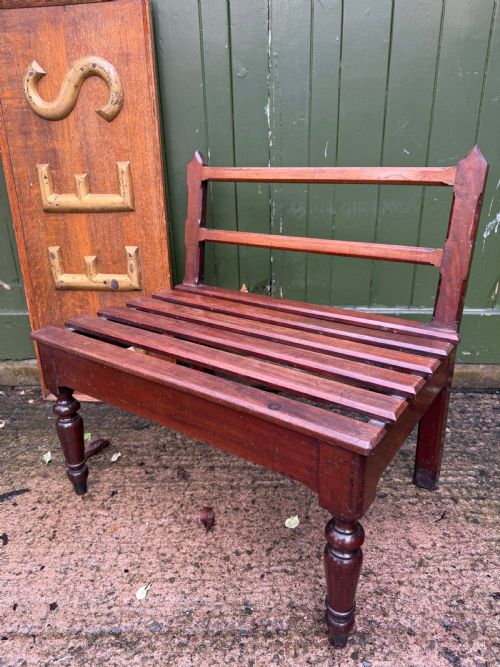


Brown Wooden Luggage Stand
A brown wooden luggage stand offers practical guest room charm, combining folding timber frames with sturdy textile or webbing slats.
Brown Wooden Luggage Stand
A brown wooden luggage stand provides a dedicated surface for bags and suitcases, appearing frequently in oak and mahogany across Edwardian and Victorian periods. These pieces range from simple folding domestic racks to hotel-grade fittings with raised rear upstands and robust stretchers.
Makers such as Waring & Gillow and Brown & Lamont produced these stands alongside Canadian manufacturer Beatty Bros, reflecting both British country house utilities and commercial hospitality uses. Most examples rely on slatted tops supported by X-frame legs that fold flat when not in service.
Construction and materials
Cabinetmakers utilised hardwoods including oak, mahogany, walnut, beech, and yew, often finishing the timber with polished surfaces or simple wax. Brass hinges, brackets, and maker stamps frequently accent the joints and structural stress points.
The frames are typically joined with pegged mortise and tenon or robust screw fittings to withstand heavy weight, while webbing or wooden slats form the flexible platform that cradles luggage without scratching leather.
Brown Wooden Luggage Stand Retail Price Guide 2026
Typical asking prices for brown wooden luggage stand among the pieces listed under this phrase on Sellingantiques today, from the lower quarter to the upper quarter. They describe what is for sale here now, not the wider market.
Listings feature woods such as oak, mahogany, walnut, beech, teak, and yew spanning the Victorian and Edwardian periods.
Assessing build quality
The distinction between standard utility items and superior examples lies in the selection of figured timber, such as dense mahogany or polished oak, and the crispness of turned or carved details. Heavier framing and thoughtful additions like a raised and raked rear upstand separate utilitarian hotel pieces from refined country house furniture.
Original hardware, including marked brass plates and maker stamps, elevates the historical interest of a piece, whereas poorly executed modern repairs or replaced webbing diminish the structural integrity and period coherence.
Beatty Bros Fergus Canada·Brown and Lamont·Waring and Gillow
The Brown Wooden Luggage Stand Glossary
- Upstand
- A raised barrier at the back of a luggage stand that prevents bags from sliding off against a wall. This feature appears on deeper proportions intended for country house bedrooms.
- X-frame
- A folding support structure formed by two intersecting legs shaped like the letter X. This design allows the stand to collapse flat for storage.
- Webbing
- Strong woven fabric straps stretched across the top frame to support luggage weight. Original examples utilise heavy cotton, linen, or leather bands.
- Stretcher
- A horizontal timber connecting the legs of a stand to provide lateral stability. These reinforcing rails prevent the folding frame from racking under heavy loads.
Brown Wooden Luggage Stand: Frequently Asked Questions
How were luggage stands originally used?
These stands sat at the foot of a guest bed in large country houses and hotels so visitors could unpack trunks without bending down to the floor.
Servants also used them in antechambers to move luggage easily between rooms before folding the frames away.
Are these stands suitable for daily modern use?
Solid hardwood construction and sturdy folding frames make these pieces entirely practical for holding suitcases in contemporary guest bedrooms.
Checking the webbing and leg joints ensures the frame safely supports modern luggage weight without wobbling.
How do I identify an Edwardian piece?
Edwardian stands frequently feature plain or lightly carved oak with simple folding mechanisms and functional brass hardware.
They often reflect the simpler domestic tastes of the early twentieth century compared to heavily carved Victorian furniture.
What woods should I expect to find?
Oak and mahogany dominate the surviving examples, though workshops also utilised walnut, beech, teak, and yew.
Each timber dictates the overall tone of the piece, from warm reddish mahogany to golden polished oak.