



Antique Wooden Portmanteau Stand
An antique wooden portmanteau stand holds a traveller's bags with practical dignity, offering a sturdy frame for unpacking at leisure.
Antique Wooden Portmanteau Stand
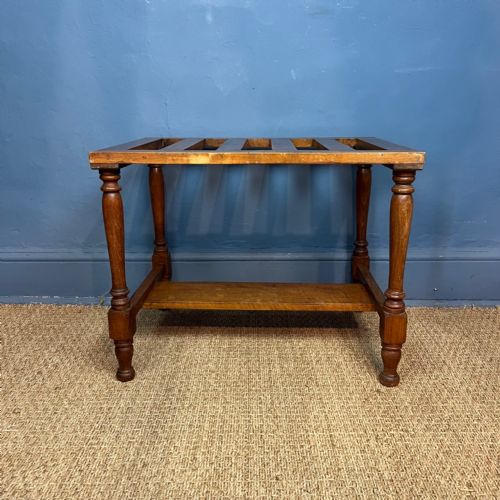
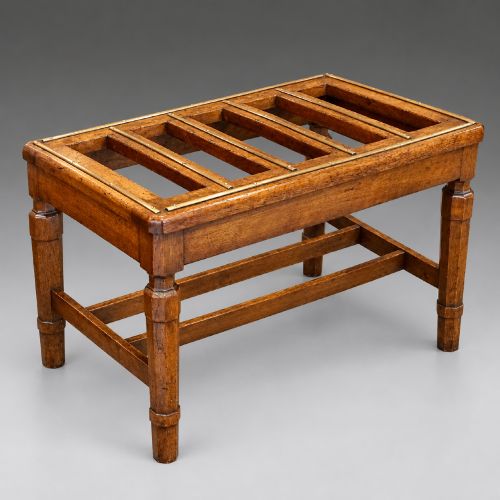
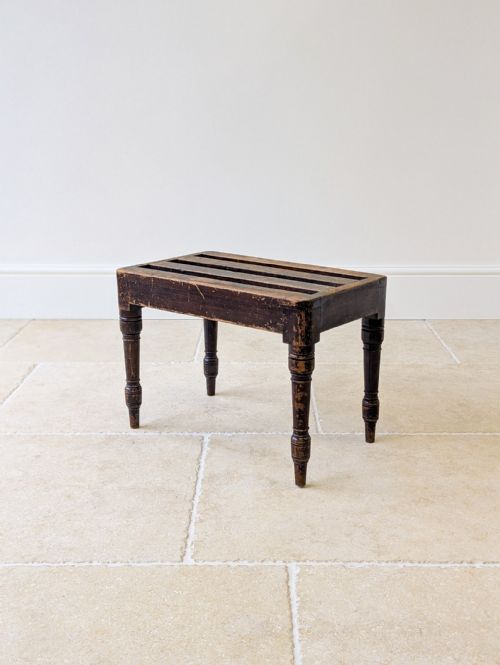
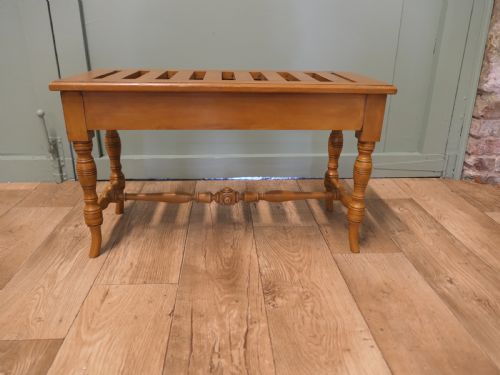
When you search for an antique wooden portmanteau stand, you are looking at domestic furniture designed to hold luggage off the floor during the nineteenth and early twentieth centuries. These pieces appear across periods from the mid-nineteenth century through to the Edwardian era, taking the form of low luggage stands, suitcase stands, and occasional wall-mounted brackets.
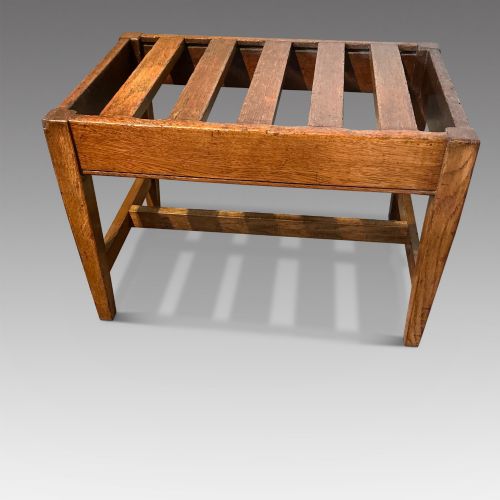
The most common version met on this page is the low folding or fixed wooden stand, typically constructed with four legs and a slatted top. Origins span English country house designs to French provincial interpretations, reflecting how domestic spaces accommodated visiting guests.
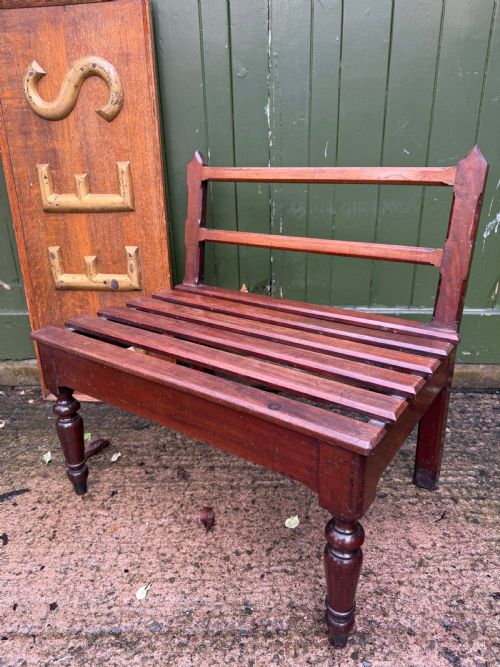
Forms vary from simple rectangular beech luggage racks to substantial ash and golden oak examples with raised rear upstands. Alongside traditional floor-standing luggage racks, the selection includes related items such as wall-mounted coat racks and brass portmanteau hooks.
Materials and construction
Construction relies heavily on hardwoods selected for strength and stability under heavy travel trunks, principally oak, mahogany, beech, and ash. Joinery traditions of the period ensure these frames bear considerable weight without loosening at the joints.
Metal components such as brass brackets and scalloped hooks appear on specific wall-mounted and multi-bracket variations, adding functional durability to the timber framework. Surface finishes range from natural polished oak and mahogany to stained beech and applied finishes typical of the Aesthetic Movement and Arts and Crafts periods.
Antique Wooden Portmanteau Stand Retail Price Guide 2026
Typical asking prices for wooden portmanteau stand among the pieces listed under this phrase on Sellingantiques today, from the lower quarter to the upper quarter. They describe what is for sale here now, not the wider market.
Some stands feature scalloped brass hooks, ensuring even your coat feels politely received.
Distinctions in quality
Quality in these pieces is dictated by the selection of timber and the sophistication of the joinery rather than decorative excess. Denser hardwoods like mahogany and golden oak denote better workshops, while secondary timbers such as beech often indicate lighter domestic output.
Proportion and structural detailing elevate certain examples, seen in deep proportions, raked rear upstands, or integrated brass hardware. The presence of specific maker attribution further distinguishes standard utility items from superior country house furniture.
Brown & Lamont
The Antique Wooden Portmanteau Stand Glossary
- Portmanteau stand
- A piece of furniture designed to support a large travelling case or portmanteau at a convenient height for packing and unpacking. These stands typically sit at bench height and fold flat when not in use.
- Upstand
- A raised barrier at the rear edge of a luggage stand designed to prevent luggage from scuffing the wall behind it. This feature often incorporates decorative carving or structural bracing.
- Aesthetic Movement
- A late nineteenth-century design style emphasising visual beauty over narrative content, often utilising ebonised or stained beech frames with simplified linear forms. Pieces from this movement prioritize artistic harmony in domestic spaces.
- Arts and Crafts
- A design movement valuing traditional craftsmanship, visible construction methods, and the natural grain of materials such as golden oak. Furniture from this tradition rejects mass production in favour of honest hand-working.
- Luggage rack
- An alternative term for a stand or shelf unit built to hold suitcases and travel bags. These can be floor-standing folding frames or rigid wall-mounted fixtures.
Antique Wooden Portmanteau Stand: Frequently Asked Questions
What is an antique wooden portmanteau stand used for?
These stands were originally placed in guest bedrooms to hold a traveller's trunk or suitcase at a comfortable height for unpacking.
Today, they function well in modern homes as guest room luggage holders, bedroom benches, or distinctive display surfaces.
How do I date an antique luggage stand?
Dating relies on identifying the timber choices, construction techniques, and stylistic movements associated with the piece, such as Aesthetic Movement ebonising or Arts and Crafts oak.
Earlier nineteenth-century examples often feature deeper proportions and solid mahogany construction, while later pieces show lighter beech or Edwardian oak framing.
Are these stands sturdy enough for modern luggage?
Most surviving examples were built from dense hardwoods like oak, ash, and mahogany to support heavy nineteenth-century travel trunks.
Consequently, they remain structurally robust and easily capable of supporting contemporary suitcases and travel bags.
What is the difference between a luggage stand and a rack?
The terms are often used interchangeably, though floor-standing folding versions are typically called stands, while fixed or wall-mounted versions are often termed racks.
Both serve the primary domestic purpose of keeping travel bags elevated and accessible.