
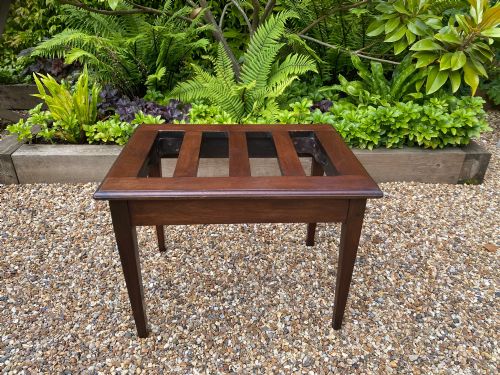


Slatted Wood Luggage Bench
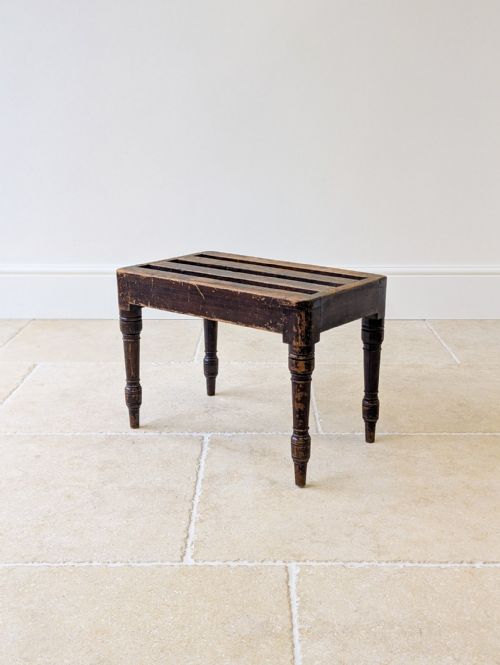
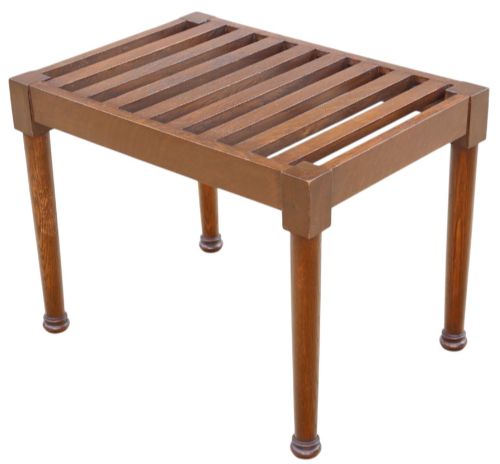
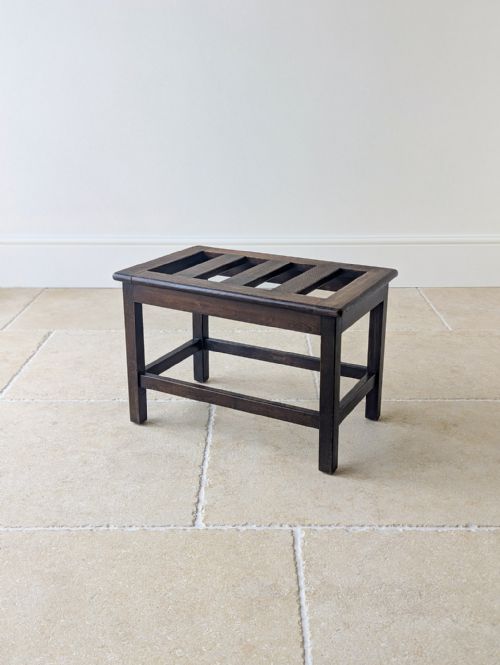
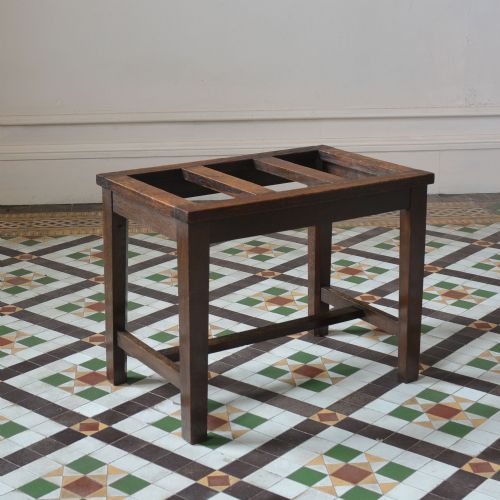
These slatted wood luggage bench examples are sturdy stands designed for holding bags, offering both practical utility and period character.
Slatted Wood Luggage Bench
A slatted wood luggage bench provides a raised surface for cases and travel bags, combining practical function with traditional cabinetmaking. The pieces available here span the Victorian, Edwardian, and 1920 eras, alongside examples simply dated to the 19th century or early 20th century.
Most pieces take the form of dedicated luggage stands and luggage racks designed for domestic bedrooms or guest quarters. These practical furnishings keep baggage elevated off the floor for easy packing and unpacking.
Materials and construction
Maker workshops utilised a range of timber species, including mahogany, oak, ash, teak, hardwood, and yew wood. These dense timbers provide the structural strength required to bear heavy travel trunks and suitcases without flexing.
Metal components such as brass often appear in the construction, providing durable fastenings and corner supports. The slatted top design allows air circulation while maintaining a rigid weight-bearing surface.
Listings span several periods including Victorian, Edwardian, and 1920, alongside general 19th Century and early 20th Century examples.
Assessing quality
Superior examples demonstrate substantial timber selection and tight joinery that remains rigid under heavy loads. Heavier woods like ash and yew wood generally indicate a more robust build quality than standard utilitarian pieces.
Refined pieces display careful attention to the slat arrangement and finish, whereas simpler items focus purely on utilitarian strength. The choice of timber species often distinguishes standard utility items from more decorative furnishings.
The Slatted Wood Luggage Bench Glossary
- Luggage stand
- A low freestanding frame with a slatted top designed to hold suitcases. These items typically sit at a convenient height for handling travel bags.
- Luggage rack
- An alternative term for a stand, often incorporating folding or fixed wooden slats. They served guest bedrooms in traditional homes.
- Slatted top
- A surface constructed from parallel strips of timber spaced at intervals. This design reduces overall weight while maintaining structural integrity.
- Hardwood
- Timber derived from broad-leaved trees, offering high density and durability. Common varieties in these furnishings include mahogany and oak.
Slatted Wood Luggage Bench: Frequently Asked Questions
What is a luggage bench used for?
These furnishings were traditionally placed in guest bedrooms to hold visitor suitcases at a convenient height. They keep luggage off the floor during unpacking.
Today, they function well in modern homes as practical stands for guest rooms or as low display surfaces.
How do I identify Victorian pieces?
Victorian examples often feature heavier timbers like substantial ash or dark hardwoods with robust framing. They reflect the solid construction methods of the nineteenth century.
Comparing the timber finish and joinery style helps differentiate these from later twentieth-century items.
Are these stands foldable?
Many traditional racks and stands utilise fixed frames designed for stability under heavy luggage loads. Some period variations incorporated folding mechanisms for easy storage.
Checking the specific construction of each piece reveals whether the frame is static or articulated.
What woods were commonly used?
Maker workshops frequently selected sturdy timbers such as mahogany, oak, and ash for their structural resilience. Rarer examples occasionally utilise yew wood or teak.
These dense materials ensure the stand can support heavy travel trunks without sagging.