



Wooden Suitcase Rack
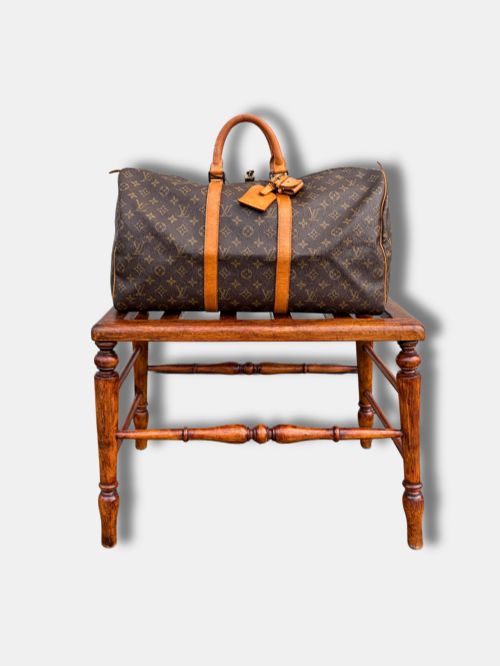
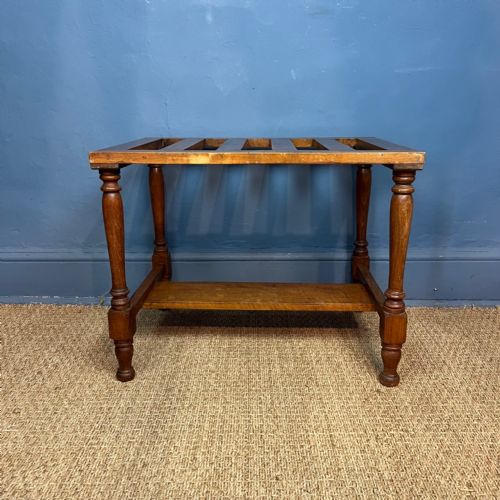
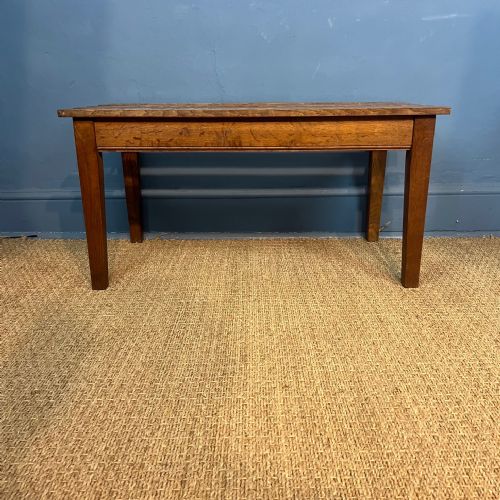
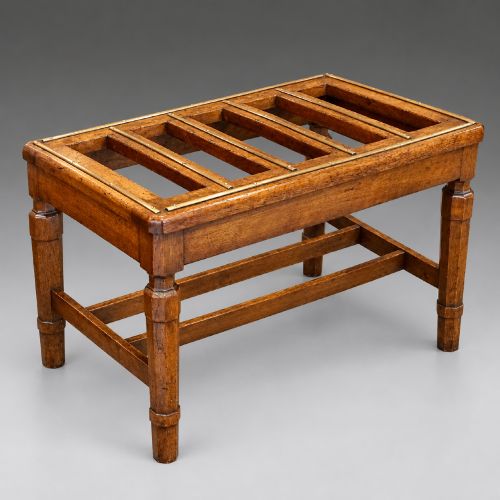
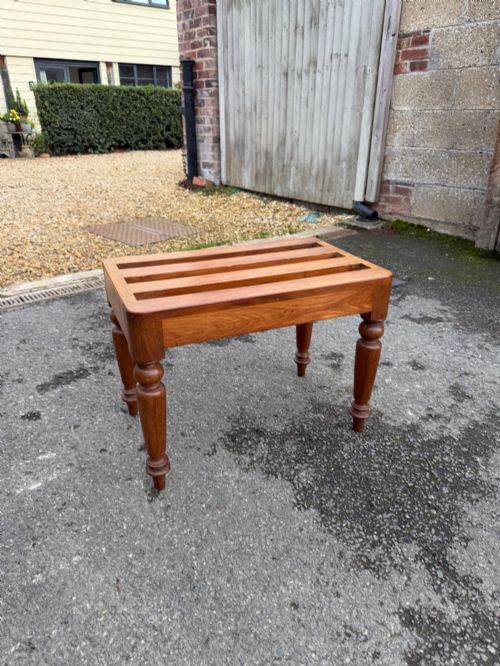
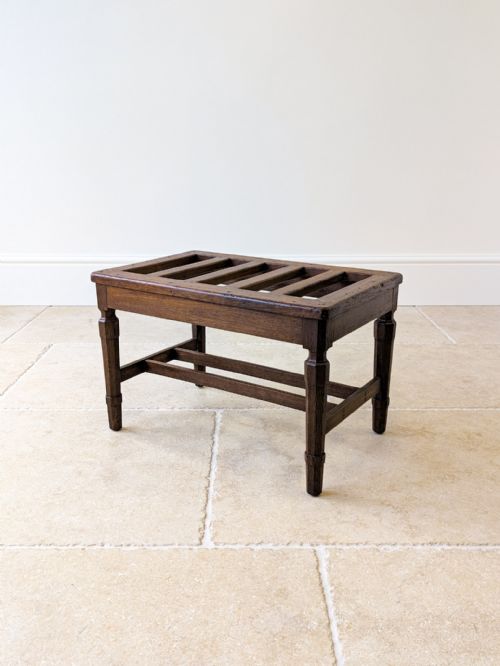
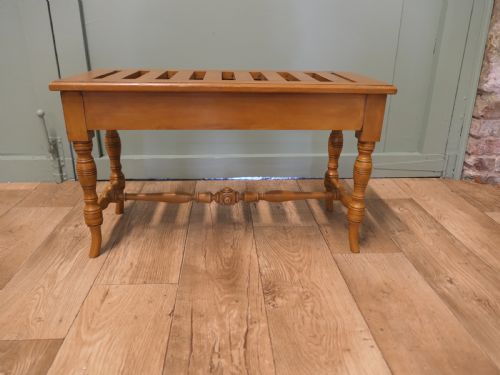
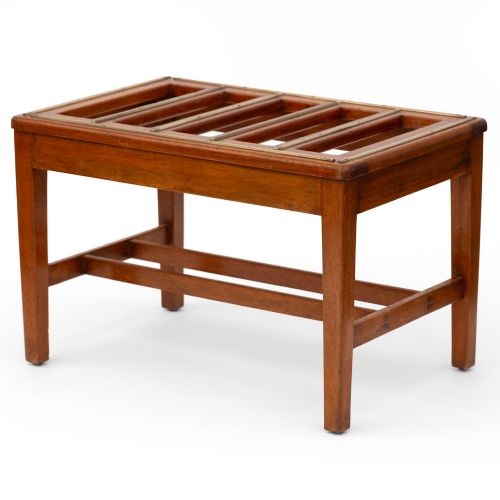
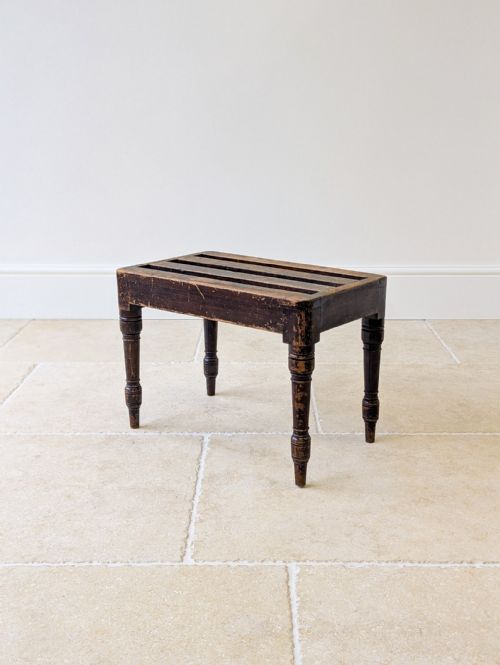
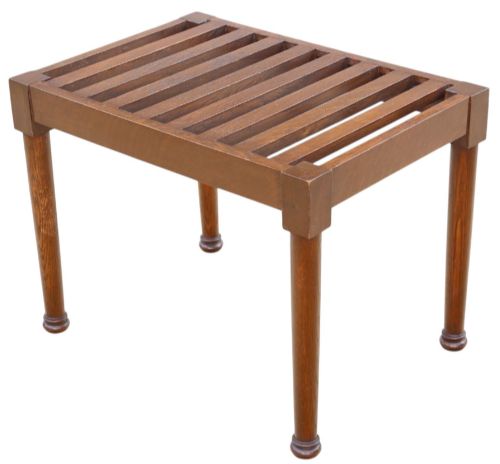
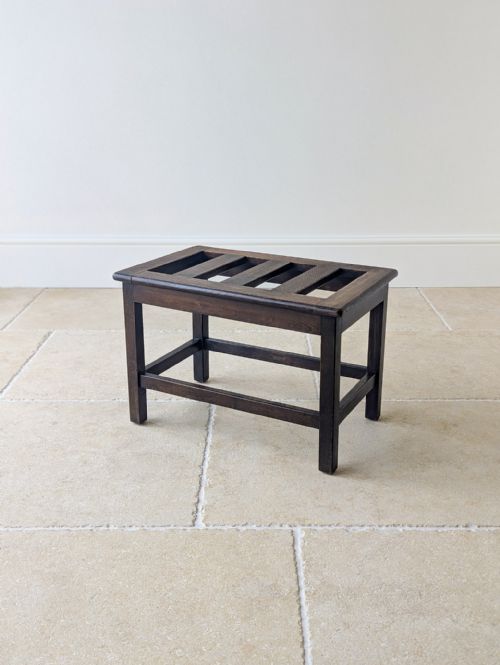
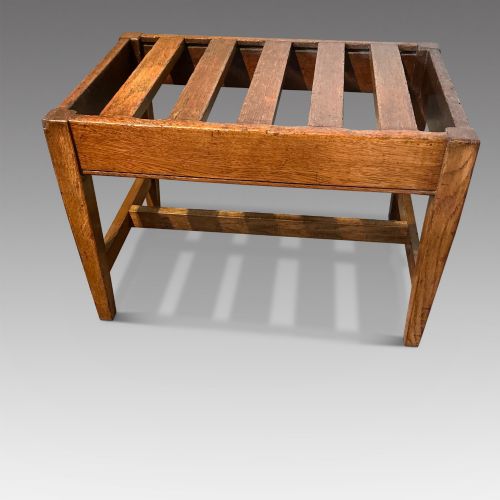
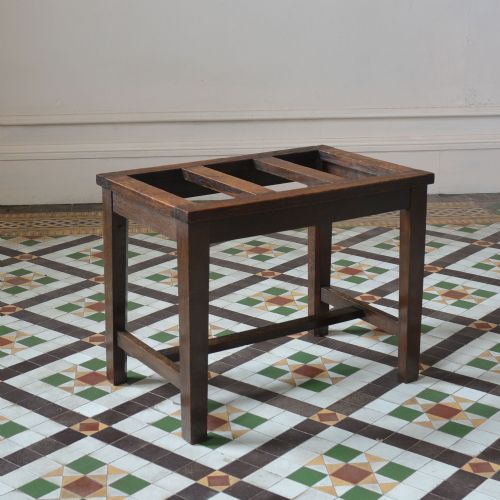
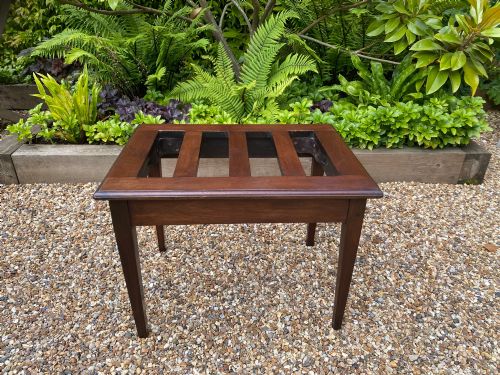
These wooden suitcase rack examples are practical bedroom furniture pieces designed to hold luggage off the floor, offering sturdy frames and folding slats.
Wooden Suitcase Rack
A wooden suitcase rack provides a raised surface for bags and trunks, taking up minimal floor space while keeping guest belongings at a convenient height. These practical stands appear primarily in oak and mahogany across Edwardian and Victorian periods.
Most examples feature slatted tops supported by four legs, sometimes incorporating lower shelves or raised rear supports. Buyers frequently encounter hotel pieces alongside domestic country-house variants originating from the nineteenth and early twentieth centuries.
How they were made
Cabinetmakers constructed these stands using dense hardwoods like oak, mahogany, walnut, beech, ash, and yew wood to withstand heavy leather luggage. Joinery typically involved sturdy framing, sometimes augmented with brass or iron hinges and brackets.
Surfaces received traditional polishing or paint finishes depending on whether the piece served a domestic bedroom or a commercial hotel setting. Selected examples feature carved details or raised upstands to prevent bags from sliding against walls.
Wooden Suitcase Rack Retail Price Guide 2026
Typical asking prices for wooden suitcase rack among the pieces listed under this phrase on Sellingantiques today, from the lower quarter to the upper quarter. They describe what is for sale here now, not the wider market.
Several stands originate from West End hotels, having survived decades of enthusiastic packing by Victorian travellers.
What varies in quality
The choice of timber and the robustness of the frame dictate the structural integrity and visual appeal of each stand. Dense hardwoods and substantial proportions separate heavy-duty hotel and country-house pieces from lighter domestic variants.
Refined details such as polished finishes, brass hardware, carved ornamentation, and maker stamps elevate certain examples above standard utilitarian luggage supports.
Beatty Bros Fergus Canada·Brown & Lamont·Waring & Gillow
The Wooden Suitcase Rack Glossary
- Upstand
- A raised barrier at the rear of the rack designed to protect walls from scuffs and prevent luggage from sliding backward. This feature appears on deeper nineteenth-century stands.
- Luggage Stand
- An alternative term for a rack, describing a freestanding low table or folding frame built specifically to hold travel bags. These objects served bedrooms in both grand hotels and private homes.
- Hardwood
- Timber derived from broad-leaved trees such as oak, mahogany, walnut, beech, ash, and yew. These durable woods form the primary structure of quality stands.
- Slats
- Parallel strips of wood forming the horizontal top surface of the rack to support the base of a suitcase. They allow weight to distribute evenly across the frame.
Wooden Suitcase Rack: Frequently Asked Questions
What is a wooden suitcase rack used for?
These pieces serve as elevated platforms for luggage, traditionally placed in guest bedrooms or hotel rooms to make packing and unpacking easier without bending to the floor.
They also function effectively as everyday bedroom furniture or temporary storage stands in modern homes.
How do I identify a Victorian wooden suitcase rack?
Victorian examples typically date from the nineteenth century and display dense timbers such as mahogany, ash, beech, or yew wood. They often feature heavier proportions and robust construction suited to the period's large leather trunks.
Maker stamps and specific structural flourishes like raised rear upstands can also indicate nineteenth-century origin.
Where were wooden suitcase racks originally placed?
In the nineteenth and early twentieth centuries, these stands lived in domestic spare rooms, grand country-house chambers, and West End hotel bedrooms. Their purpose was to accommodate heavy guest luggage and protect bedroom furniture.
Today, they transition easily into modern guest rooms, hallways, or dressing areas for the same practical purpose.
What woods were used for luggage stands?
Cabinetmakers utilised durable hardwoods capable of supporting heavy loads, most commonly oak and mahogany. Other varieties include walnut, beech, ash, yew, and occasionally painted pine.
Metal components like brass and iron frequently reinforced these wooden frames.