
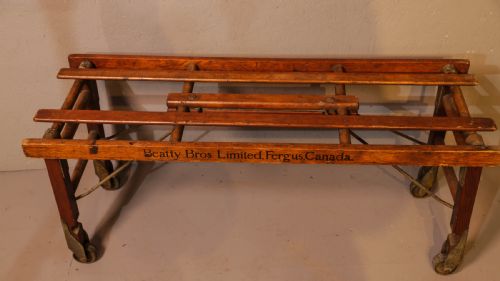


Vintage Wooden Luggage Holder
These vintage wooden luggage holders are practical folding stands built for trunks and cases, bringing sturdy utility and period charm to a guest bedroom.
Vintage Wooden Luggage Holder
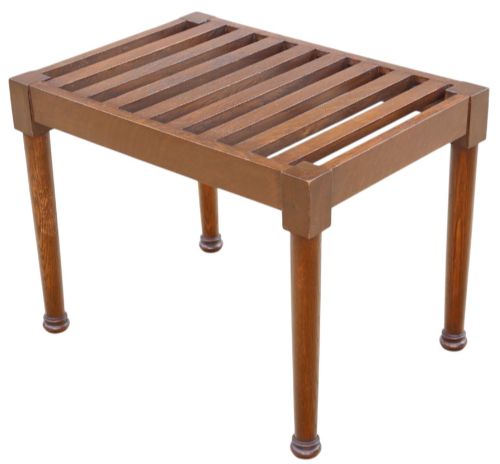
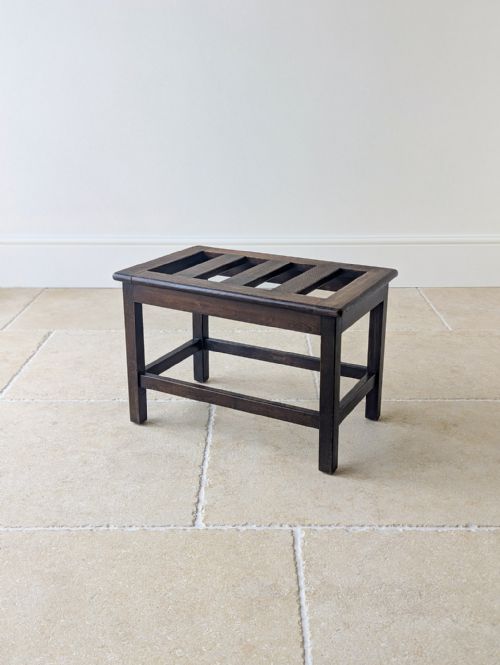
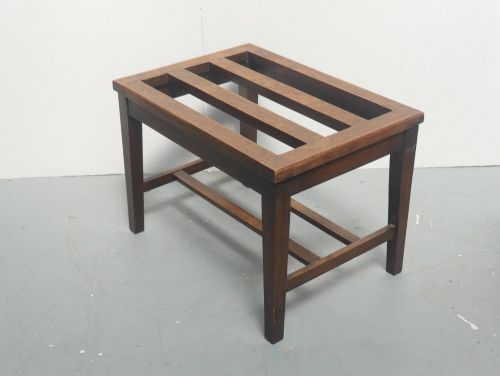
A vintage wooden luggage holder provides a sturdy raised surface for packing and unpacking suitcases, designed to fold flat when not in use. The examples appearing here span from the Victorian period through the Edwardian era and into the early twentieth century.
The selection includes folding luggage stands and luggage racks fashioned in various woods such as oak, mahogany, ash, elm, and painted pine. Certain pieces bear specific railway markings or maker attribution, connecting them directly to their original travel and hospitality use.
How they were made
Carpenters constructed these folding frames using durable hardwoods like oak, mahogany, and ash to withstand the heavy weight of travel trunks. Joints were typically secured with strong wooden joinery and reinforced with iron brackets or hinges to ensure smooth folding action.
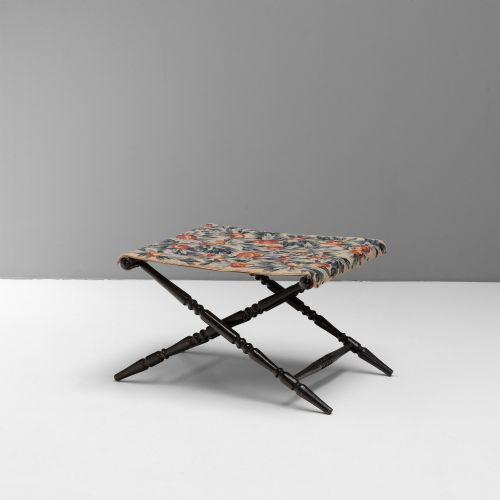
Many stands incorporated sturdy textile or tapestry webbing across the top rails to support cases without scratching their surfaces. Ebonised wood and painted pine finishes also appear among the pieces, offering different aesthetic choices for period interiors.
Materials represented across the selection include oak, mahogany, ash, elm, pine, and ebonised wood.
What varies in quality
The distinction between standard utility items and finer examples often lies in the choice of timber and the sophistication of the folding mechanism. Dense hardwoods like mahogany and figured oak elevate a piece beyond simple utilitarian pine or basic ash.
Original railway provenance or stamped maker details add historical interest and verifiable origin to a stand. The condition of the webbing straps and the smooth operation of the folding frame also influence the overall desirability of the piece.
Beatty Bros Fergus Canada·Waring & Gillow
The Vintage Wooden Luggage Holder Glossary
- Luggage stand
- A folding wooden frame designed to hold a suitcase or trunk at a convenient height for packing. These pieces typically feature X-frame supports.
- Ebonised wood
- Timber treated with a dark stain or finish to imitate the appearance of ebony. This technique was frequently utilised on Victorian furniture.
- Webbing
- Strong woven fabric strips stretched across the top rails of a rack to support luggage weight. It is often seen in textile or tapestry variations.
- X-frame
- A structural design utilising crossing members that allow a piece of furniture to collapse flat. This configuration provides stability when open and space-saving storage when closed.
Vintage Wooden Luggage Holder: Frequently Asked Questions
How do you fold a luggage stand?
Most stands utilise a hinged X-frame design that collapses inward simply by lifting the central rails or gently pushing the sides together.
Ensure any retaining straps or locking catches are released before attempting to fold the frame flat for storage.
What woods were used for luggage stands?
Cabinetmakers utilised durable hardwoods including oak, mahogany, ash, and elm to ensure the frames could support heavy travel trunks.
Softer woods like pine also appear, frequently finished with paint or ebonisation to match period interior schemes.
Were these used on railways?
Certain pieces were manufactured specifically for railway companies, evidenced by stamped company lettering on the wooden frame.
These railway collectables served passengers in station hotels or sleeping compartments during the late nineteenth and early twentieth centuries.
How do you use one in a modern home?
These stands function perfectly in a guest bedroom as a traditional luggage rack for visitors unpacking their bags.
They also serve well folded away in a cupboard or deployed as a compact tray table base when topped with a suitable board.